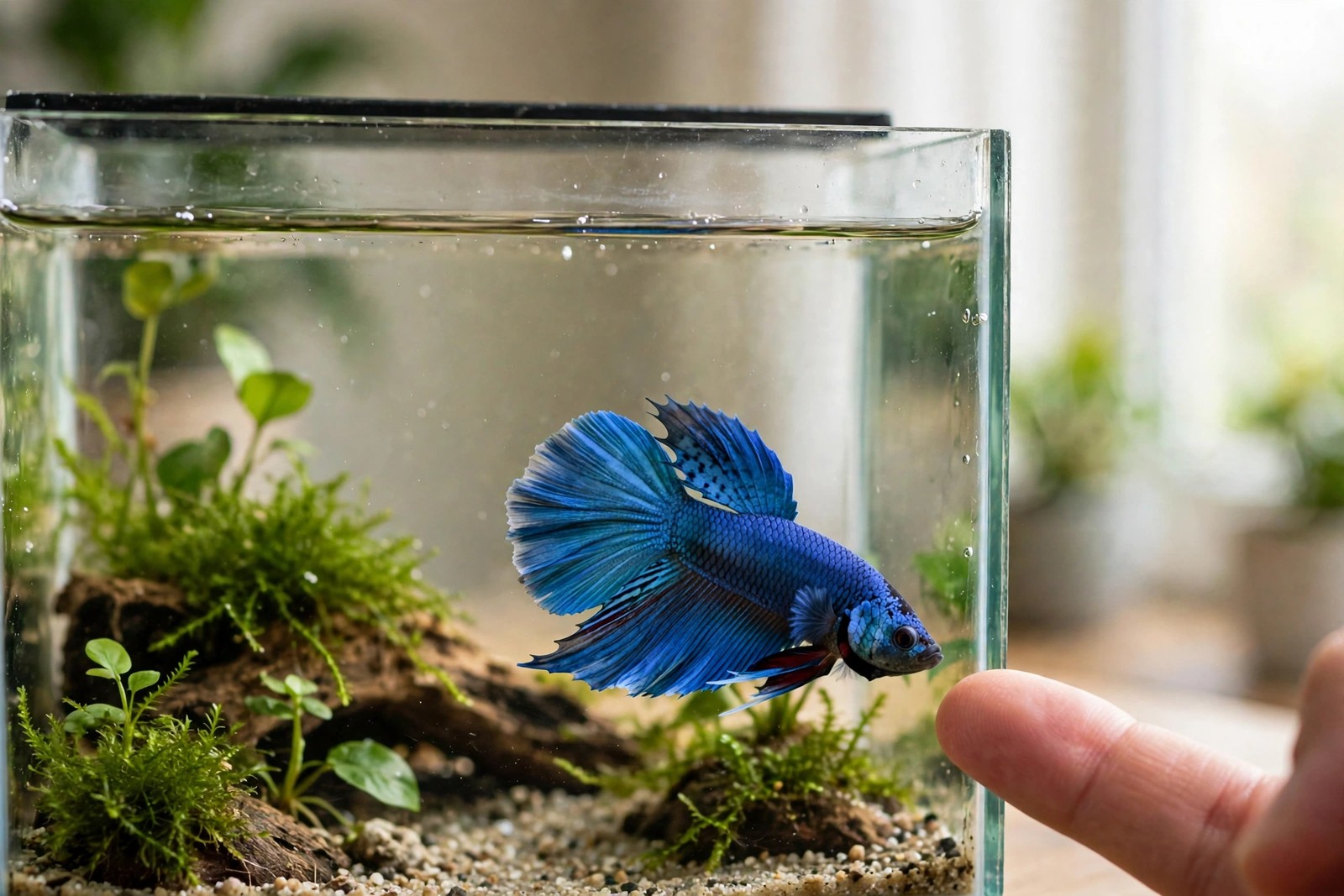
Watch a settled betta when its regular feeder walks into the room and you will see the answer before anyone explains it: the fish leaves its resting plant, rises toward the front glass, and begins the eager side-to-side wiggle owners call the food dance. A visitor standing in the same place often gets a look and a slower approach, or none at all. Bettas have good eyesight for a small fish, strong memories for anything connected with food, and distinct personalities, and together those traits produce behaviour that is fair to call recognition, even if it works differently from a dog's.
What Your Betta Is Actually Learning
The core of it is association. You are the shape, size, and movement pattern that reliably appears just before food does, at roughly the same times, usually from the same direction, often with the same small sounds of a lid or a container opening. Bettas are solitary, observant predators of tiny insects, built to notice movement and remember which spots pay off, so a feeding person becomes the most important landmark in their world. Many also learn a feeding corner, respond to the tank light switching on, and can be taught to swim to a fingertip target or through a small hoop for a single pellet, which shows how much deliberate learning sits behind the greeting at the glass.
Signs the Recognition Is Real
Owners most often report the same cluster of behaviours: rushing to the front when you approach but not when the cat does, following a finger moved slowly along the outside of the glass, flaring less at you than at unfamiliar faces close to the tank, and settling quickly after a water change in your hands while staying jumpy with a stand-in feeder. None of this proves a betta picks out your face the way a parrot might, and honest keepers should hold it as recognition of a familiar, food-linked presence. That is still a genuine two-way awareness, and it is why a betta can seem dull in a shop tank and turn into a character within weeks at home.
Building the Bond Without Spoiling the Fish
Consistency teaches faster than quantity. Feed at similar times, in the same spot, in measured amounts a betta can finish in a couple of minutes, and pause at the glass for a moment before feeding so your presence, not just the food, becomes part of the event. Talk or tap very lightly on the tank rim if you like, but never rap the glass, which sends a shock wave through a fish's whole body. Short, calm interaction a few times a day beats one long session of finger-chasing, and a betta that retreats to its plants is asking for the session to end.
One caution completes the picture: a betta that stops greeting you has usually changed for a physical reason, such as cold water, poor water quality, age, or illness, rather than forgetting you, so treat a lost greeting as a prompt to test the water and check the temperature. Keeping the routine steady is what makes that change visible, and KinsLe Care Teams keeps it steady by assigning each feeding to a named person with the amount noted and the job time-stamped, so your betta is never double-fed by two admirers or left waiting because each person thought the other had been.