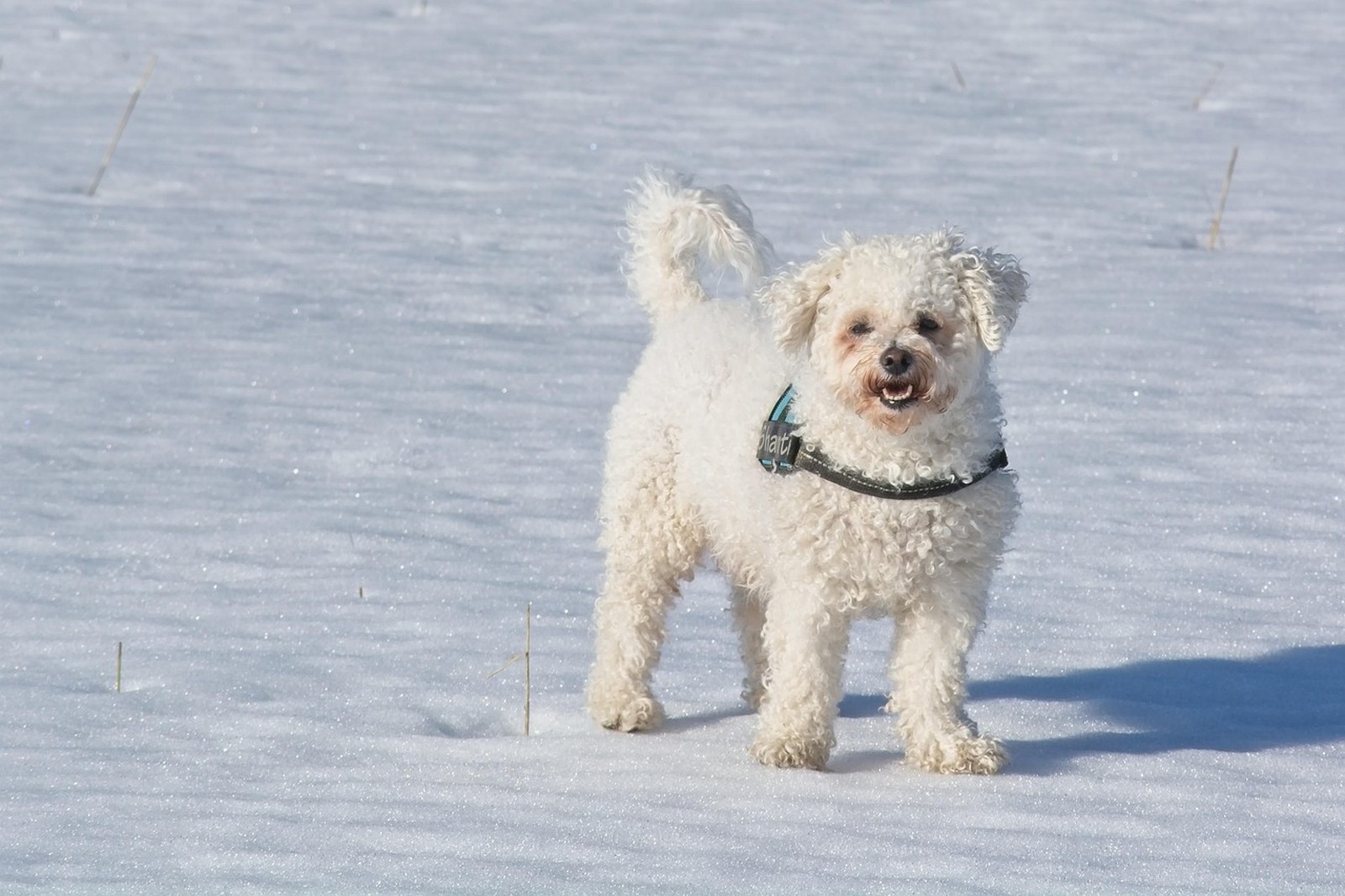
A Bichon Frise sits in the middle of the barking scale. This is not a silent breed and not a relentless one. Most Bichons bark in bright, short bursts to announce something, a knock at the door, a passer-by at the window, or a dog heard down the street, and then settle again once the event passes or a person takes charge of it. Understanding what a Bichon is barking about tells you whether you are hearing normal breed behaviour or a dog whose day needs adjusting.
Why a Companion Breed Announces Everything
The Bichon was bred as a companion, kept close to people in homes and, historically, at courts and on ships, and that history shows in two habits: the dog monitors the household constantly, and it expects the household to involve it. Alert barking is part of that monitoring. A Bichon will typically bark at arrivals, at the delivery driver, and at unfamiliar sounds, and many owners value the early warning from a small dog who cannot actually guard anything. The bark itself is high-pitched and carrying rather than loud in volume, which matters in flats and terraced homes: neighbours hear a persistent yap more than a single deep woof, so frequency and duration are what you manage, not power.
When Moderate Becomes Too Much
Bichon barking escalates for predictable reasons. Boredom is the first: a Bichon left staring at the same room all day will bark at every tiny stimulus because it is the only event available. Loneliness is the second, and it is the big one for this breed. A Bichon left alone for long stretches may bark, whine, and work itself into genuine distress, because close human company is a core need rather than a preference. The third is rehearsal: if barking at the window reliably produces excitement, attention, or a fun chase game with the children, the dog practises it daily and gets better at it.
Note the pattern for a week before you intervene. Barking only at genuine arrivals is alert behaviour doing its job. Barking at leaves, distant traffic, and nothing visible, for long stretches and mainly when the house is empty, points to boredom or separation stress, and the fix is in the dog's day rather than in the bark itself.
What Actually Reduces Bichon Barking
Give the alert an ending. Let the dog announce the visitor, then call it away from the door or window, ask for a sit or a settle on its bed, and reward the quiet that follows. Rewarding quiet only works if you catch the pause, so stay close during practice rather than shouting from another room, which the dog reads as joining in. Build the day so there is less to fill: a morning walk with sniffing time, play and short training games spread across the day, food offered in a puzzle or scattered in grass to search for, and a calm chew or lick activity for the evening.
For alone time, build duration gradually, leave and return without fuss, and arrange company, a visitor, or a sitter for genuinely long absences rather than expecting a companion breed to simply get used to them. If barking when left is paired with pacing, drooling, or toileting indoors, talk to your vet, because that pattern suggests anxiety that deserves proper support.
If several people live with the dog, one shared rule matters most: everybody ends window barking the same way and nobody rewards it with excited attention on some days and scolds it on others. Sharing the walks, the play sessions, and the settle practice so each happens daily is exactly the kind of routine KinsLe Care Teams organises, with each Bichon care task assigned and time-stamped when done.