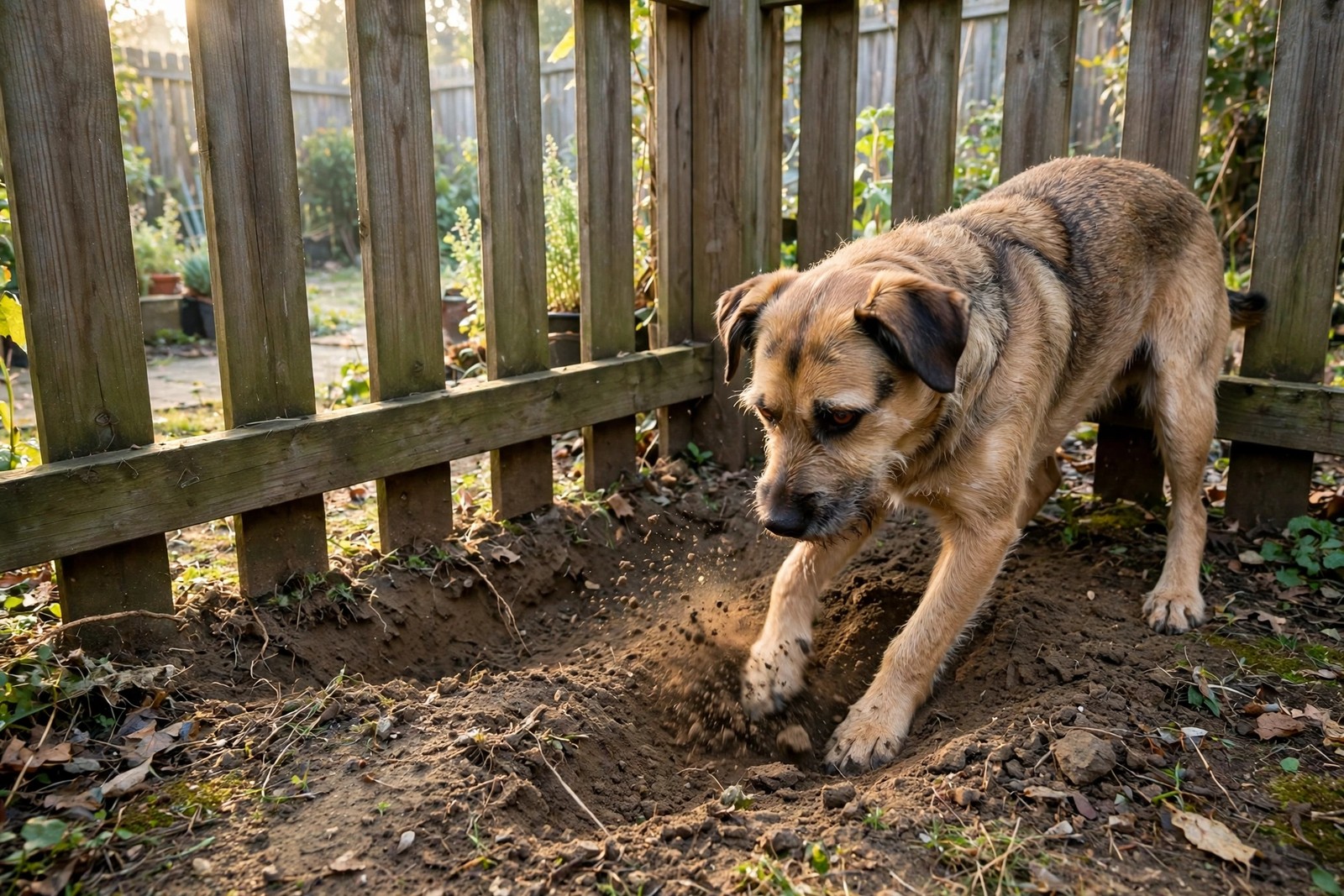
Random digging is scattered; this digging is an itinerary. The same corner, on workdays, starting within an hour of your departure, is a dog executing a known plan at the known time. Two facts shape the plan. The corner is a destination-facing corner: something on the other side of it, or reachable by way of it, is the point. The timing is departure-shaped: whatever your dog is going to do out there, it is doing instead of staying in an empty garden on a weekday morning.
What Is Beyond That Corner?
Stand in the corner yourself and audit it like a dog. Does the neighbour's dog come out at a set time on that side? Does a school-run or dog-walking route pass within sight or earshot shortly after you leave? Do foxes, cats, or squirrels use that boundary as a corridor? Or does the corner simply point toward the street you walk down, making it the natural start of following you? Owners often find the answer by asking the neighbour, checking the corner at the digging hour on a day off, or filming the garden for one morning. A camera also tells you whether this is purposeful escape or anxious digging: the purposeful dog works steadily at the gap, checks the surroundings, and tries to get out; the anxious dog digs in frantic bursts, interspersed with pacing, barking at the house, and returning to doors and windows.
Secure the Corner First
Whatever the motivation, a dog who has nearly dug out once will eventually succeed, so physical security comes before behaviour work. Options that hold up include burying welded mesh or paving slabs along the fence line at that corner, extending the barrier below ground level in an L-shape that turns back into the garden, or reinforcing the corner with a concrete edge the dog cannot undermine. Fill and compact any existing scrape properly rather than kicking loose soil back in, because loose fill is an invitation to resume. Then survey the rest of the fence line honestly; a determined dog displaced from one corner will test the others.
Filling the First Hour
If the camera shows a purposeful but calm dog, the first hour after departure is simply empty, and your dog fills it with the most interesting available project. Change what that hour contains: access indoors if the dog is trustworthy there, a frozen food toy left at departure, a scatter of treats in the grass on the opposite side of the garden, or a dog walker or family visit that breaks the morning earlier. If the pattern smells of separation distress — frantic digging, vocalising, a dog who does not settle at all — treat that instead: graded alone-time work, a vet conversation, and interim arrangements that avoid full-length departures. Punishing the digging on your return achieves nothing except a dog who digs and then dreads your arrival.
The Day the Digging Works
Plan for success — the dog's, not yours. One morning the corner will hold or it will not, and a dog loose from that corner is a dog heading onward with purpose, possibly toward traffic on your own route. A collar with clear, current identification is the difference between a phone call and a search. Building that safety net into KinsLe's Verified QR ID Pet Profiles means your dog carries a collar code that takes a finder straight to your contact details, so the dog found two streets away along your walking route gets you called within minutes, even while you are still at work.