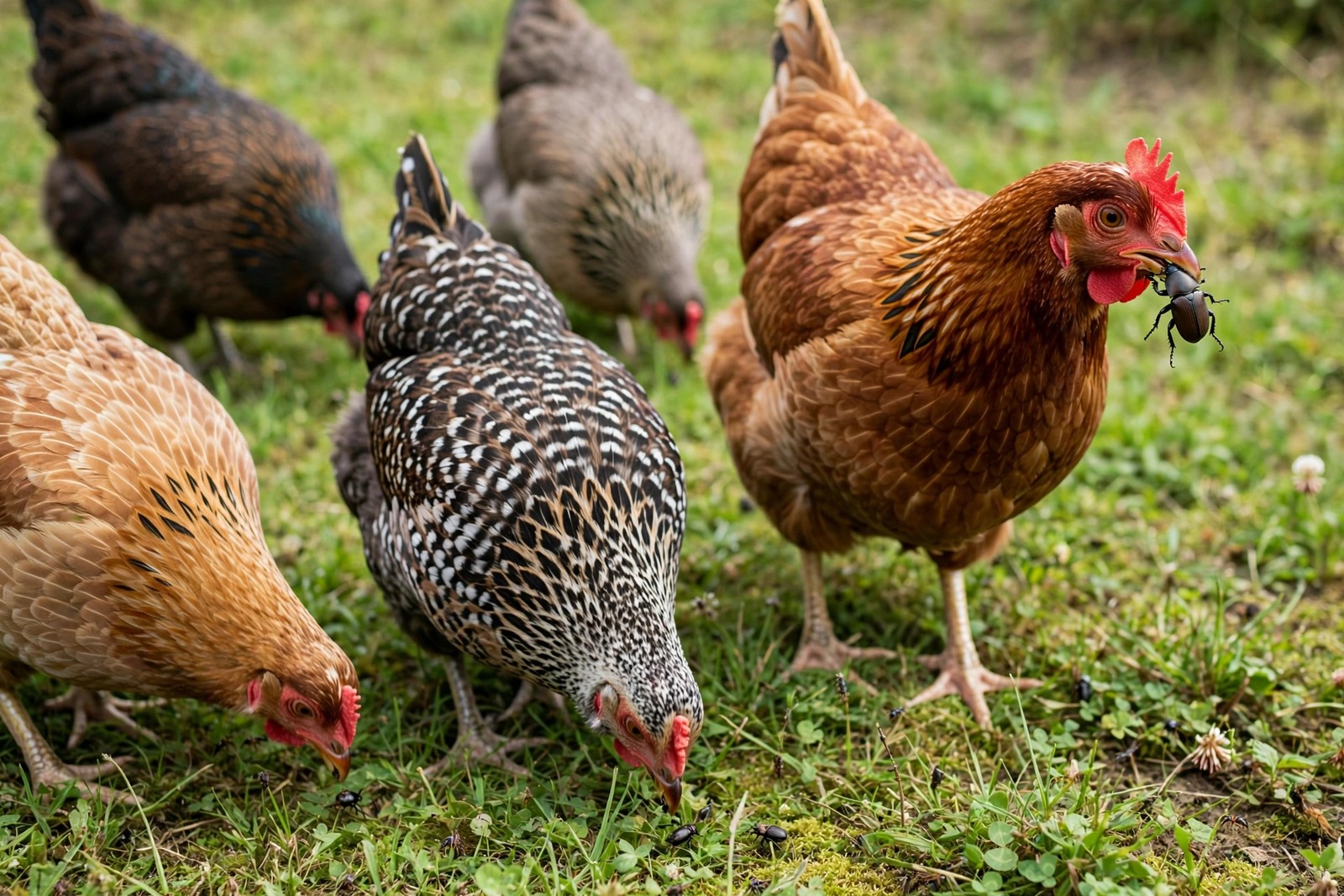
Put a flock out on grass and the ground starts getting worked over almost at once. Hens scratch through litter and short turf, snapping up insects, larvae, worms and slugs as they go, and ticks encountered along the way are eaten too — not sought out one by one, but taken whenever ranging brings a bird across one. Worked over the same patch day after day, that steady foraging thins the ticks living there, which is why keepers in tick country rate their birds as part of the yard's defences.
Making the Most of a Foraging Flock
Give the flock safe ranging space in daylight hours and they will do the pest patrol as part of normal behaviour — rotating ranging areas spreads the benefit and protects the ground. Remember the limits: foraging does not replace checking dogs, cats, and children for ticks after time outdoors, and chickens themselves can carry mites and lice, so keep up coop cleaning and bird checks. Protect the flock from predators (the main cost of free-ranging), keep them out of areas treated with insecticides or slug pellets, and supplement ranging with proper feed — bugs are a supplement, not a complete diet.
What Owners Need to Know
For this flock, the behaviour worth reading is foraging itself. Birds that range eagerly, work fresh patches and settle to dust-bathe afterwards are doing the pest work for you; birds that huddle by the coop, leave whole corners untouched or stop ranging in daylight may be flagging something else — a predator about, ground turned sour, or hens feeling unwell. Watch where they choose to work, because chickens avoid boggy, heavily soiled corners where parasites thrive, and those avoided corners are the ones to rest, drain or fence off next.
Work with that instinct instead of against it. Shift the ranging area before the ground is stripped bare, move feeders and water so the flock spreads across the whole run, and keep grass along tick-prone edges short enough for birds to hunt through. Used well, a flock does not clear a property of ticks, and ranging never replaces a tick check on people or other animals after time outside — what it does is lower the numbers on the ground covered, day after ordinary day.
Practical Steps That Help
Work through these in order and give each one time to become routine before you judge it:
- Let the flock out to range once the dew has lifted, when ground insects are active
- Rotate ranging ground in strips so each patch is worked thoroughly, then rested
- Keep grass and leaf litter in ranging areas short and dry enough to hunt through
- Check birds over regularly for mites and lice, and clean the coop on schedule
- Still check dogs, cats and children for ticks after outdoor time, because the flock lowers numbers without clearing them
Where several keepers share flock care, agree who opens the run, who checks the birds and who shuts them in, and keep that order the same each day. Chickens settle into a ranging routine quickly, and a missed gate, an unemptied waterer or a late shut-in undoes the calm pattern that makes their foraging useful.
Making It Part of Everyday Life
Ranging works as pest control only when it happens daily. A flock turned out most days keeps working familiar ground, learning where insects gather after rain and where litter builds up, while birds ranged once a fortnight make no real dent in tick numbers at all. Build ranging into the ordinary round — open up, scatter a little feed across fresh ground to start them hunting, then check birds and coop as they come in — and tick control becomes a by-product of keeping chickens well, rather than a separate project. That round is easier to hold when helpers log each finished job in Care Teams, because KinsLe timestamps the entry and the next person can see at a glance whether the flock was let out, fed and shut in safely.