
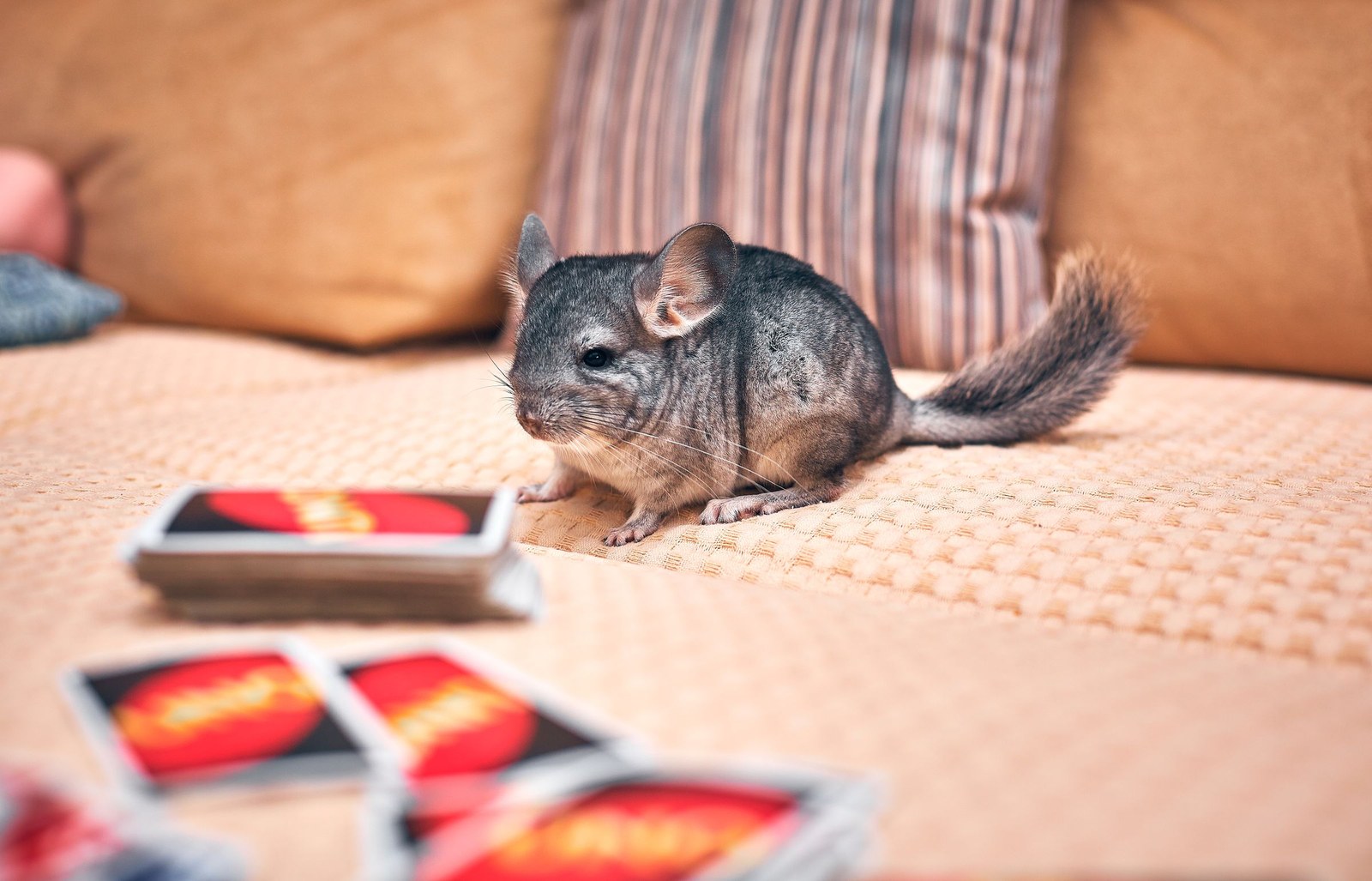
Many chinchillas tolerate handling but do not love long cuddles. Most prefer short, calm interactions on their own terms — sitting near you, hopping in and out of a playpen, or briefly being held with full body support in a cool room — rather than being squeezed, carried around, or held for extended stretches.
Why Chinchillas Are Not Natural Cuddlers
Chinchillas are prey animals from the cool, dry Andes, with some of the densest fur of any land mammal. That coat keeps them warm in the mountains but makes them overheat easily in a warm home, especially when stressed or held tightly against a warm body. What feels like a cozy cuddle to a person can feel hot, confining, and frightening to a chinchilla.
They are also built for escape. When grabbed from above or pursued around a cage, a chinchilla may release patches of fur — called fur slip — as a defense, leaving a bald spot and a very stressed animal. Never grab at their fur or chase them down for a hold. A chinchilla who freezes during cuddling is not necessarily enjoying it; freezing is often a stress response, not relaxation.
Individual temperament varies. A hand-raised chinchilla who has known gentle handling from a young age may happily sit on a lap or climb onto a shoulder for a while. Another, equally well cared for, may always prefer exploring over sitting still. Neither is doing anything wrong — respecting the preference is the care.
Handling That Actually Works
Let them come to you. Sit on the floor in a safe pen during the evening, when chinchillas are most active, with a treat and an open hand, and let them investigate, climb, and leave again. That choice-based approach builds real trust over weeks.
When you do need to hold a chinchilla — for a health check, moving to a carrier, or a brief cuddle with a willing animal — keep it short and supportive:
- Scoop with one hand under the chest and support the hindquarters fully with the other, never lifting by the tail or scruff alone.
- Keep sessions brief in a cool room, and watch for signs of overheating like bright red, hot ears.
- Sit down while holding, so a sudden leap is a short, safe drop rather than a fall.
- End on a calm note, returning them gently instead of waiting until they struggle hard.
Playtime in a safe, chew-proofed pen, dust baths several times a week, and quiet companionship often give a chinchilla more pleasure than any cuddle — and many owners find watching a chinchilla joyfully bounce off pen walls, called popcorning, far more rewarding anyway.
Safety Notes for Warm Homes
Because overheating is a real risk, keep handling away from hot rooms, direct sun, and stressful noise, and never exercise a chinchilla hard in warm weather. If a chinchilla becomes lethargic, drools, breathes rapidly, or collapses, that is urgent — stop handling, move them somewhere cool, and contact a veterinarian promptly.
Sharing Handling Preferences With KinsLe
KinsLe's Pet Pass gives your chinchilla a verified ID card, but their handling preferences are just as important to share with anyone who meets them. Note on their profile that short, supported holds in a cool room are fine, long cuddles and chasing are not, and fur must never be grabbed, so a sitter, vet visitor, or excited guest does not learn those rules the hard way. A clear profile protects a sensitive animal from well-meaning mistakes.
Pet Pass on KinsLe identifies this chinchilla by name for the sitter, vet visitor, or guest meeting them, so nobody has to guess which animal the short-hold, no-grabbing rules belong to.