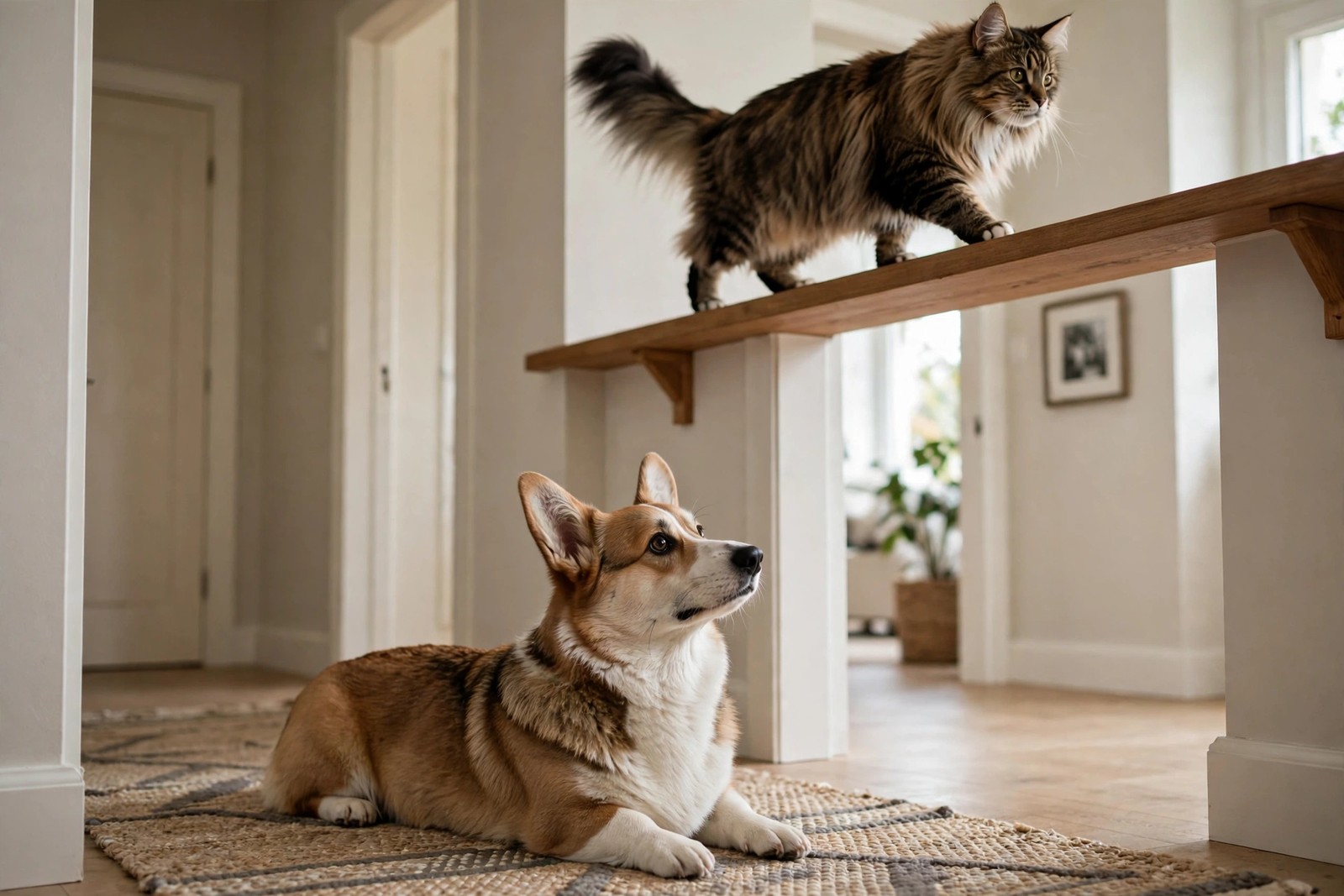
Corgis and cats can share a home successfully, and plenty do, but nobody should mistake a Corgi for a laid-back lapdog in this pairing. Despite the short legs, a Corgi is a cattle herder in a compact body: bold enough to face animals many times its size, quick to dart and nip at heels, and inclined to organise the movement of everyone in the household. A cat who strolls is usually accepted. A cat who sprints, changes direction and dives under furniture offers a Corgi a moving puzzle the breed was literally built to solve, and heel-nipping a cat can injure her legs.
What Corgi Herding Looks Like at Home
Your Corgi may shadow the cat at a distance, fix her with a stare, cut across her path to turn her, or position himself in a doorway so she has to pass him. Barking often joins in, because Corgis use their voice to move stock and to comment on household life generally. The cat may freeze, detour or bolt; bolting is what escalates a management problem into a chase with nipping. Intervene at the shadowing stage, not the chasing stage: call your dog away, reward him well and give him something legal to do, because a Corgi who learns that watching the cat earns nothing while coming away earns plenty will offer the better behaviour more often.
Corgis can also be possessive about their person, bed and food, so keep feeding separate, provide spare beds, and never force the two to share valued spots.
Introductions for a Bold, Vocal Herder
Settle the dog first, with a walk and a few minutes of training, because a fresh Corgi meeting a cat is a recipe for barking at the gate. Start behind a sturdy barrier with the dog on a leash, reward every look away from the cat and every quiet moment, and end sessions while things are still calm. Keep the stages distinct: scent swapping for a few days, gate meetings until they are boring, then same-room time with a trailing house line you can step on if the stare locks in or the heels come up.
Let the cat keep the initiative throughout: she should reach high ground and leave the room without ever passing within nipping range of the dog, and she should never be carried to him. If your Corgi lunges at the barrier or barks without settling across several sessions, increase the distance and slow the whole plan down.
Outlets, Rules and the Cat's Geography
Give the herding brain scheduled work: training games, scent searches, fetch with rules, and a taught settle on a mat, all paid well, so the dog's day contains legal chances to focus and move.
At home, design around the cat's safety permanently. She needs high routes across rooms the dog uses, a gated dog-free room for food, litter and rest, and feeding completely separate from the dog, because a food-motivated Corgi will check a cat bowl with dedication and guard his own with equal dedication. Separate the pair when nobody is home until you have a long, uneventful record, and revisit supervision during adolescence, when young Corgis commonly retest every rule they appeared to accept as puppies.
Reading the Outcome Honestly
Success here looks quiet: a dog who glances at the cat and looks away, a cat who crosses rooms at walking pace and rests in the open, and no doorway stand-offs. Persistent staring you cannot interrupt, repeated heel-nipping or a cat living on top of furniture to avoid the floor are signs to pause and bring in a qualified behaviour professional, and a vet check is sensible if an older dog's tolerance drops suddenly, as pain can sit behind new irritability.
The Corgi's strong will means the plan survives only if every person in the house applies the same cues, the same boundaries and the same rewards. KinsLe's Care Teams helps you coordinate exactly that, assigning barrier sessions, movement training and separate feeding to named family members, with each completed task marked complete with a timestamp.