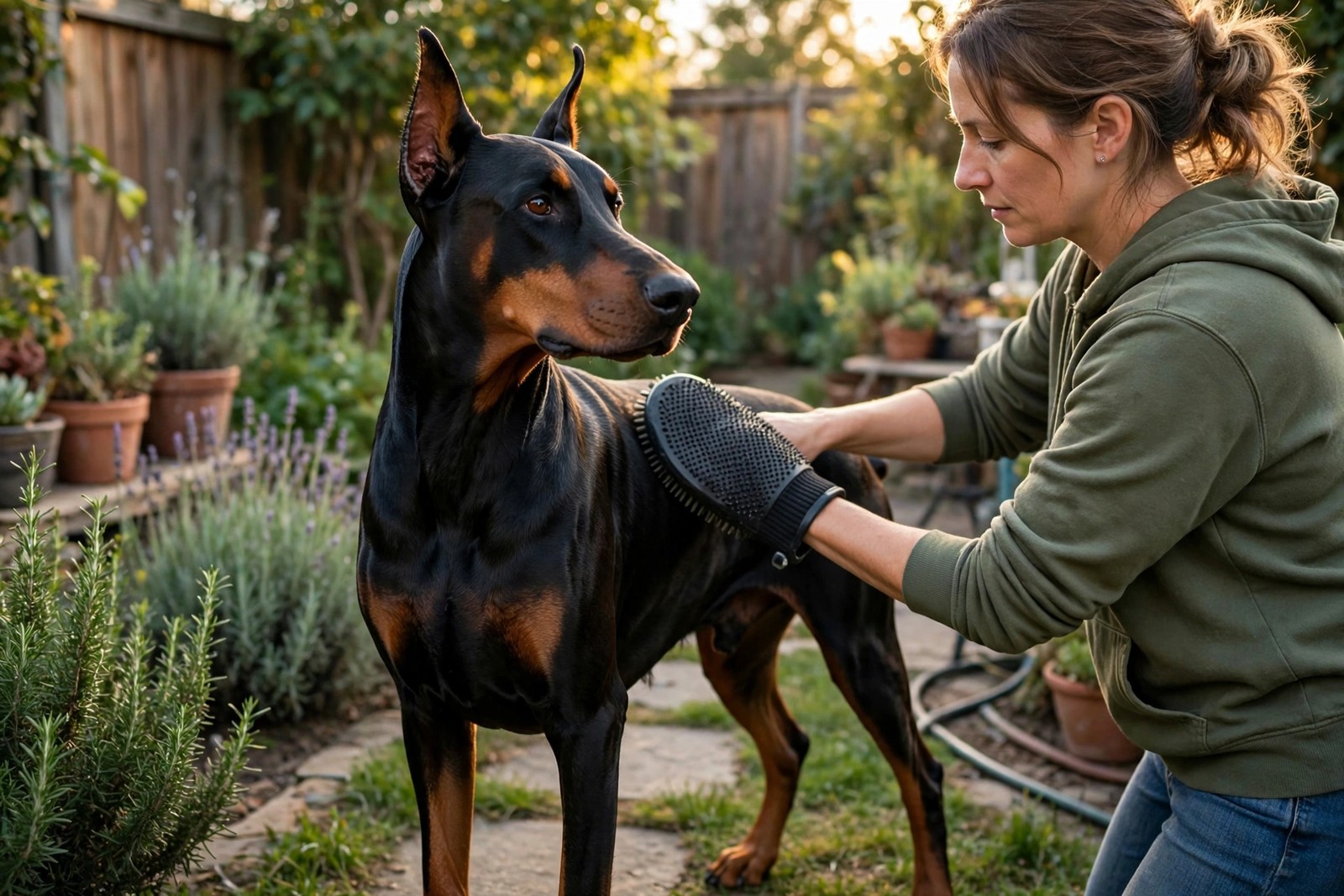
No — Dobermans are moderate shedders, not heavy ones. Owners are sometimes surprised in both directions: the breed's sleek, wash-and-wear reputation suggests almost no hair, yet Doberman hairs turn up everywhere. Both impressions come from the same coat, so it is worth understanding what that coat is actually doing.
Short, Single, and Shed All Year
A Doberman's coat is a single layer of short, smooth hair with no insulating undercoat underneath. That rules out the dramatic twice-yearly blowout of double-coated breeds, when handfuls of undercoat come away for weeks. In its place you get continuity: individual hairs reach the end of their growth cycle and drop in small numbers every week of the year, with a modest increase in spring as the coat adjusts. The total volume is unremarkable — a weekly brush yields a modest pile, nothing like a shepherd's. What catches owners out is texture. Doberman hairs are short and stiff, and they work their way into woven fabric, carpet pile, and car upholstery like splinters, lying flat against a vacuum's airflow. The shedding is moderate; the clinging is not.
Managing Hair That Hides in Fabric
Brush once a week, ideally outdoors, with a rubber grooming mitt or soft brush; on a coat this short, five minutes strips out the loose hairs that would otherwise shed indoors over the following days. A wipe-down with a slightly damp cloth between brushings picks up surface hair before car rides. In the house, washable throws on the dog's favourite furniture and a lint roller by the door handle the reality better than any promise of a hair-free Doberman. Bathe only occasionally, when the dog is dirty, and rinse thoroughly — frequent bathing dries this breed's skin, and dry, flaky skin sheds more and looks worse, so over-grooming creates the very problem it aims to solve.
Coat Changes Worth a Second Look
Because the coat is short, skin and coat changes are unusually visible on a Doberman, which is a genuine benefit of the breed. Treat noticeably thinning patches, persistent flaking, a dull coat replacing the usual sheen, or shedding paired with itching as prompts for a veterinary visit rather than a grooming fix — in a short single coat there is nowhere for a skin problem to hide, and changes you can see early are changes a vet can address early. Keep the standard consistent across the household, from what counts as normal shedding to who does the weekly brush. That sleek coat is this breed's most visible asset, and Family Sharing in KinsLe gives the relatives you pick access to the Doberman's profile.