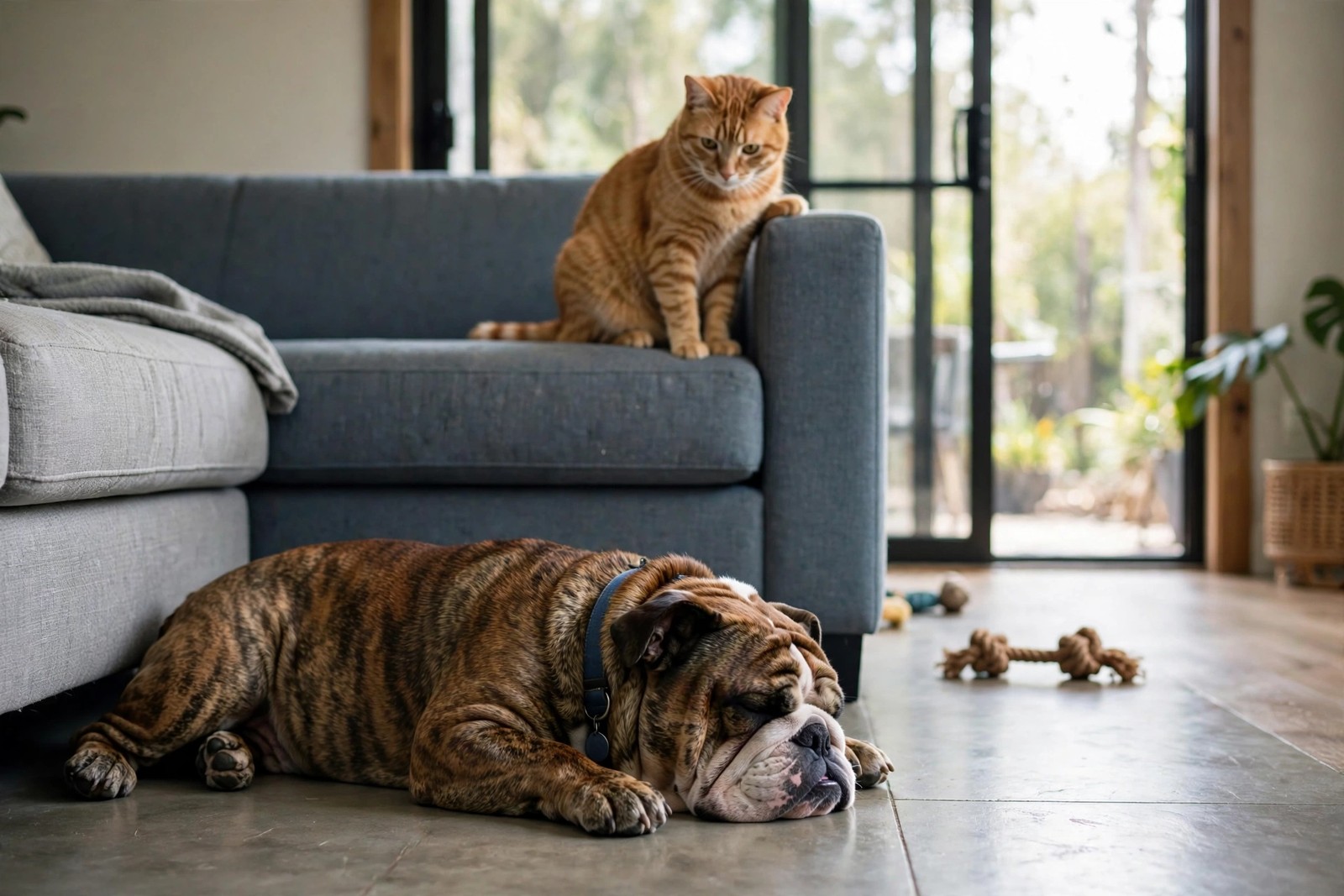
English Bulldogs and cats are usually one of the lower-effort pairings in the dog world. The Bulldog was reshaped over generations from a working animal into a pure companion: unhurried, people-loving and notably low in prey drive, with little interest in chasing anything that requires sustained effort. A typical Bulldog meets the household cat, forms an opinion within days, and settles into peaceful coexistence, and many end up sharing a bed with her. The management this pairing needs is about the dog's body, because a Bulldog is heavy, broad and short of breath, and those facts shape both introductions and play.
Bulk, Breathing and Good Intentions
A Bulldog expresses affection physically, leaning, barging gently and flopping down against or occasionally on top of companions. Against a person that is comedy; against a four-kilogram cat it can be a genuine squash risk, particularly with a young, clumsy dog who has not yet learned where his body ends. Supervise early contact in a room where the cat can step aside easily, teach the dog that calm approaches earn attention, and interrupt any attempt to lie on, pin or body-block the cat, redirecting him to his own bed beside her rather than away in disgrace.
Breathing sets the schedule. A Bulldog's short muzzle makes him inefficient at cooling and at handling excitement, so the standard advice to tire a dog out before introductions needs adjusting for this breed: a gentle stroll and a few minutes of easy training in cool conditions, never vigorous exercise, and never introductions on a hot day or in a stuffy room. Keep meetings brief, watch for loud, laboured breathing, drooling or a dog too wound up to respond, and end the session while he is still comfortable. A Bulldog who is panting hard is not learning manners; he is coping with his airways.
Introductions at Bulldog Pace
Start with scent swapping for a few days, leaving each animal's bedding near the other, so the cat learns the dog's considerable soundscape, snoring, snuffling and snorting, alongside his smell; cats who are startled by Bulldog noises settle faster when the noises arrive before the dog does. Meet through a gate with the dog on a loose leash, rewarding relaxed behaviour, and let the cat choose whether to approach, watch from height or leave.
In the same room, keep sessions short and cool, with the cat's exit and high places open, and reward the dog for lying down and letting the cat move around him. Bulldogs can be stubborn about a rule they see no profit in, so pay the behaviours you want with food and praise every time at first. A Bulldog puppy needs closer supervision than an adult, because puppy play in this breed is mouthy and barging even when it is entirely friendly, and a senior cat should not be a puppy's wrestling partner.
Everyday Life With a Heavy, Sleepy Dog
Feed the two apart, because a Bulldog is a committed eater who will finish the cat's dinner without malice and whose own meals should not have a cat wandering through them. Keep the cat's food, litter tray and at least one favourite resting place in a dog-free or elevated zone. Provide the cat with high territory as a permanent feature: Bulldogs cannot follow a cat upward, which makes height a complete and stress-free escape in this pairing, one of its quiet benefits.
Separate the pair when nobody is home until their calm together is well established, and even then keep the cat's retreats open. If either animal's behaviour changes suddenly, a dog who begins snapping or a cat who starts hiding after months of ease, book a vet visit.
Where this pairing occasionally struggles, it is usually a young dog's boisterousness against an elderly cat's patience, and time plus supervision solves most of it. KinsLe's Care Teams helps the household keep the short, cool sessions and separate feeding on track, assigning them to whoever is home with each completed task marked complete with a timestamp.