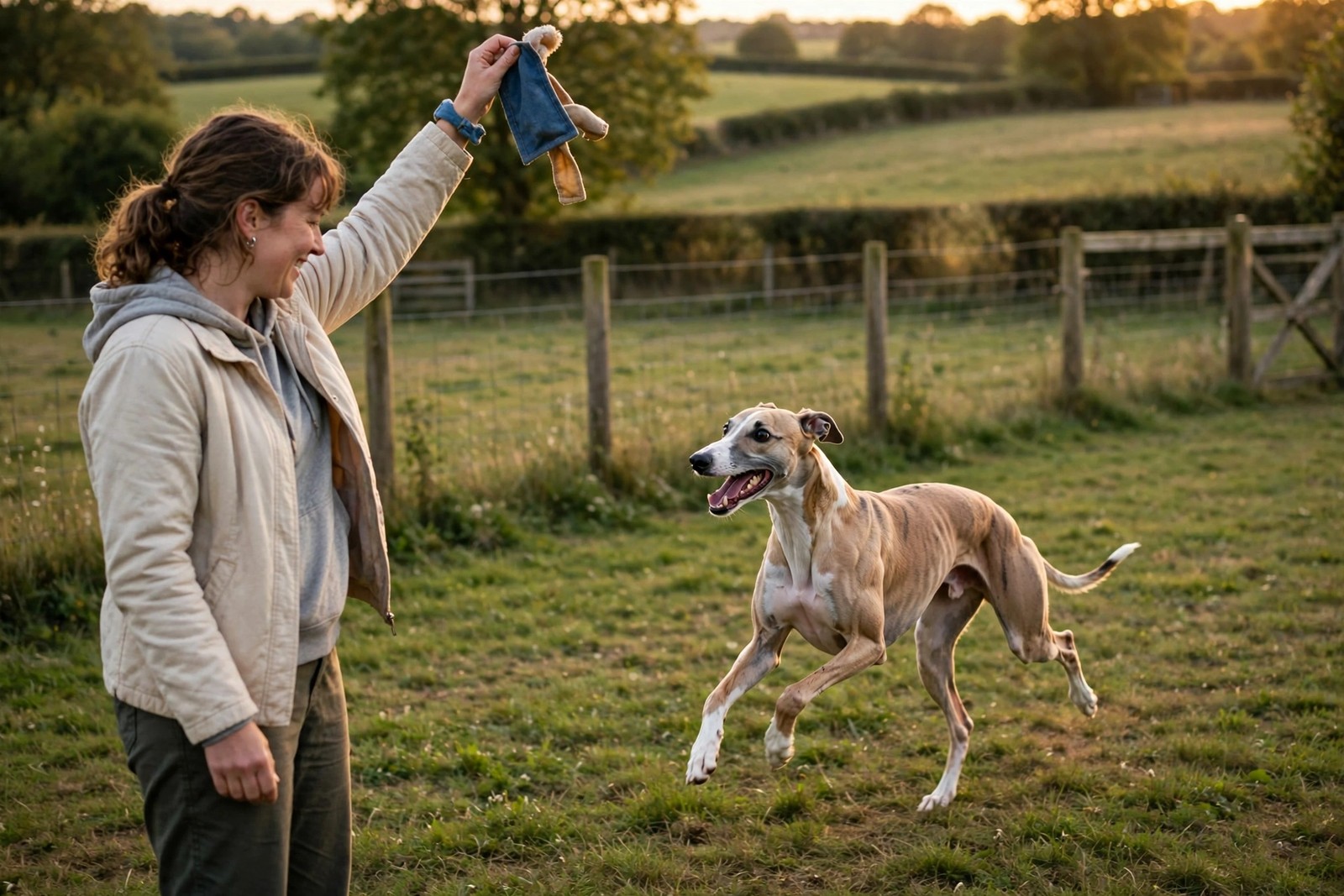
Pay a Whippet in more running: call him, reward generously when he arrives, then release him straight back to sprinting so recall feels like a pit stop rather than the end of freedom. Many sighthounds learn recall backwards because owners call only when the fun is ending, clip the lead on and walk home. The games below reverse that lesson by making your call predict a brief, worthwhile stop followed by more of what he loves.
Start with the release as the headline reward
In a secure field or large enclosed garden, let him move away, call once in a bright voice, and when he turns and comes, praise him, offer a high-value food reward, touch his collar calmly, and release him with a clear cue to go again. Repeat a few times while he is still keen, and finish while running is still on offer rather than after he has begun drifting away. Early on, the lead should appear only occasionally in this game, so a collar touch does not become a warning that freedom is over.
Games that use speed honestly
In a restrained recall, a helper holds him gently while you walk or run a short distance away, call, and cheer as he is released to race to you. The recall itself becomes a launch, which suits a sighthound's motivation far better than a slow obedience exercise. Reward, release him to explore again, and repeat only while he remains eager.
In a chase-me recall, call and run away from him, letting him catch you, then reward and play briefly before sending him off again. In hide-and-seek, hide behind a tree or fence in a secure area while a helper holds him, call once, and celebrate when he finds you; keep early hiding places simple so he wins quickly. A whistle can be charged like a cue by pairing its sound with an excellent reward and then with a thrown toy or a short lure-chase game in an enclosed space, so the whistle predicts action rather than capture.
Rotate games within a session so he cannot predict a dull ending, and vary whether the payoff is food, a throw, a chase or immediate release. Variety matters less than the rule underneath every game: coming to you makes good things happen and rarely ends the outing.
Protect the cue while it is still fragile
Practise in secure spaces until recall is reliable around the distractions you actually face, and use a long line where a space is not fully enclosed and it is safe to do so, taking care that a fast dog cannot hit the end at speed. Never call repeatedly while he is chasing another dog, a squirrel or a ball thrown by someone else; go and collect him calmly instead of spending the cue on a moment he cannot win.
Also avoid calling him away from something wonderful only to do something he dislikes, such as leaving the park immediately every time. If you must end the outing, add an extra reward and a short final game after the lead goes on, so the ending still contains something he values.
Build distance and distraction in layers
Raise one challenge at a time: a little more distance, a slightly busier secure field, or another calm dog at a distance, but not all three together. If he fails twice at a new level, return to the easier version where he was succeeding and end on a win. Short sessions, several times a week, suit this work better than one long drilling session, because a Whippet who is tired, hot or bored will make poorer choices and rehearse ignoring you.
With KinsLe's Care Teams, you can assign those short recall sessions to different family members across the week, keep the same cue and release rule for everyone, and see from the completed tasks that practice happened several times a week.