
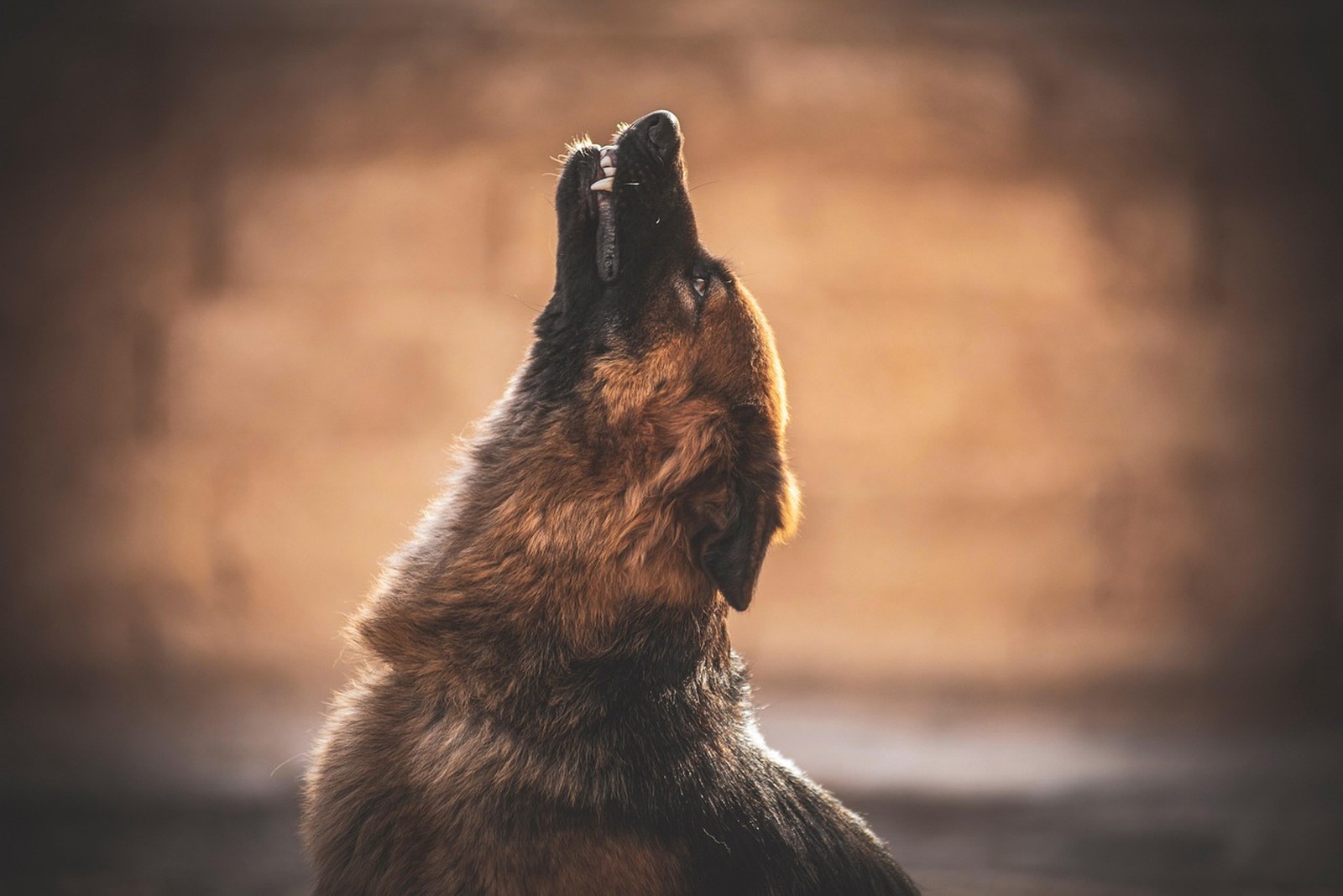
A howl carries further than a bark, and that is its purpose. For dogs' ancestors, howling was long-distance communication: a separated member announced where it was and listened for the group's reply. Your dog, howling at an empty house, is using that same channel on you. She is not being dramatic, defiant, or noisy for entertainment. In most left-alone howlers, the call is powered by separation-related distress, an emotional state closer to worry than to naughtiness.
Confirming What Happens After the Door Closes
Owners are the only witnesses who never hear it, so gather evidence before choosing a response. Ask neighbours when the noise starts and how long it runs, or record a normal departure on a phone left running. The pattern sorts the cases:
- Distress howling usually begins within minutes of you leaving and comes in long, repeated bouts, often with pacing between door and window, drooling, panting, chewing or scratching at exits, and sometimes toileting by a dog who is housetrained when you are home.
- Answering howling is different: a dog who joins sirens, other dogs, or a particular sound, then settles, is responding to a trigger rather than to your absence.
- Under-stimulation sits between the two: a young, under-exercised dog may howl in bouts between naps and raiding the bin, and looks relaxed on camera between episodes.
If the first pattern fits, treat the howling as a symptom. Punishing noise you were not there to hear does nothing except raise the anxiety that produced it.
Departure Desensitisation, Done Gradually
The goal is to teach her, in doses too small to trigger panic, that departures are boring and temporary. Start by breaking the predictive chain: pick up keys, put on shoes and coat, then sit back down, several times a day, until those cues stop raising her heart rate. Then practise absences measured in seconds: step out, return calmly before any distress, and build duration slowly over days and weeks, mixing in shorter, easy repetitions so she never knows whether this absence is a long one. Keep every goodbye and greeting deliberately flat. Before real departures, walk her, let her toilet, and leave her settled with a safe chew or food toy and a familiar household sound playing quietly if that normally relaxes her.
Severe cases need more than patience. A dog who howls for hours, injures herself on doors or crates, refuses food when alone, or soaks her chest with drool is panicking, and that deserves a prompt talk with your vet, who can discuss referral to a qualified behaviour professional and whether additional support is appropriate. Do not simply leave her to howl it out, because rehearsing panic deepens it. Steady, sub-threshold practice is slow work, and KinsLe Care Teams makes it manageable by assigning the daily practice absences and pre-departure walks across the household, each one logged, so her confidence builds on a plan everyone follows.