
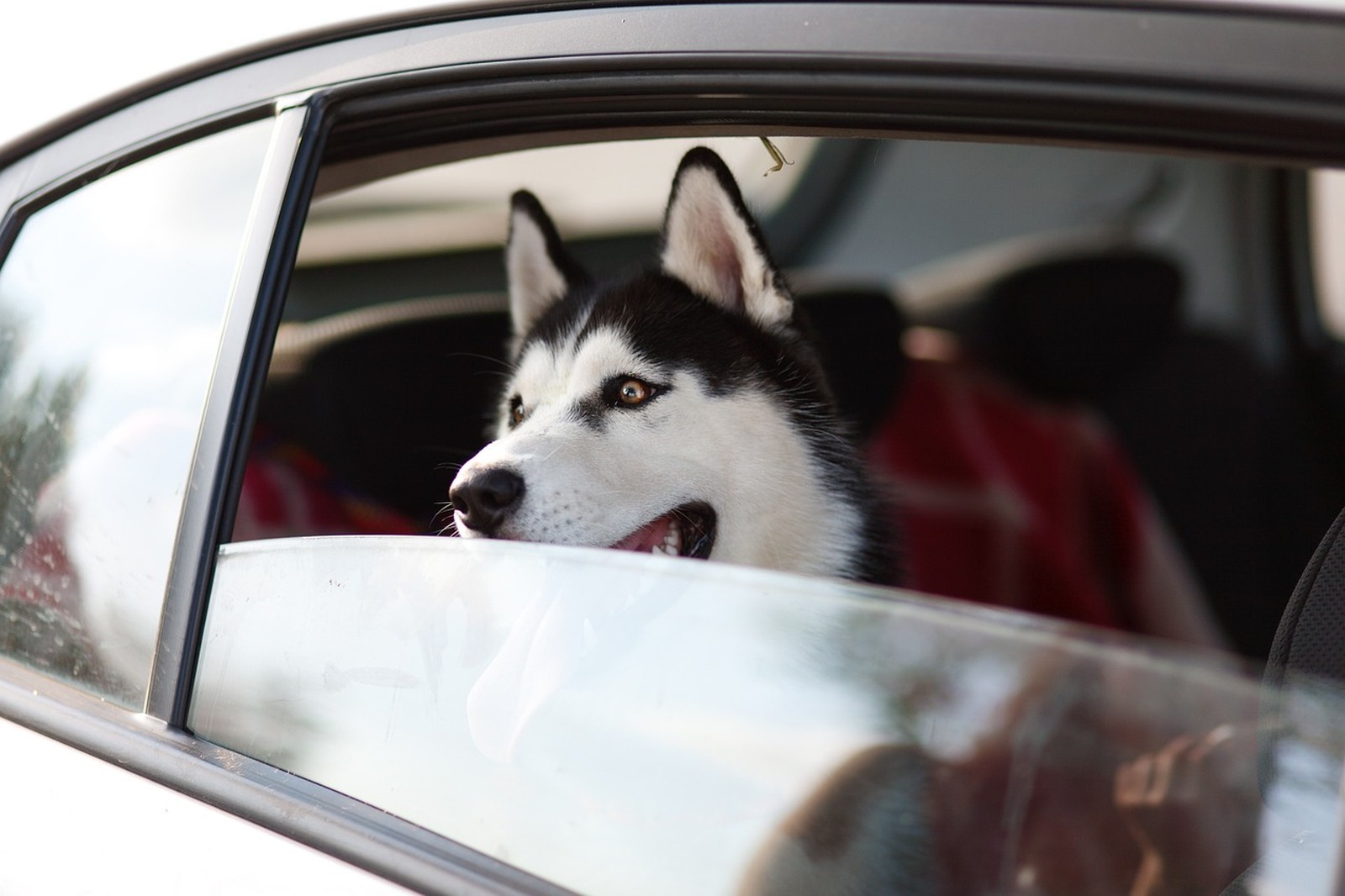
Whining is a sound, not an explanation, and in the car it is produced by at least three quite different states of mind and body. The anxious dog, the travel-sick dog, and the dog beside himself with joy can all sing for an entire journey, but they need opposite handling in places, so the first job is reading the rest of the dog: posture, ears, drool, and what he does when the engine starts and when it stops.
The Anxious Passenger
Anxiety is the most common engine. A dog may dislike the car's movement and engine noise, may have learned that car rides end at the veterinarian or the groomer because those were the only trips he ever took, or may simply never have been introduced to travel gradually as a puppy. Anxious whining tends to come with panting, pacing or scrabbling where he rides, tucked or flattened posture, yawning, lip-licking, and reluctance to get in at all. Some dogs settle once moving and dread the start; others escalate with every mile. Note where your dog sits on that pattern, because it decides where your practice sessions should concentrate: the approach, the engine starting, or the journey itself.
The Travel-Sick Passenger
Puppies are frequently car sick for a mechanical reason: the balance structures of the inner ear are still developing, so motion the eyes and body report does not match, and nausea follows. Whining in a sick dog is restlessness with a miserable edge, typically joined by heavy drooling, repeated lip-licking and swallowing, a hunched, quiet misery between bouts of noise, and sometimes vomiting. Many puppies outgrow it, especially if their early trips are short and do not repeatedly end in feeling dreadful, which can otherwise teach a lasting dread of the car on top of the sickness. Travel on a fairly empty stomach suits many dogs better than travel straight after a meal, and fresh air from a slightly open window and a cool cabin help some; if sickness persists past puppyhood or is severe, your veterinarian can discuss the situation properly rather than you experimenting.
The Excited Passenger
Excitement whining sounds similar but looks entirely different: bright eyes, ears up, body loose and forward, tail in motion, whining that spikes at familiar turnings, at the sight of the park bag, or as the car slows near a favourite place. This dog is not suffering; he is frustrated that the good thing has not started yet. The fix is calmness practice, not desensitisation to fear: reward quiet settling in a stationary car, keep departures low-key, and avoid accidentally paying the noise with the immediate start of the walk the moment you arrive, which teaches him that volume opens doors.
Rebuilding the Car as a Good Place
For anxious and excited dogs alike, work in stages small enough that he stays under his threshold: sit in the parked car with treats and get out again; then engine on, nobody going anywhere; then a two-minute roll to the end of the street; then short trips that end somewhere pleasant, mixed with trips that end nowhere at all, so the car stops predicting one charged destination. Secure him with a harness or in a crate he already likes so sliding around does not add to his worries, keep early sessions to a few minutes, and end before the whining peaks rather than after. Never leave a dog in a parked car in warm weather, even briefly, whatever stage your training has reached. If weeks of patient staging change nothing, or the panic is intense enough that he injures himself or cannot eat in the car at all, bring in hands-on help: KinsLe's Pet Services Directory lets you search local veterinarians and trainers, so the dog in front of a professional is your dog, with his exact whine, rather than a general description of one.