
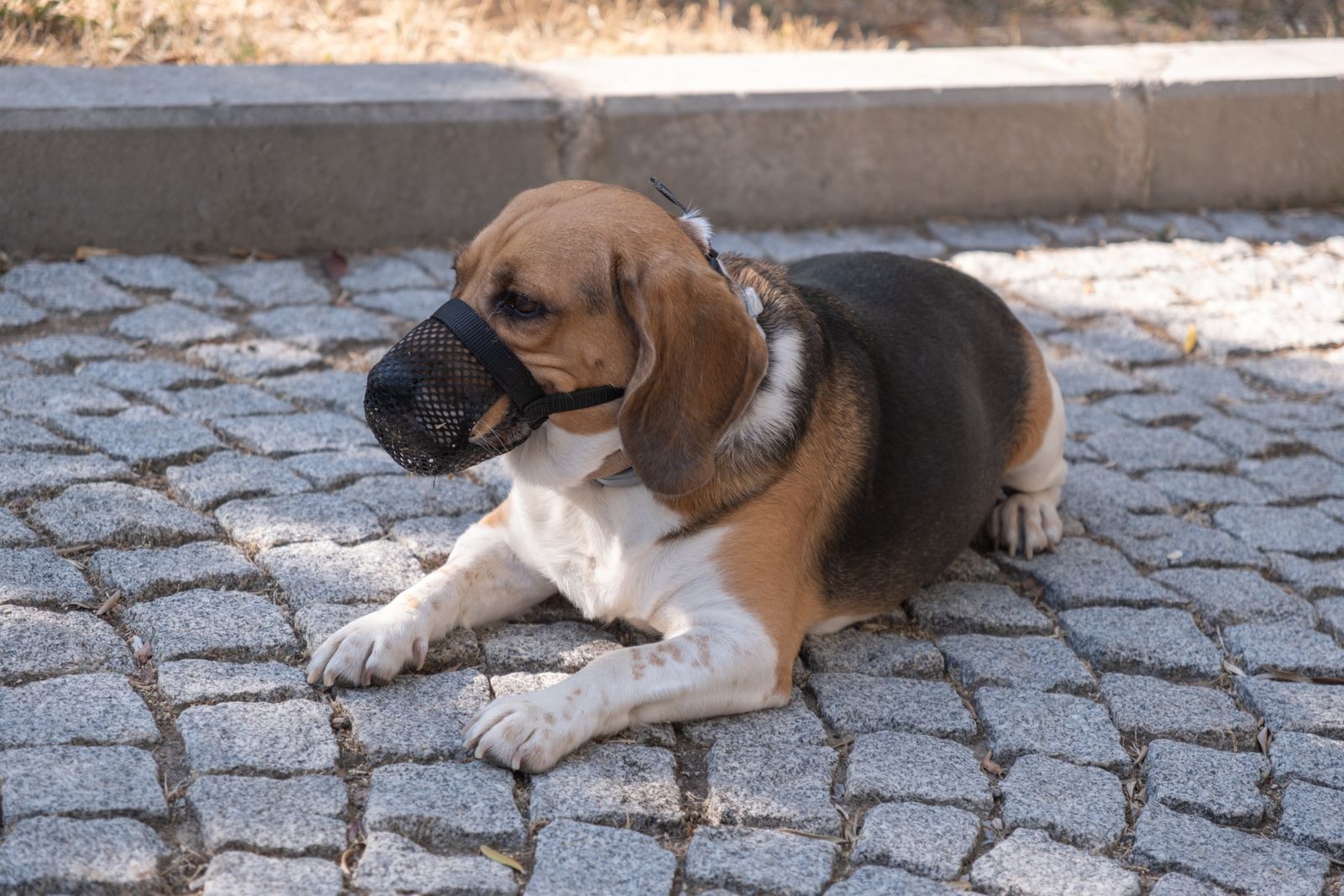
A dog becomes genuinely comfortable in a muzzle through short, rewarding sessions that always end before frustration — pairing the muzzle with favorite treats, calm activities, and easy outings until wearing it feels as ordinary as a collar. Given days and weeks of that pattern, a well-conditioned dog will often push their nose in eagerly, because in their experience the muzzle predicts cheese, walks, and attention. Comfort is built, never forced.
Comfort starts with honest fit
A dog cannot relax in equipment that hurts. Check that the basket clears the end of the nose, doesn't ride up into the eyes, and lets the mouth open into a full pant — watch for a loose, wide pant on a warm walk, not tight, shallow breathing. Straps should sit snugly behind the ears without pinching, and the whole muzzle shouldn't twist sideways when your dog shakes.
Breeds complicate fit. A Boxer or French Bulldog needs a short, wide basket made for flat faces; a Whippet needs a narrow, deep one. Many owners add a soft fleece strap cover or moleskin where the basket touches the nose bridge. If your dog comes home with rub marks or hair loss, the fit is wrong no matter how good the conditioning is — refit or replace it before continuing.
The conditioning pattern that creates real ease
Comfortable dogs are made by repetition at low pressure. Keep the same rhythm every session:
- Muzzle appears, great food follows — nose in, lickable treat, muzzle off
- Brief strap contact, more food, muzzle off before your dog asks
- Short wear during things your dog already loves: sniffy garden time, a gentle training game, dinner prep in the kitchen
- Gradual first outings — the quiet street, the familiar park at an off-peak hour
Pairing the muzzle with calm activities matters. If the muzzle only appears for vet visits and nail trims, your dog will read it as a warning sign no matter how much cheese you used at home. Let it also predict the good stuff — the sniff walk, the car ride to the drive-through, the visit to a favorite friend's garden — so its meaning stays balanced.
Reading your dog's body honestly
Learn the difference between tolerating and comfortable. A comfortable dog has soft eyes, a loose wagging body, takes treats at their normal enthusiasm, and moves and sniffs normally. A merely tolerating dog may freeze, pant tightly with ears pinned, refuse food they'd normally love, or paw repeatedly at the basket once the treats stop.
If you see the second picture, shorten sessions, raise the reward value, and slow the progression. Some dogs stall at the strap step for a week; that pause is progress, not failure, because you're banking trust. End every session on a rep your dog nailed, then put the muzzle away — quitting while you're ahead is what makes the next session start eager.
When comfort isn't coming together
Struggling despite slow work usually points to fit, a frightening association you didn't know about, or anxiety that goes beyond equipment — common in rescue dogs with unknown histories. Get eyes on the problem rather than pushing through. A good trainer will watch your dog's body language in the muzzle, check the fit in motion, and rebuild the plan at the pace your individual dog needs.
You can find that kind of one-on-one coaching through KinsLe's Pet Services Directory, which lists local trainers you can ask about muzzle conditioning and fit checks before booking. Note on your dog's profile which muzzle model and size finally worked, so replacing a worn one later takes minutes, not another fitting saga. Curious about more ways to make everyday gear stress-free? Pet Services Directory on KinsLe helps you find a local trainer who can watch the fit in motion and rebuild stalled muzzle sessions at your dog's pace.