
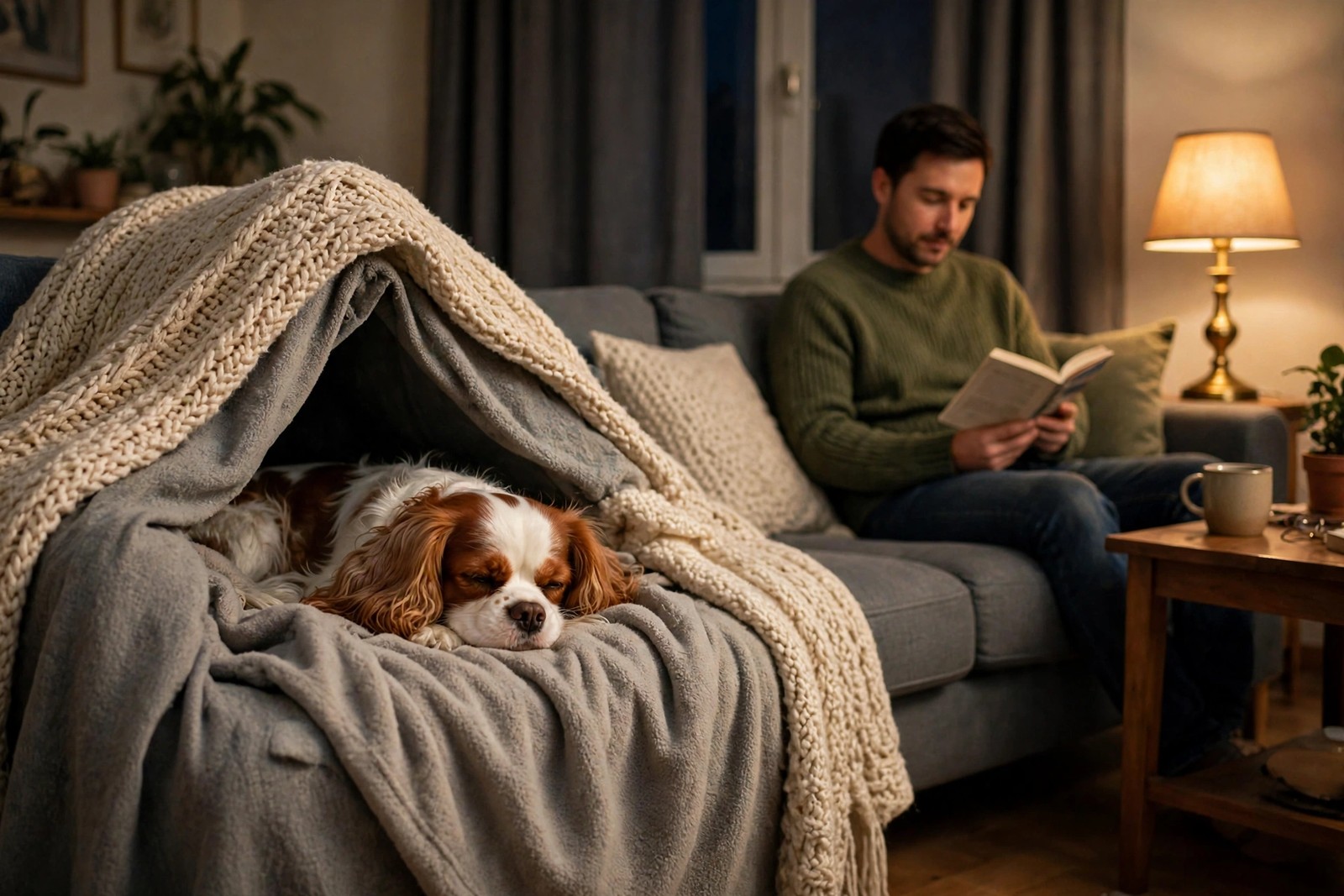
Noise fear is managed on two fronts: what you do on the night itself, and the slower work you do between storms to lower the fear over time. On the night, your job is preparation and presence. Between events, gradual sound practice and, for severe cases, a vet conversation can genuinely change how next season goes.
Before the First Bang
On a forecast fireworks night, or when thunder is building, walk your dog earlier in daylight and give him a good toilet chance close to home before dark. Feed a little earlier too, since a frightened dog will not eat later. Check that doors, windows, and garden gates are shut and latched, and confirm collar fit and that ID and microchip details are current — fireworks nights are when even steady dogs panic, squeeze through gaps, and bolt. Set up the refuge before he needs it: a quiet room away from the street, curtains drawn against flashes, and a den made from a crate or a table draped with heavy blankets, lined with bedding that smells of home.
During Fireworks or Thunder
Stay with him if you possibly can; being left alone in a noisy house is what turns fear into panic for many dogs. Put music or the television on at a normal, steady volume to take the edge off individual bangs. Then be calm and unremarkable. Let him choose where to be — pressed against you, inside the den, or behind the sofa — and stroke and soothe him if he seeks contact. The old claim that comforting a frightened dog rewards the fear does not hold up; fear is an emotion, not a behaviour you are training. Offer a long-lasting chew or a lick mat only if he will take it, and never scold trembling, panting, drooling, or an indoor toilet accident.
Building Resilience Between Events
In quiet weeks, gradual desensitisation helps many dogs. Play recorded thunder or fireworks at a volume so low he notices but stays relaxed, pair the sounds with treats and play, and raise the volume a fraction over many sessions spread across weeks. Any session where he tenses, pants, or stops taking treats means the volume went up too fast — drop back down next time. Thunder adds extra layers some dogs react to — pressure changes, static, rain noise — so practise on calm days and finish well before real storms are forecast.
When Fear Needs Professional Help
Panic is a step beyond fear: frantic escape attempts, clawing at doors, self-injury, howling for hours, or refusing food the following day. For a dog at that level, book a vet appointment well before fireworks season rather than the week before, and ask about a referral to a qualified behaviourist. Keep him safely indoors until the morning after an event, check fences before the first garden visit, and walk on a lead in case of stray late bangs. If the worst happens and he does get out, speed matters more than anything. KinsLe's Lost Pet Alert System lets you send a free alert to nearby Circle of Love members straight away, and a finder can message you directly, so the search starts in minutes while the trail is still warm.