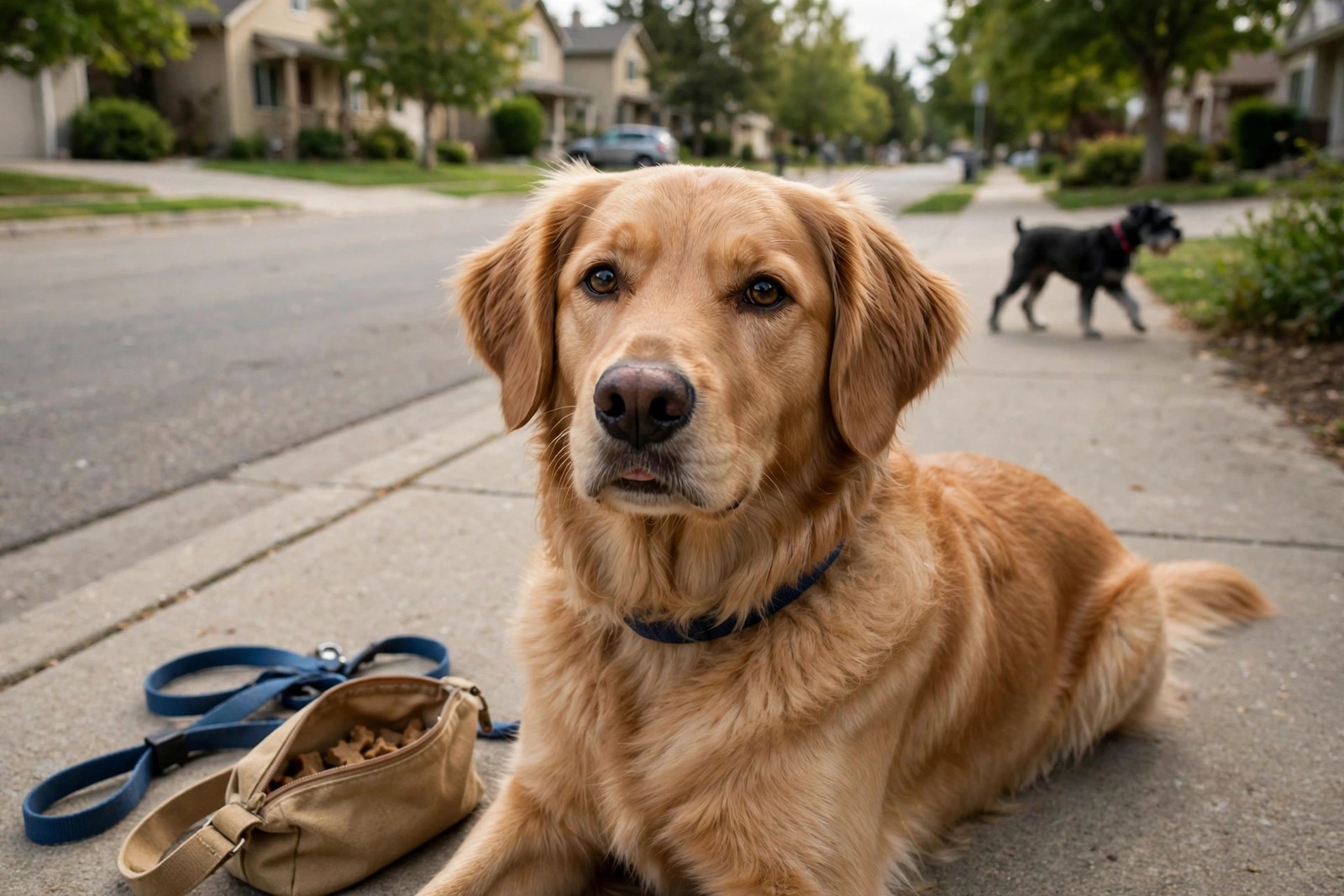
Barking and lunging at other dogs on the lead is usually called leash reactivity, and it is rarely stubbornness. Many reactive dogs are frustrated greeters who want to reach the other dog, while others are worried and have learned that a big display makes dogs go away. Either way, once your dog is barking, lunging, and fixed in a stare, learning has stopped for that moment. All useful training happens before that point, at a distance where your dog can notice another dog and still eat, think, and look away.
Find Your Dog's Threshold Distance
Threshold is the distance at which your dog first changes: ears forward, mouth closing, body stiffening, staring for more than a glance. It might be across a wide park for one dog and half a street for another, and it shrinks when the other dog is running, barking, or coming straight at you. Your working distance is beyond that line, where your dog sees the dog, registers it, and can still take food and respond to their name. If you cannot get that response, you are too close — add distance without embarrassment. Crossing the street, stepping behind a parked car, or turning down a side road are training tools, not defeats.
The Engage-Disengage Game
At working distance, let your dog look at the other dog for a second or two. The instant your dog turns away from the trigger, or looks back at you, mark it with a cheerful "yes" and pay with something genuinely good — small pieces of chicken, cheese, or whatever your dog works hardest for. That is the engage-disengage pattern: notice the dog, choose to disengage, get paid.
If your dog will not look away, help rather than waiting for an explosion. Say their name once, jog backwards a few steps, or scatter a few treats in the grass to break the stare. If barking starts anyway, turn calmly and walk away until your dog settles; do not yank the lead, shout, or make your dog sit and endure a close pass. Over weeks of short, successful repetitions, most dogs can work at gradually shorter distances — but progress is measured in your dog recovering faster and choosing to look at you, not in tolerating the closest possible pass.
Set the Walk Up to Succeed
- Choose wider streets, open parks, and quieter times while you are training, and keep head-on meetings on narrow pavements rare.
- Use a well-fitted harness and a standard-length lead so you can guide without jerking the neck.
- Pay for check-ins throughout the walk, not only near other dogs, so looking at you is already a habit.
- End on an easy win rather than pushing for one more, closer repetition.
When to Bring in Help
Get your veterinarian involved if the behaviour appeared suddenly or your dog seems sore, since pain lowers every threshold, and seek a qualified, force-free behaviour professional promptly if there are snaps, bites, or a dog you cannot physically hold safely. Reactivity that is rehearsed daily for months also deserves a professional plan rather than more of the same walks.
Consistency is what turns this from a good walk into a new habit, and KinsLe Care Teams lets each walker be assigned the same working-distance rules and reward steps, with walks marked complete so a second handler never unknowingly practises the old routine.