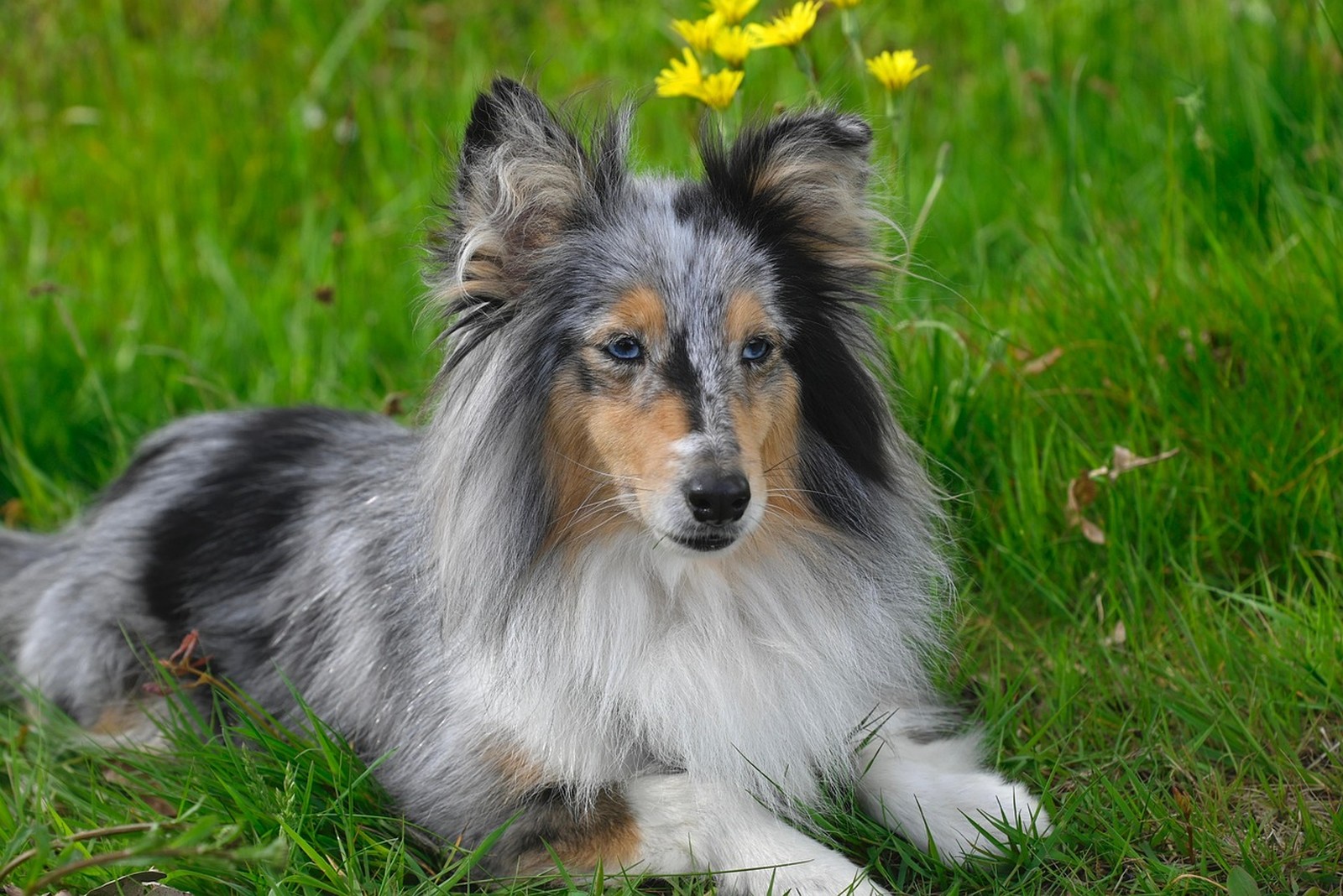
Usually, yes — and the reason lies in what a Sheltie was bred to do. The Shetland Sheepdog is a small herding breed from the Scottish islands, developed to move sheep and ponies on crofts and to keep the farmyard in order. Herding is controlled pursuit in the service of gathering, not catching and killing, so most Shelties look at a cat and see a household member who wanders, not prey. Many Sheltie-and-cat households end up genuinely close, with the dog appointing itself the cat's quiet supervisor. The work of the first weeks is making sure the herding instinct itself does not sour the relationship before it starts.
The Herding Problem, Specifically
A Sheltie manages movement, and a running cat is movement. The sequence to watch for is the hard stare, the dropped head, the circling out to the side, and the attempt to turn the cat back toward the room — sometimes finished with a nip at the heels, the same nip used on a stubborn sheep. To the dog this is tidying. To the cat it is terrifying, and a cat who is repeatedly rounded up will either live stressed or start ambushing the dog from furniture, after which both animals have a grievance. The goal of introductions is not merely preventing injury; it is teaching the Sheltie, early and kindly, that the cat is never a job.
An Introduction Plan Built for a Sensitive Breed
Shelties are sensitive readers of mood, and they learn fast from low-pressure repetitions. Begin with scent: swap bedding between the animals for several days so each one's smell is ordinary before any meeting. Meet through a baby gate or a cracked door next, with the Sheltie on a lead and the cat free to leave at any moment — never carry the cat to the dog. Keep sessions short, and pay the dog lavishly for the behaviours you actually want: glancing at the cat and looking back at you, lying down, choosing a chew. If the stare hardens and the body goes still and forward, you are too close; increase distance rather than correcting a dog who is already over threshold.
Set the House Up So the Cat Can Always Win
The cat needs geography the dog cannot have. Fit a gate the cat can slip through or jump but the Sheltie cannot, keep litter trays and the cat's food in the dog-free zone, and give the cat high routes — shelves, tall scratchers, the tops of cupboards — across shared rooms, because a cat who can go up rarely needs to run along the floor, and running along the floor is what starts the herding sequence. Feed the animals on opposite sides of the same door for the first weeks: each learns that the other's smell predicts dinner, not drama. Keep meetings supervised until you have weeks of the Sheltie choosing to ignore a moving cat, not merely tolerating a sleeping one.
Young Sheltie, Old Cat, and Other Variations
A Sheltie puppy raised with a confident, dog-savvy cat usually needs the least work, because the cat teaches boundaries a person cannot — one swat to a puppy nose, delivered early, is a lesson that lasts. An adolescent Sheltie meeting a shy, elderly cat is the pairing to manage most carefully, since the dog is at peak herding enthusiasm and the cat has the least interest in being managed. In multi-cat homes, introduce the calmest cat first and let the dog build its manners one relationship at a time. If chasing persists despite staged work, a qualified behaviourist is a better spend than more repetitions of a failing setup.
The plan only works when every supervised meeting runs the same way, whichever family member is holding the lead. KinsLe's Care Teams lets you assign the scent-swap days, the gate meetings, and the shared-room sessions as named duties with the same rules attached, so your Sheltie's education with the cat stays consistent and the cat gets the calm, predictable dog it needs.