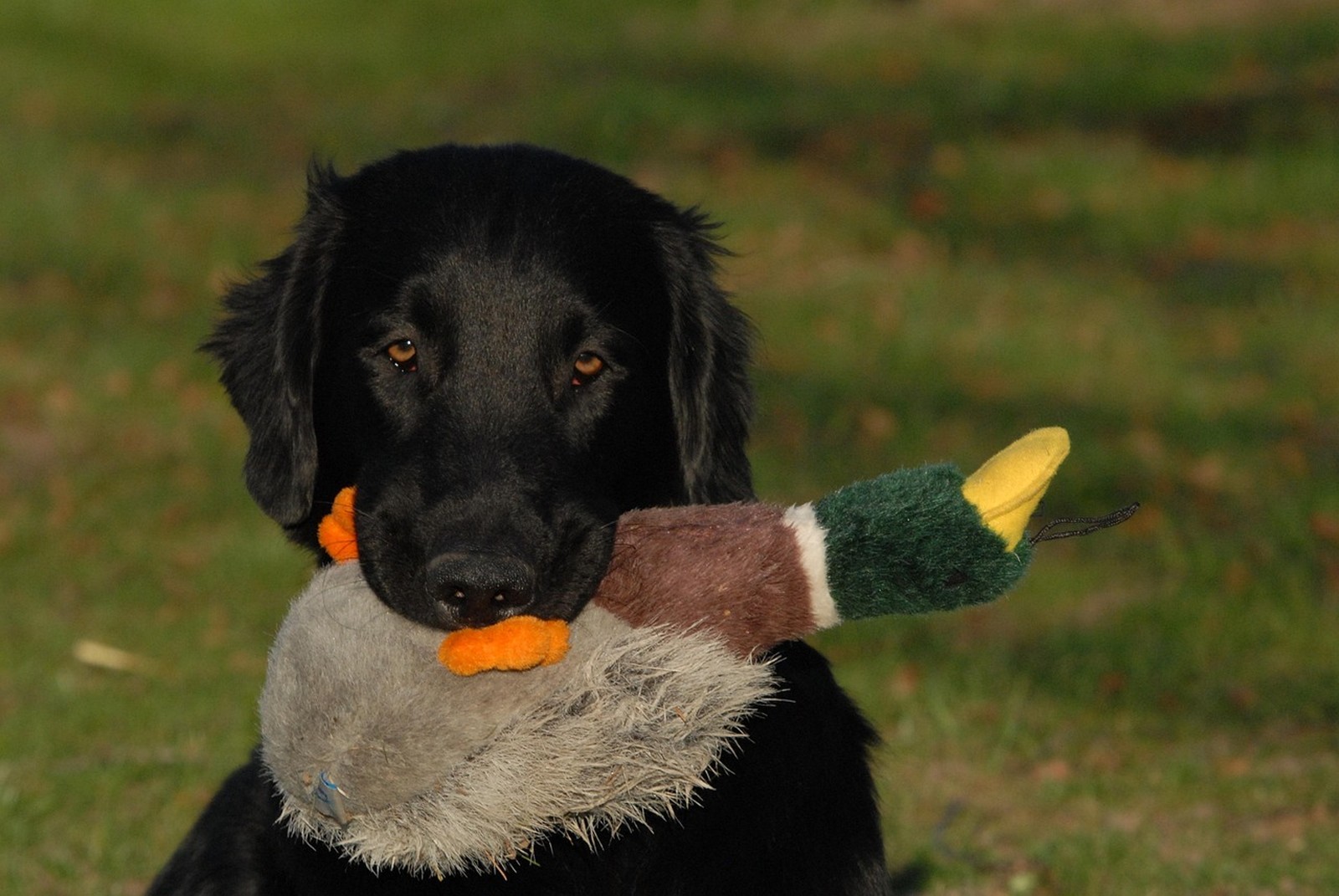
Barking as a Social Activity
Flat-Coated Retrievers sit in the middle of the barking scale for volume of occasions, but near the top for enthusiasm. This is not a suspicious, guarding breed that barks at shadows. A Flat-Coat barks the way he does everything — socially, joyfully, and at full commitment. Visitors are announced like celebrities arriving. A lead being picked up is news worth broadcasting. Another dog barking two gardens away is a conversation worth joining.
Because the motivation is usually happiness or frustration rather than alarm, Flat-Coat barking responds well to training and management — provided his very real needs for exercise and company are met first. An unmet Flat-Coat is a loud one, and no cue fixes an empty day.
The Usual Triggers in This Breed
Greetings lead the list. The breed's famous exuberance means arrivals — yours, guests, the post — trigger barking paired with bouncing, spinning, and tail-swept furniture. It is friendly noise, but it can overwhelm visitors and needs a routine of its own.
Excitement during play and training comes next: many Flat-Coats bark while retrieving, while waiting their turn, or when a game pauses — arousal overflowing. Then there is frustration barking, from a young Flat-Coat behind a barrier watching fun he cannot join, or from a dog whose exercise has been skimped for a few days running.
Finally, boredom and loneliness. This people-focused breed barks to summon company, and a Flat-Coat left alone and under-exercised will often bark in long, rhythmic bouts that neighbours report faithfully.
Channelling the Noise Without Flattening the Dog
The aim is a Flat-Coat who can be quiet on cue, not a dog whose sparkle has been trained out. Start with the diary: proper retrieving exercise, free running in a secure area, and short training games scattered through the day drain the energy that otherwise exits as noise.
Teach quiet as a skill, not a scolding. Let him bark twice at a door knock, then cue quiet, reward the pause generously, and release him to greet calmly if appropriate. Practise the greeting routine itself — a mat to go to, four paws rewarded on the floor — so arrivals have a script he knows.
Give barking an off-switch during play too: pause the game the moment arousal barking starts, resume when he is quiet, and he learns that silence keeps fun moving while noise stops it.
When Barking Signals a Problem Instead
See your veterinarian if barking increases sharply in an adult dog, appears at night with pacing or confusion, or arrives with drooling, destruction, and distress when he is left alone — those patterns suggest pain, cognitive change, or separation anxiety rather than high spirits, and each needs its own response.
Age is worth factoring in. Flat-Coats famously stay puppyish for years, and many owners find the barking peaks in adolescence, when energy, confidence, and opinions all outrun self-control. This is the season to be most generous with exercise and most patient with the quiet training — the dog underneath is learning, even when the volume suggests otherwise, and most Flat-Coats soften noticeably once maturity finally, belatedly, arrives.
In KinsLe, Care Teams helps your household split your Flat-Coat's retrieving sessions, greeting practice, and quiet-cue training into named duties, marked complete as they happen, so his joyful volume meets one consistent answer.