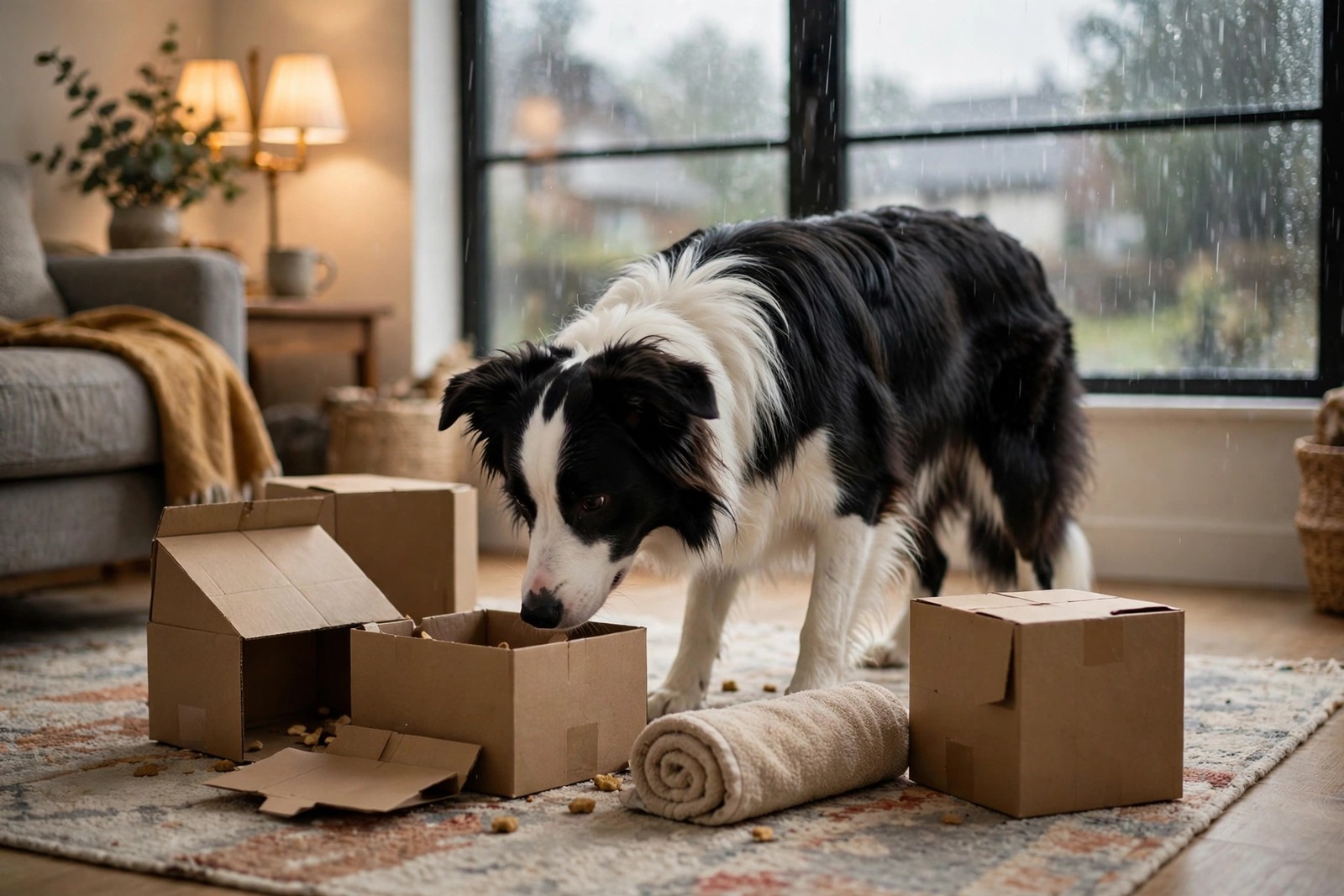
A clever dog left with a short, wet walk and a basket of familiar toys is not tired; that dog is underemployed. What spends mental energy is work the nose and brain must solve afresh: searching, unravelling, remembering and deciding. Build the rainy day around those jobs, in short blocks with rest between them, and the dog that paced at the window by lunchtime will usually be asleep by mid-afternoon.
Lead With the Nose
Sniffing is a high-value activity indoors, because searching for scent is cognitively demanding in a way that chasing a ball is not. Scatter a portion of the dog's normal meal through the room: rolled inside towels, tucked into the folds of a mat of knotted fleece, or sprinkled through a pile of empty cardboard boxes the dog may push around and climb into. Start with food in plain sight, then hide pieces a little deeper over several rounds so the dog succeeds quickly at first and works harder as confidence grows.
Hide-and-seek scales the same idea up. While someone holds the dog, hide a favourite toy — later, hide a person — in another room, then release the dog with a search cue. A dog that has learned this game will work a whole house methodically, checking behind doors and under chair legs, and will finish visibly satisfied.
Problem-Solving That Gets Harder in Small Steps
- Muffin-tin puzzle: place treats in a few cups of a muffin tin and cover each cup with a ball; the dog noses balls aside to reach the food, and later rounds can leave some cups empty so scent, not habit, guides the search.
- Cardboard destruction box: nest treats wrapped in plain paper inside a box within a box, and let the dog rip its way in; supervise closely, remove staples and tape first, and take the box away from any dog that eats cardboard rather than shredding it.
- Lick mat as a downshift: spread a thin layer of the dog's usual wet food or plain yogurt on a textured mat at the end of a session, because repetitive licking settles many dogs after active problem-solving.
Raise difficulty one notch at a time. A puzzle the dog cannot solve at all does not tire the brain productively; it teaches the dog to bark at the puzzle, paw at furniture, or walk away. If frustration signs appear — whining, hard staring, frantic scratching — make the next round easier and end on a win.
Short Trick Bursts, Then Real Rest
Trick practice in bursts of two or three minutes taxes memory and self-control without the physical winding-up of rough play. Teach something new rather than drilling known cues: a chin rest on your palm, backing up between your legs, or holding a toy while you move around. Two or three minutes of genuine concentration, a play break, then a different short burst later in the day suits a clever dog far better than one long session.
Then protect the payoff. Brain work only converts into a calmer dog if sleep follows it, so finish with the chew, a dimmer room and no further invitations to play. Puppies and adolescents can look wired after enrichment when they are actually overtired, and a dog put down for a nap often sleeps deeply and wakes easier to live with.
Rotating So Novelty Does the Work
The same game on the third rainy day in a row is no longer enrichment; it is routine, and routine is cheap for a bright dog to run on autopilot. Keep a list of search games, puzzles and tricks that your dog knows, and deal them out in a different order each wet day, noting which game ran and how settled the dog was afterwards. That rotation is easy to run in KinsLe Care Teams, where each rainy-day activity can be assigned to whoever is home and ticked off with its difficulty noted for the next person.