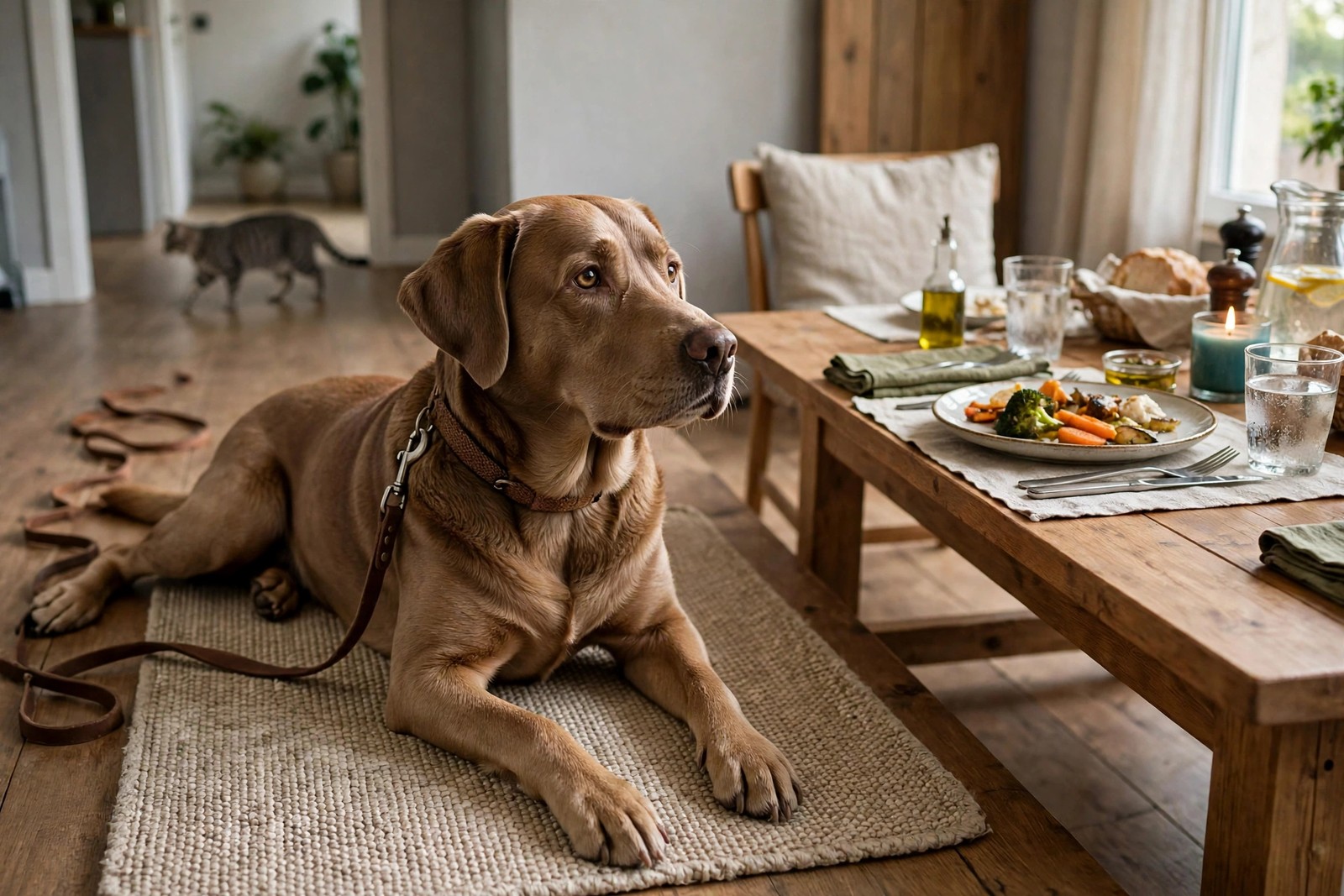
A cat crossing the dining room at dinner combines almost everything that breaks a stay: movement, prey interest, food smells, people seated and distracted, and a route the cat takes every single evening. The way through is a ladder. Your dog earns the cat level only after the levels under it are solid, and every rung is trained away from real dinner first, so the first live performance is a rehearsed one.
Rung One: A Mat Stay Worth Paying For
Teach a settled down-stay on a specific mat or bed until the mat itself predicts good things. Build duration in small steps, ten seconds growing to several minutes, paying frequently at first with food delivered to the mat so getting up is never the profitable move. Add the release word clearly, because a stay with no defined end teaches dogs to self-release whenever they judge the session over. Practise in the room where dinner happens, but at quiet times of day, until your dog can hold the mat while you stand, sit, and move around the table.
Rung Two: Movement and Mild Distractions
Add distractions in rising order: a person walking past the mat, someone carrying a plate, a chair scraping, a door opening, food placed on the table. Keep the dog on a light house line you can step on calmly if it rises, and pay with genuinely high-value food, such as small pieces of cooked chicken or cheese, because mat work near dinner competes with strong smells. If the dog breaks twice at one level, that level is too hard today; shorten the duration or increase distance and end on a success.
Rung Three: The Cat, Managed
Now stage the cat rather than waiting for chance. Let the cat be visible behind a baby gate or across the room at maximum distance, dog on a lead, and reward the exact moment your dog notices the cat and then looks back at you or resettles; that glance-and-choose is the behaviour you are buying. Keep sessions to a minute or two, several times, before removing the gate with the lead still on. Give the cat its own escape route and a high perch in the dining room so it never has to pass within grabbing range of the mat, and feed the cat's dinner away from the dog's station to avoid guarding tension on either side.
At Real Dinner
Station the mat out of the cat's walking route and the serving path, clip the lead on for the first weeks of live dinners, and pay the stay in courses during the meal so the mat competes with the table. If the cat changes route and crosses close, that is a management moment: calmly hold the line, reward heavily, and do not scold a break. Never leave a dog in a stay with a loose cat unsupervised, and dogs with a history of lunging at or chasing the cat need a gate between them at dinner regardless of training, plus advice from a qualified behaviour professional. Reliability here is measured in weeks of boring success, and boring is exactly what you want. KinsLe Care Teams keeps the ladder moving by assigning the short daily practice sessions and dinner-station duty across the household, timestamped, so progress does not stall because everyone assumed someone else had trained that day.