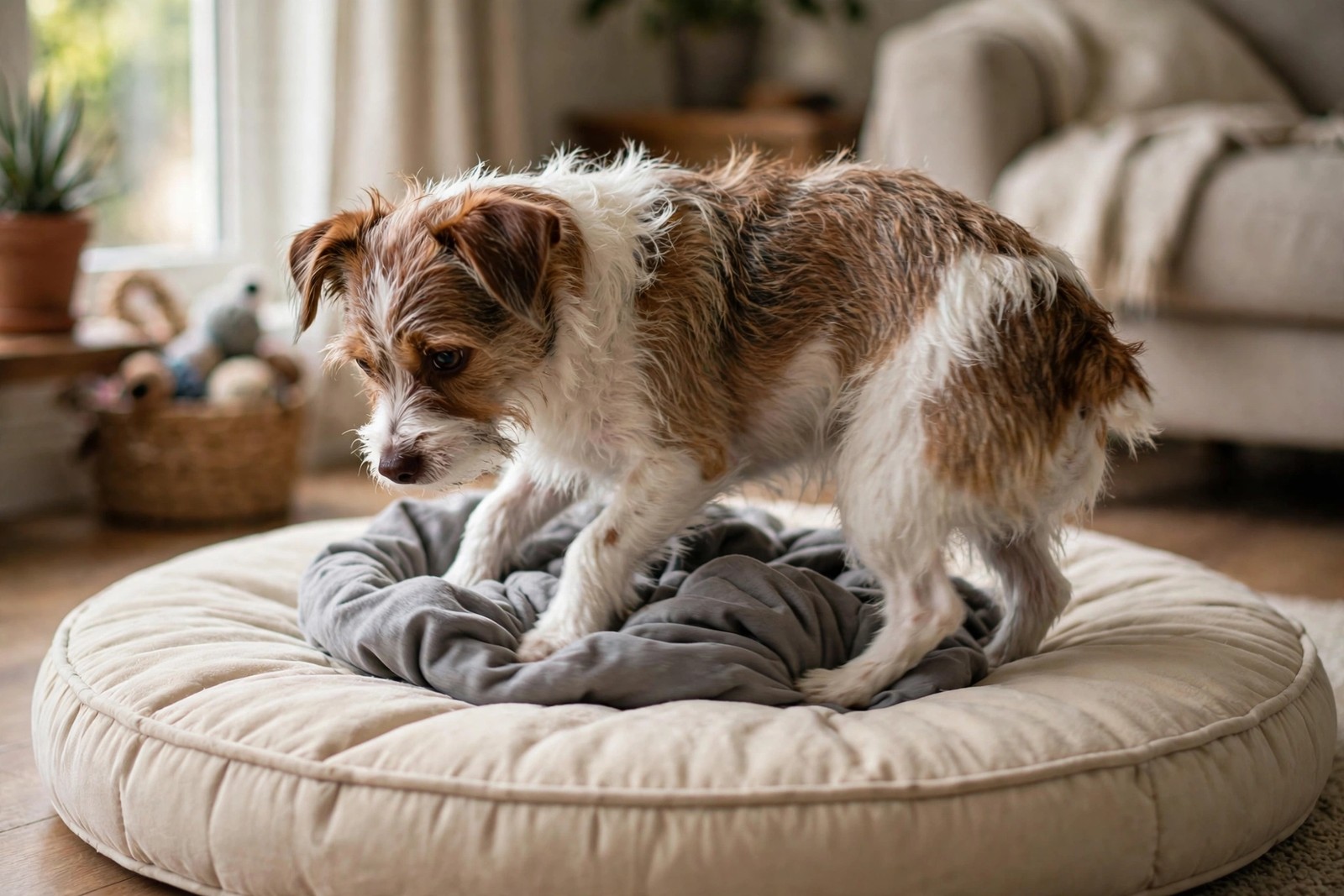
Watch the sequence and the sameness is striking: he turns two or three tight circles on his bed, perhaps paws at the blanket once, then drops into the exact hollow he has made. Outside, the same tight circling appears on the grass before he finally squats. Owners often wonder whether one behaviour explains both, and broadly it does: circling is an inherited preparation routine, used in two different jobs, and in both cases it ends the moment he commits to the spot.
The Bedtime Spin: Nesting Behaviour
Before dogs slept on foam beds, their ancestors slept on ground they had to prepare. Circling trampled long grass flat, pushed aside twigs and debris, and turned the dog through a full survey of the sleeping patch, which would reveal anything sharing it. It also let the dog arrange the hollow to fit a curled body and, outdoors, to settle with nose and back positioned against the wind. The modern version survives intact because it costs nothing and feels right: he circles his bed, sometimes digs or bunches the blanket, then lies down in the direction the circling ended. Softer, larger beds often reduce the number of turns, while a new bed, a washed blanket or a strange room can add extra circuits while he makes the place his. Older dogs may circle longer simply because settling stiff joints into a comfortable position takes more arrangement.
The Outdoor Spin: Choosing the Toilet Spot
Outside, circling is selection and preparation. He is reading scent from previous visits, his own included, checking the ground underfoot, and manoeuvring into a posture and position where he feels secure while vulnerable. Many dogs favour a consistent orientation and a familiar patch of ground, which is why the circling often happens in the same corner of the garden. The turning can also be physiological: movement and circling while the urge builds help some dogs get positioned and ready, and puppies, who have less control, may circle more frantically and for longer before they go. Rushing him through this stage usually backfires; a dog pulled away mid-selection may simply not toilet, then need to go again soon after coming back inside. Give him the minute, keep the lead loose, and let the routine complete.
When Circling Stops Being Ordinary
That kind of spinning is brief, tied to bedtime or toileting, and easy to interrupt with his name or a treat. Pay attention if the circling becomes frequent across the day, happens away from bed and toilet contexts, is hard to interrupt, or grows into tail chasing, fly snapping at nothing, or long repetitive loops. Repetitive circling can be a stress behaviour, a sign of discomfort, or in some dogs part of a compulsive pattern, and new or worsening circling in a senior dog deserves a veterinary check because pain, sensory decline and cognitive changes can all express themselves as restlessness and turning. Film a typical episode, note how often it happens and what surrounds it, and take that record to your veterinarian rather than trying to train the behaviour away before its cause is clear. Sudden circling with a head tilt, loss of balance, vomiting or eyes flicking side to side is an urgent veterinary matter, not a wait-and-see one, because those signs point to a balance problem that needs same-day assessment.
Note his normal pattern now, while it is ordinary: how many turns, at which moments, and how easily he settles afterwards, so any future change stands out clearly. KinsLe's Pet Passport holds notes like these alongside his health records in one organised profile, ready to show a veterinarian exactly how his routine has shifted.