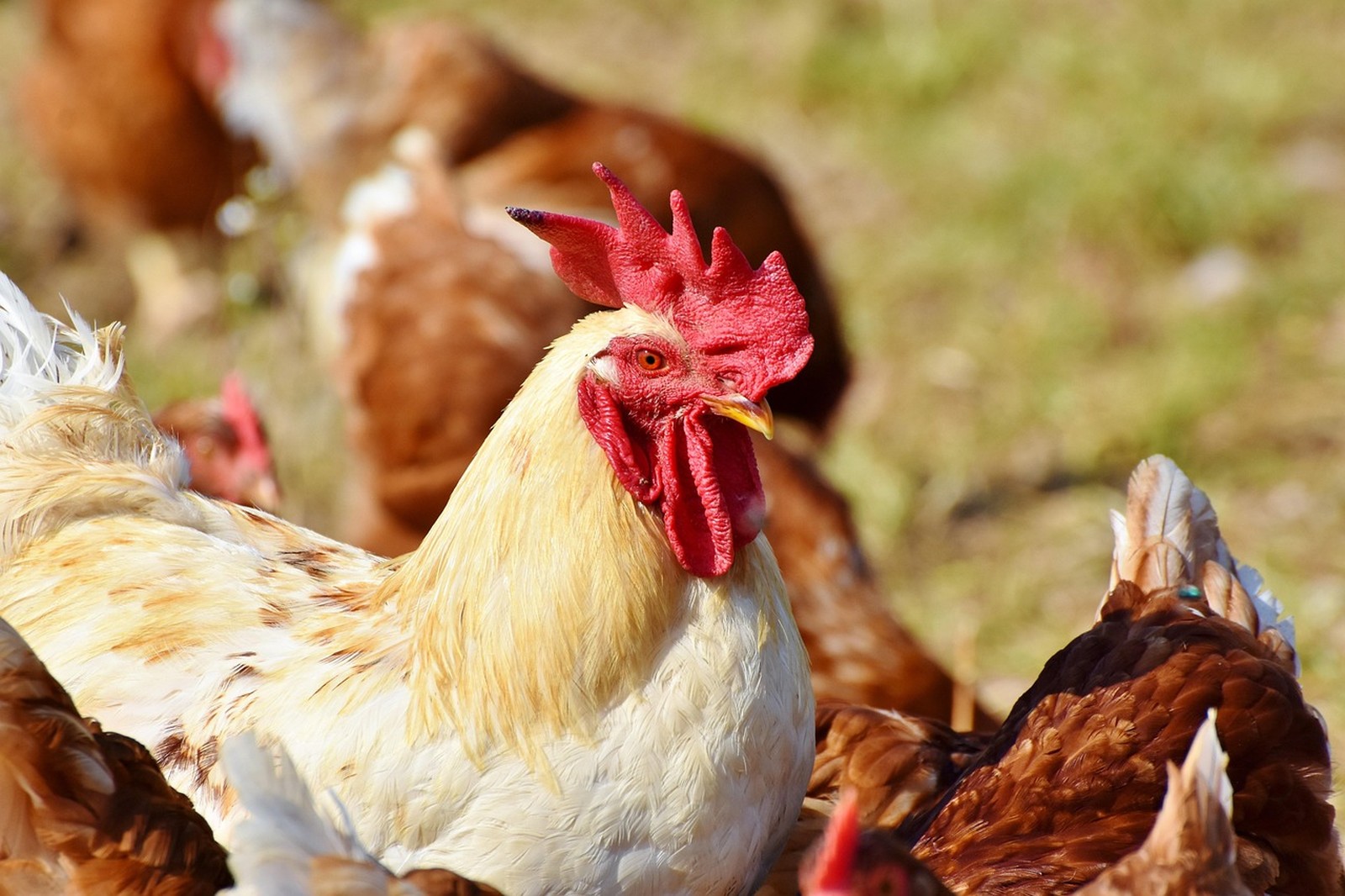
Yes. A free-ranging hen is not a self-feeding hen, and the image of chickens living entirely off the land belongs to an era of very low egg production and large, rich ranges per bird. Modern laying hens have been bred to lay at a rate their ancestors never approached, and each egg exports protein, energy and calcium out of the hen's body. Forage can contribute to that bill; on ordinary pasture, in ordinary weather, it cannot pay it, and hens asked to manage on forage alone lay fewer, smaller eggs, lose condition and start showing the shortfall in their shells, feathers and health.
Why Forage Falls Short
Three nutrients expose the gap. Energy first: a hen ranges, scratches and walks all day, and in cold or wet weather she burns much of what she finds just keeping warm, while winter pasture offers little to find, since insects vanish, grass stops growing and daylight for foraging shrinks. Protein second: eggs and feathers are protein, and while bugs and worms are excellent protein, a hen cannot catch enough of them reliably, day after day, across a whole flock competing for the same ground. Calcium third, and most sharply: a laying hen needs far more calcium than growing birds do, because every shell is built from it, and pasture plants and insects simply do not contain enough. A hen short of calcium lays thin-shelled, soft or shell-less eggs and draws the difference from her own bones.
Range quality varies enormously too: a large, rotated pasture in late spring is rich, while a small, worn run in winter offers very little, because a flock strips the insects and young growth from a fixed area quickly.
What Proper Feed Means in Practice
Make a complete layer feed the flock's main ration, available through the day in a clean, dry feeder, and let the hens regulate their own intake around their foraging. Layer feed is formulated as a complete package for birds in lay, with the energy, protein, calcium and micronutrients balanced together, which scratch grains and kitchen scraps are not: scattered corn and scraps are treats, useful for calling the flock in and for enrichment, but they dilute the ration if they become a large share of the day. Offer oyster shell separately in its own container so each hen can take extra calcium when she needs it, and provide insoluble grit in another container, because hens grind feed in the gizzard and free-range birds on soft ground do not always find enough suitable grit for themselves.
Match the feed to the life stage. Chicks need a starter feed, growers a grower feed, and neither should be on layer feed, because its calcium level suits laying hens and is too high for birds not yet laying. Keep feed dry, stored away from rodents, and clean water available at all times.
Reading the Flock for Shortfalls
Your hens will tell you when the ration is failing. Falling egg numbers outside a moult or the winter slowdown, thin or soft shells, eggs eaten by the flock, feather pecking, hens losing weight under their feathers and birds crowding the feeder desperately at refill time all say the same thing: intake is not meeting output. Check body condition by feeling the breastbone and the muscle either side of it, and check feeder space, range condition and season before assuming illness. Persistent problems, or hens who stop eating, look hunched or lose condition quickly, deserve advice from a vet familiar with poultry.
Free-ranging is still worth doing well: it gives hens exercise, varied grazing and dust-bathing ground. It is a supplement and an enrichment, layered on top of a complete ration, not a substitute for one.
In a household where different people open up, feed and shut in the flock, the daily basics are easy to assume and easy to miss. KinsLe's Care Teams lets you assign the morning feed check, the shell and grit top-up and the evening water check to named helpers, with every completed task marked complete with a timestamp.