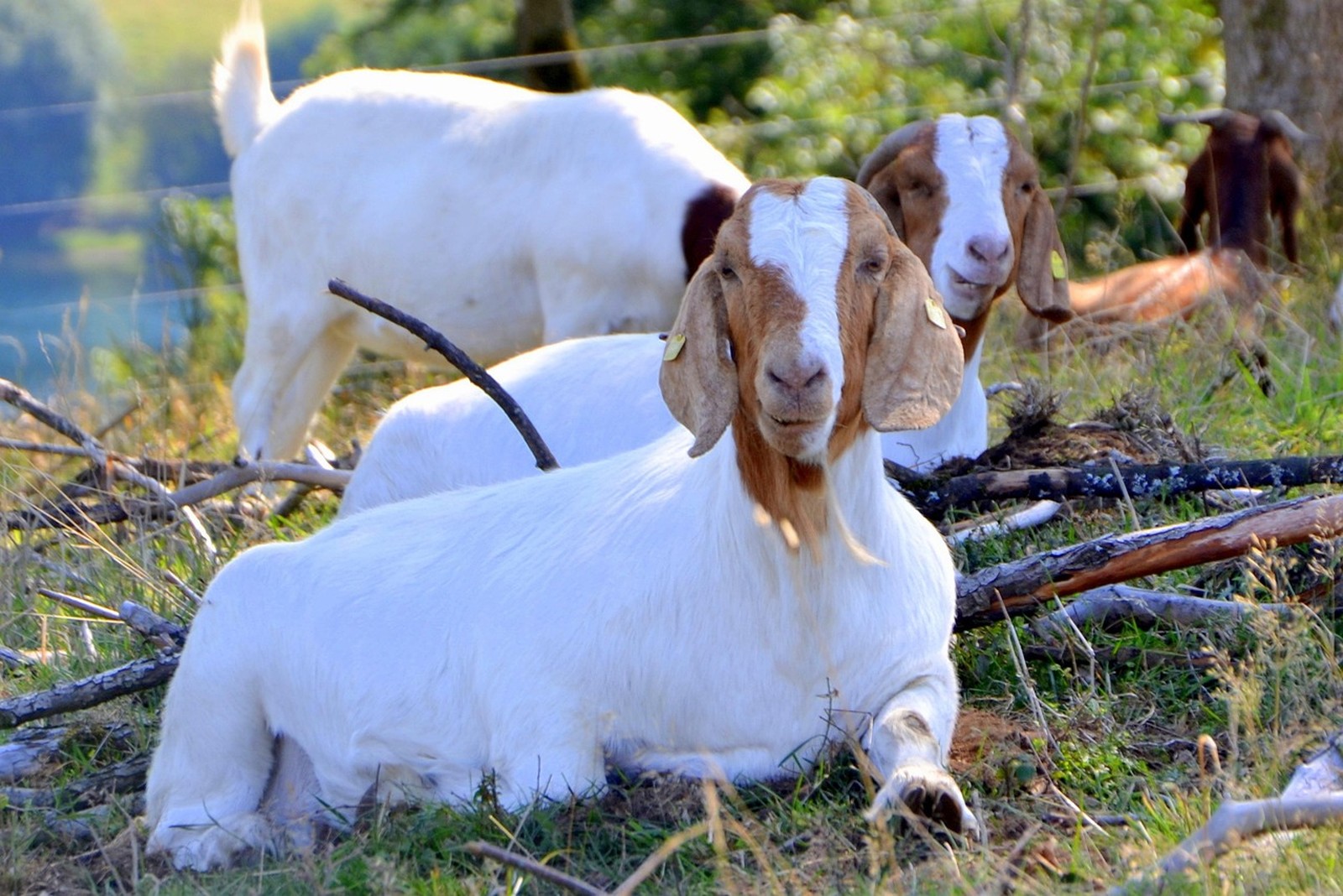
Yes — forage, hay and browse alone rarely cover a goat's full mineral needs, so a mineral supplement is a standard part of goat keeping rather than an optional extra. The detail that decides whether the supplement actually works is its form and formulation: goats need loose minerals made for goats, offered free-choice so each animal can take what it needs, and the copper content matters more than almost anything else on the label.
Why Loose Minerals Beat a Block Alone
A hard mineral block asks a goat to lick a rough surface with a smooth tongue, and intake from blocks alone often falls short — the goat simply cannot lick off enough in a day. Loose minerals solve that problem: goats take them in by the mouthful, intake is steadier, and you can see from how fast the feeder empties whether the herd is actually consuming them. A block can sit in the pen as a backup, but it should not be the only source. Choose a loose product formulated for goats, check that copper is listed among its ingredients, and be wary of all-stock or sheep minerals, which are blended for different needs.
Copper, Sheep and the Shared-Pen Problem
Goats need considerably more copper than sheep, and minerals formulated for sheep keep copper very low because copper that suits a goat can harm sheep. That single fact drives two common mistakes. Feeding sheep minerals to goats quietly under-supplies copper for as long as the bag lasts, and running goats and sheep together on goat minerals puts the sheep at risk instead. If you keep both species, feed minerals separately — each group in its own pen or feeding area — rather than compromising with one shared feeder. Signs often linked with poor mineral status include a dull, faded or rough coat, hair that loses its colour, and a herd that generally looks unthrifty, and any of those is a reason to review the whole feeding programme with your vet rather than simply adding more of everything.
Setting Up the Feeder So Goats Actually Use It
Placement and dryness decide intake as much as the product does:
- Put loose minerals in a covered feeder under shelter, raised off the ground, where rain cannot turn them into a solid, ignored cake.
- Keep the feeder near where goats loaf and drink, but away from hay racks, so spilled hay and droppings do not contaminate it.
- Tip out damp, clumped minerals and refill with fresh, dry product; goats are picky and often refuse stale or wet minerals.
- Offer the minerals free-choice at all times rather than mixing a set amount into feed, so shy goats low in the herd order can still take their share.
- Watch consumption for a week after any change of product — a sudden drop usually means the new minerals are unpalatable or the feeder has moved somewhere the goats dislike.
Regional Questions Worth Asking Locally
Selenium is the clearest example of a mineral where the right answer depends on your map: soils in some regions are selenium-poor and in others naturally rich, and both too little and too much cause problems, so the correct product strength is a local question. Ask your vet or extension adviser which formulation suits your area before switching products, and mention your whole setup — pasture type, hay source, any concentrate feed, and whether you keep sheep. Keep a simple record of which product you fed, when you changed it and how the herd's coats and condition responded over the following months, because that history turns a vague worry into a conversation your vet can act on. Goat keepers who put the weekly feeder check, the refill and the product-change note on one shared list rarely lose track of any of them, and KinsLe Care Teams helps by letting you assign those mineral duties for each pen to a named person, with every completed check marked complete with a timestamp.