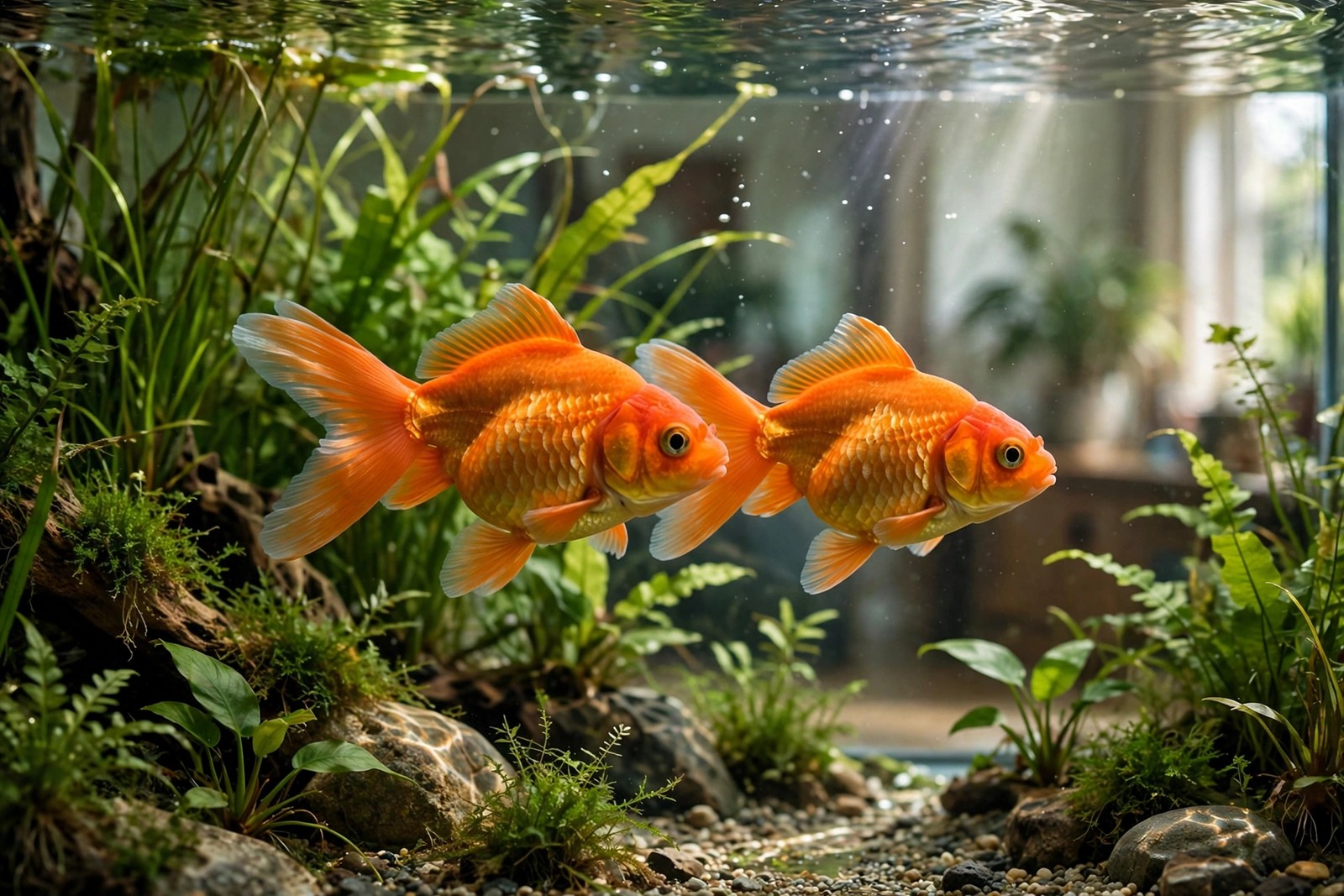
Goldfish are not solitary fish by nature. In ponds and in the wild carp family they come from, they spend their days in loose groups, grazing the bottom together, investigating the same patches of weed, and taking comfort cues from each other; a companion darting for cover is information, and calm feeding neighbours are information too. In a tank, a pair of goldfish will often shadow each other around the aquarium, rest near each other, and feed with more confidence than a single fish that startles at shadows. Calling that the opposite of loneliness is fair, even if a goldfish's inner life is simpler than a dog's.
Why So Many Goldfish Live Alone Anyway
The lonely goldfish is usually a space story, not an owner story. Goldfish grow far bigger than their shop size suggests — fancy types become round, heavy-bodied adults and single-tailed types can grow longer than a dinner fork — and they produce a great deal of waste for their size. Every added fish multiplies the filtration, water-change volume, and swimming room required, so a setup that honestly suits one goldfish may be genuinely too small for two. Adding a companion to an undersized tank trades a possible social gain for a definite water-quality loss, and poor water harms goldfish faster than solitude does. Company is the goal; adequate volume comes first.
Reading a Single Goldfish Fairly
Do not diagnose loneliness from one quiet afternoon. A content single goldfish cruises the whole tank, forages in the gravel, investigates you at feeding time, and rests in different spots. A fish who hides most of the day, sits clamped on the bottom, or surges repetitively up and down the glass deserves a checklist before a companion is bought: test the water first, since ammonia and nitrite cause exactly that behaviour, then look at temperature, oxygen, diet, and whether the fish is being startled by a bright, bare tank. Enrichment helps a single fish a great deal too — varied foods, rearranged decor, plants to graze, and your own regular presence at the glass all give its day more shape.
Adding a Companion the Safe Way
Match like with like: keep round-bodied fancy goldfish with other fancies, because fast single-tailed fish will beat them to every mouthful, and avoid mixing very different sizes where the smaller fish gets outcompeted. Quarantine a new fish in a separate setup for a few weeks before it joins your established fish, since shop fish can carry parasites and infections that only show under stress. Introduce into the main tank with the lights low, feed both fish well, and watch the first days for chasing, nipping, or one fish monopolising food, all of which usually settle but occasionally mean the pairing needs rethinking.
A pair of goldfish is a long-term commitment to bigger water changes and closer testing, shared best as a household routine rather than a solo chore. That is where KinsLe Care Teams fits naturally, letting you assign the weekly partial change, the filter rinse, and the water test to named helpers with each job stamped complete, so two growing fish get the steady water their companionship depends on.