
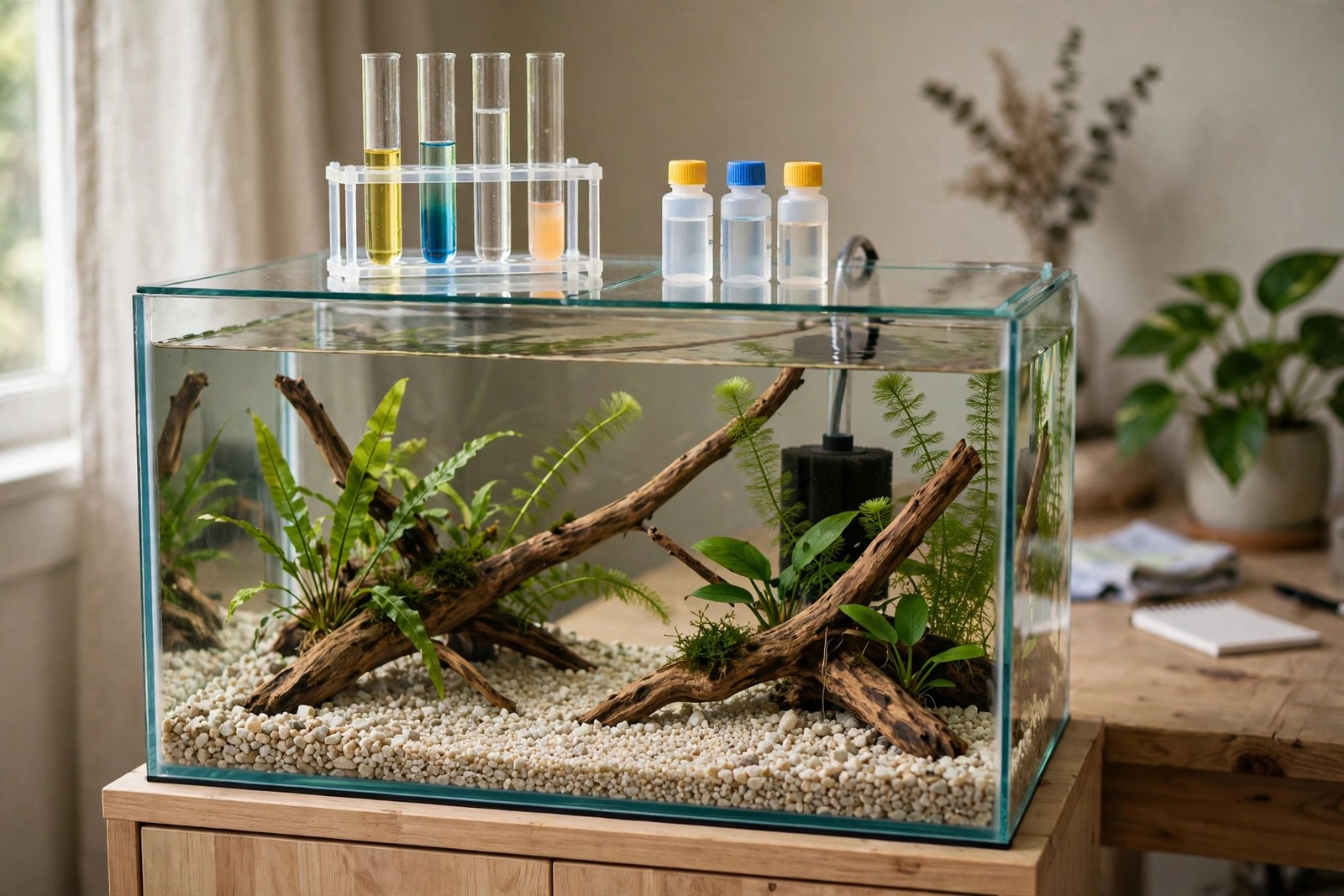
Yes — cycling your tank before adding fish is the safest path, and it's worth the patience. An uncycled tank has no established bacteria colony, so the ammonia your fish produce has nowhere to go. It spikes, burning gills, damaging skin, and stressing fish to the point of illness or death, and nitrite follows with the same effect. Cycling first — running the tank empty with an ammonia source until beneficial bacteria are established — means your first fish move into water that can actually protect them.
What Goes Wrong in an Uncycled Tank
New tank syndrome is the classic beginner heartbreak: fish look fine for two or three days, then start gasping at the surface, refuse food, sit listlessly on the bottom, or show reddened gills and streaked fins. Those are signs of ammonia and nitrite poisoning — the waste they produce is literally burning them. Some hardy species survive it, but "survived" often means damaged gills and a shortened life. A cycled tank eliminates this entire category of disaster. The weeks spent cycling feel long, but they're far shorter than the weeks spent nursing poisoned fish.
How to Fishless-Cycle, in Plain Steps
Set the tank up completely — substrate, filter running, heater on — then add an ammonia source: a pinch of fish food daily, or pure aquarium ammonia dosed to about 2 ppm. Test ammonia, nitrite, and nitrate every day or two. First ammonia rises, then falls as nitrite climbs; then nitrite falls too while nitrate accumulates. The tank is cycled when a dose of ammonia converts fully to nitrate within 24 hours with ammonia and nitrite both reading zero. Do a partial water change to bring nitrate down, then add fish — gradually. Even a cycled tank should get a few fish at a time, a week apart, so the bacteria colony scales with the bioload.
If You Already Added Fish
Don't panic — fish-in cycling is survivable with discipline. Test ammonia and nitrite daily, and do a 25 to 30 percent water change whenever ammonia rises above about 0.25 ppm. Feed sparingly (uneaten food becomes tomorrow's ammonia), use a conditioner that detoxifies ammonia if you have one, and resist adding more fish until readings stay at zero for a full week. It's slower and more stressful than fishless cycling, which is exactly why cycling first is the recommendation — but with daily attention, most fish come through it.
Log It All in Your Pet Passport
Cycling runs on data, and KinsLe's Pet Passport gives that data a permanent home. Record your daily readings, your start date, and the day ammonia and nitrite first held at zero — that history proves your tank is genuinely ready, and months later it helps you diagnose changes ("nitrite last spiked when we replaced the filter media"). Pet Passport on KinsLe preserves your start date, daily ammonia and nitrite readings, and the morning both first held at zero, giving you a baseline to revisit after later filter changes.