
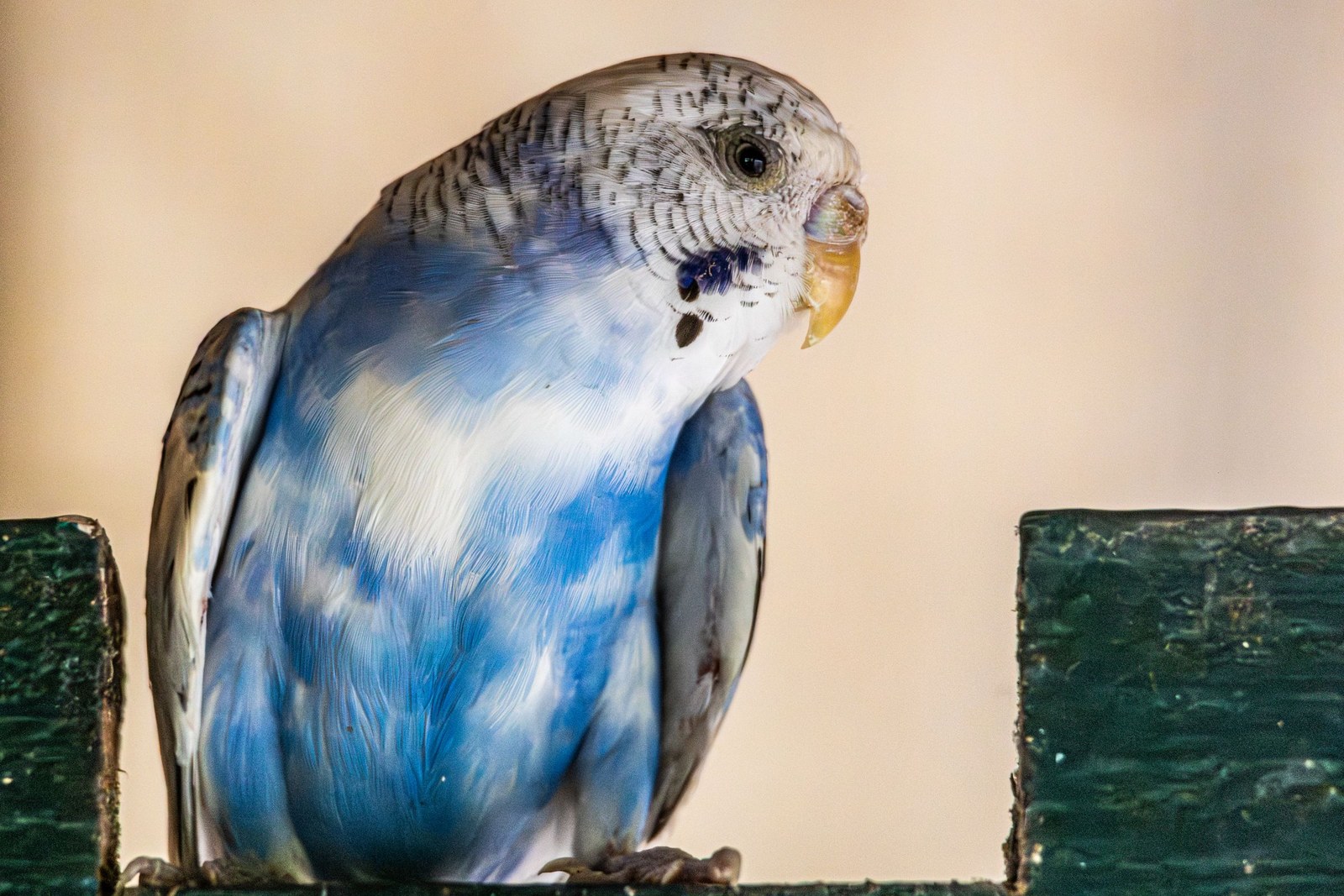
In most cases, no — you do not need to trim your budgie's beak yourself, and nails only need attention when they become overgrown, needle-sharp, or start catching on toys and cage bars. A healthy beak maintains its own length through chewing and everyday use. Because a small slip can injure the living tissue inside a budgie's nail or beak, most owners are safest letting an avian vet or experienced groomer handle trims — and show them what to watch for at home.
Why beaks and nails overgrow
A budgie's beak and nails grow continuously, like your fingernails, and normal wear balances that growth. Chewing wooden toys, working at a cuttlebone, and gripping varied perches do most of the maintenance automatically. Overgrowth tends to appear when wear drops — a sedentary bird, a soft diet with little to chew — or when an underlying health issue changes how the beak grows. That is why a suddenly overgrown, flaky, or crooked beak is worth more than a trim: it is a reason for a vet check, since the beak may be reporting a problem rather than being the problem.
Signs it is time to book a trim
- Nails curving so far the toe twists sideways on a flat surface
- Nail tips snagging on rope perches, toys, or your clothing
- A beak tip that looks long, uneven, or misaligned when the beak is closed
- Your budgie struggling to climb, perch, or crack seed it handled easily before
Between visits, keep wear opportunities in place: natural wood perches, chewable toys, a cuttlebone or mineral block, and a textured grooming perch near the food cup.
Why DIY trimming is risky in a bird this small
A budgie nail contains a blood vessel, the quick, and in pale nails it is just visible; in dark nails it is guesswork. Cutting into it is painful and bleeds briskly — a serious matter in a bird weighing about an ounce. Beaks are more delicate still: they have a rich blood and nerve supply, and reshaping one incorrectly can crack it or affect how the bird eats for life. Add a struggling, flapping patient and even confident owners can cause harm. A professional trim is quick and inexpensive, and a good vet will happily teach you the safe parts of home care.
If a nail ever bleeds at home
Stay calm, apply gentle pressure with a clean cloth, and use styptic powder or plain cornstarch on the nail tip if you have it. Keep the bird warm and quiet, and call your avian vet for advice — promptly if bleeding does not stop within a few minutes. This is first aid, not a fix; a vet should still check a bird that has lost noticeable blood.
How KinsLe helps
KinsLe's Pet Passport is your budgie's records packet — vaccines, medications, allergies, and documents in one place — and it is a handy home for grooming and vet visit records too, ready to share with your vet or sitter when they need the full picture. Note each professional trim, what was found during it, and the date of the next check in your Pet Passport on KinsLe, so a new clinician sees your budgie's beak history at a glance.