
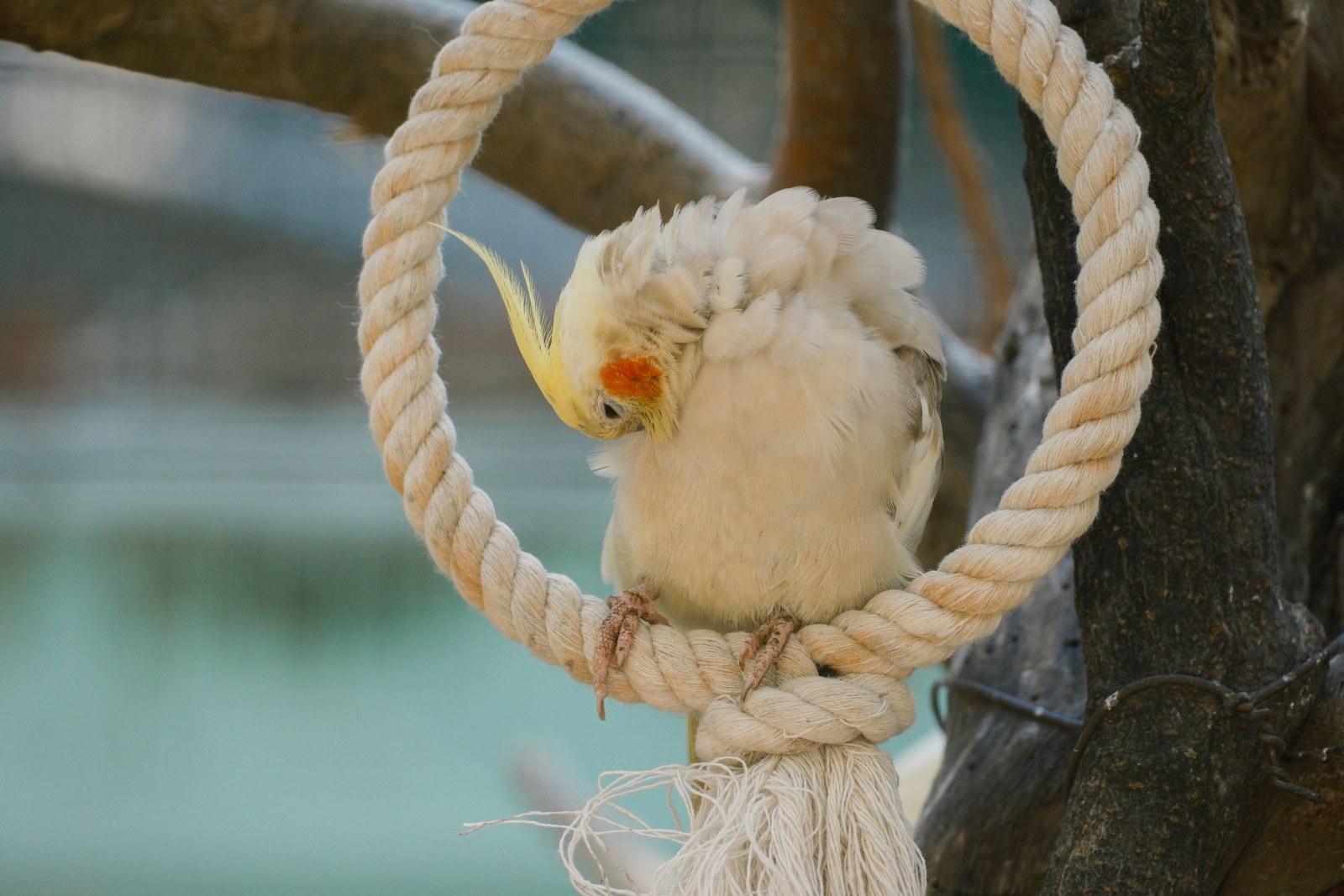
Your cockatiel needs different kinds of perches because a bird stands nearly every waking and sleeping hour, and gripping the exact same diameter all day strains the same joints and pressure points — the avian equivalent of you standing in one pair of stiff shoes forever. Varied diameters and textures make your cockatiel shift its grip constantly, exercising its feet and spreading pressure the way branches do in the wild.
What variety actually looks like
A good cockatiel setup mixes three or four perch types across the cage:
- Natural wood branches (bird-safe woods such as manzanita or java wood) with gentle bumps and width changes — the workhorse perch
- A rope perch, soft and forgiving, great for a sleeping spot
- A grooming or textured perch near the food cup, which helps keep nails and beak tips in shape through normal use
- One flat platform perch, where your cockatiel can rest with feet fully open — especially kind for older birds
Diameters should mostly sit in the half-inch to one-inch range for a cockatiel, with the foot wrapping about two-thirds of the way around rather than the toes meeting underneath.
What to avoid
Skip sandpaper perch covers; they are marketed for nail care but mainly irritate the soft underside of the foot. Be cautious with perfectly smooth plastic dowels as the only option — they offer no grip variation at all. And inspect rope perches regularly: once threads fray, tiny loops can catch a toe or be chewed and swallowed, so a worn rope perch should be trimmed or replaced promptly, not left "for one more month."
Placement matters too
Feet are only part of the story. Put the most comfortable perch up high for sleeping, since cockatiels roost at the top of the cage at night. Keep perches from sitting directly over food and water cups, or breakfast will share space with droppings. Leave enough tail clearance behind each perch — a cockatiel's long tail feathers dragging on bars or a wall wear and break quickly.
Signs your perch setup needs a rethink
Watch for your cockatiel favouring one foot, sitting fluffed low on the cage floor, developing red or shiny spots on the foot's underside, or becoming reluctant to move around the cage. Any limping, swelling, or sores deserve a prompt visit to an avian vet rather than a wait-and-see approach — foot problems escalate quietly in small birds. Simple perch changes help prevention, but they are not a treatment for an injury or infection.
How KinsLe helps
KinsLe's Care Teams let you turn perch care into a shared routine: assign a weekly perch check and cleaning as a named duty — feeding, walks, meds, and grooming tasks all work this way — and each completion is marked with a timestamp, so you can see at a glance that the rope perch really was inspected this week. Write that rotation into the Care Teams plan on KinsLe: the weekly rope-perch inspection and perch cleaning go to a specific person in your household each week, and every finished check sits logged with a timestamp beside its duty.