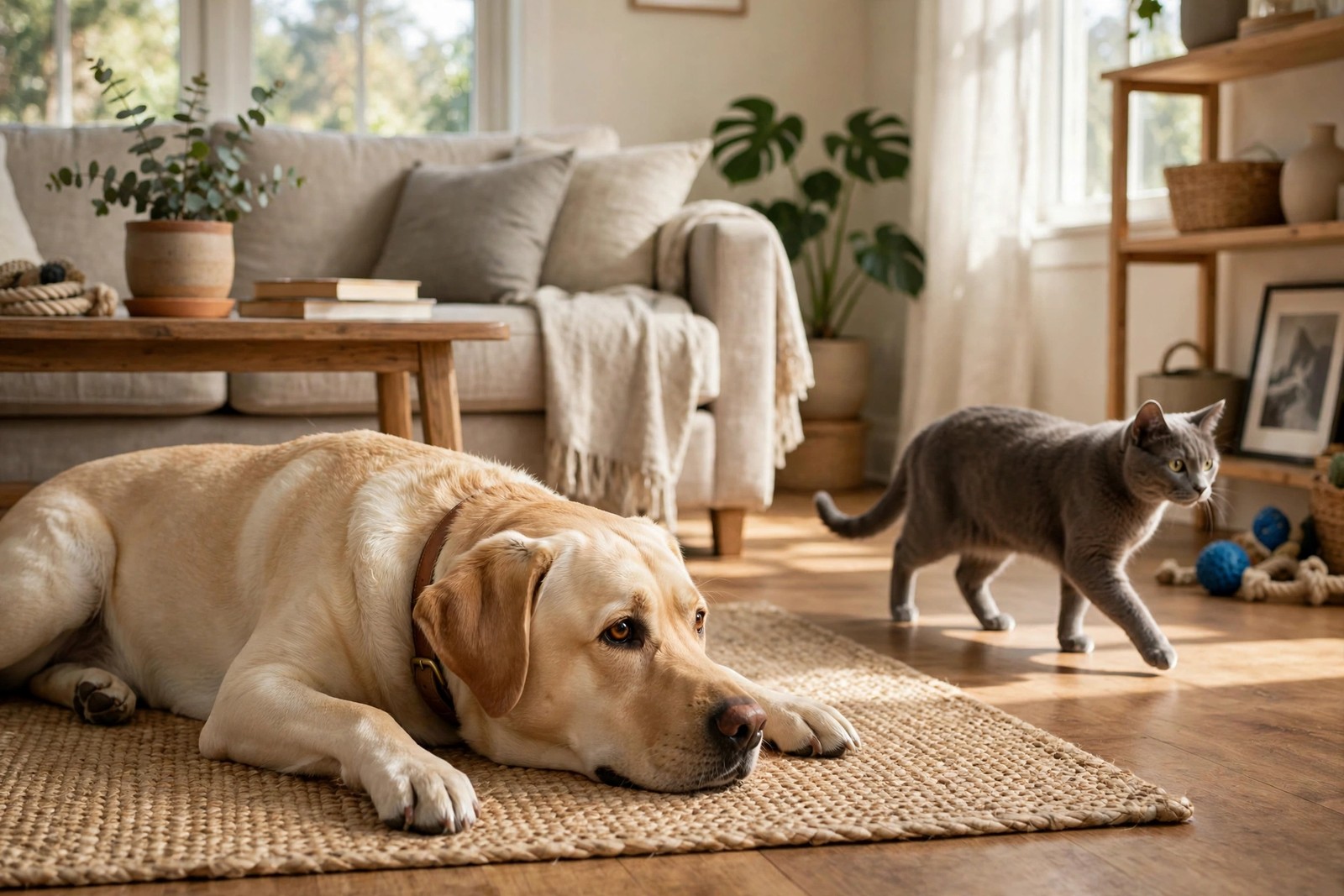
Labrador Retrievers are among the easier large breeds to settle with a cat, and many Labs end up sharing sofas and even beds with the household cat. The breed's difficulties are almost never about hostility. Labs are sociable, mouthy and physically enthusiastic, and a young Lab expresses friendship by bouncing, pawing, licking and inviting wrestling — a style of greeting that many cats find alarming. The work of the first several weeks is therefore not defusing aggression but teaching exuberance control: the cat is scenery, not a playmate, until the cat itself decides otherwise.
The Adolescent Lab Is the Whole Challenge
Puppy Labs are small enough that a cat can simply walk away, but the adolescent phase is when introductions succeed or stall. A teenage Lab may weigh nearly as much as an adult while still behaving like an oversized puppy, and that combination produces the classic problems: chasing a fleeing cat for the joy of the game, body-slamming during play, stealing the cat's toys and food, and sweeping ornaments off tables with a tail that never stops. Plan introductions around this stage honestly. Exercise comes first — a Lab who has fetched, swum or done ten minutes of training will lie on a mat and watch the cat; a rested Lab will rehearse bouncing. Feed the two animals in separate rooms from day one and keep it that way, because a food-obsessed Lab will empty a cat's bowl in seconds and guarding arguments start over exactly that kind of theft.
Staging the Meetings the Lab Way
Labs are famously food-motivated, which makes the standard staged introduction unusually trainable with this breed:
- Begin with scent swaps and feeding on either side of the cat's safe-room door, letting the Lab learn that the cat's smell predicts meals and treats.
- Move to barrier meetings with the Lab on a leash, rewarding every glance at the cat that turns back to you, and every settle on the mat, with high-value treats.
- Practise a rock-solid recall and a 'leave it' away from the cat first, then use them in short shared-room sessions where the cat can leave at any moment.
- Keep early sessions to a few minutes and end them yourself while the Lab is still calm, rather than waiting for bouncing to start.
- Let the cat set the pace of closeness — a cat who chooses to head-butt a settled Lab is building the relationship; a cat carried to meet the dog is just being frightened.
When the Cat Fights Back, and When Friendships Form
A confident cat often educates a young Lab faster than any owner: one swat on the nose, delivered to a puppy, is a lesson Labradors tend to remember. Protect the Lab's eyes by keeping early meetings supervised and the cat's escape open, though — a cornered cat aims for the face. Watch for the turning points that say the relationship is working: the Lab sighing and lying down in the cat's presence, the cat walking through the room without detouring, and both animals choosing to rest in the same sunny spot. Some pairs become genuine companions who greet each other daily; others settle into polite indifference, which is also a complete success. Keep tails, paws and energy in mind as the Lab ages — senior Labs usually mellow into excellent cat housemates, while a new kitten arriving in an elderly Lab's home deserves the same staged start in reverse. Families who split the work — one person on pre-meeting exercise, one supervising sessions, one handling separate feeding — keep the routine consistent even on busy days, and KinsLe Care Teams makes that split easy by letting you assign each recurring duty for both pets to a named person, with completed tasks marked complete with a timestamp.