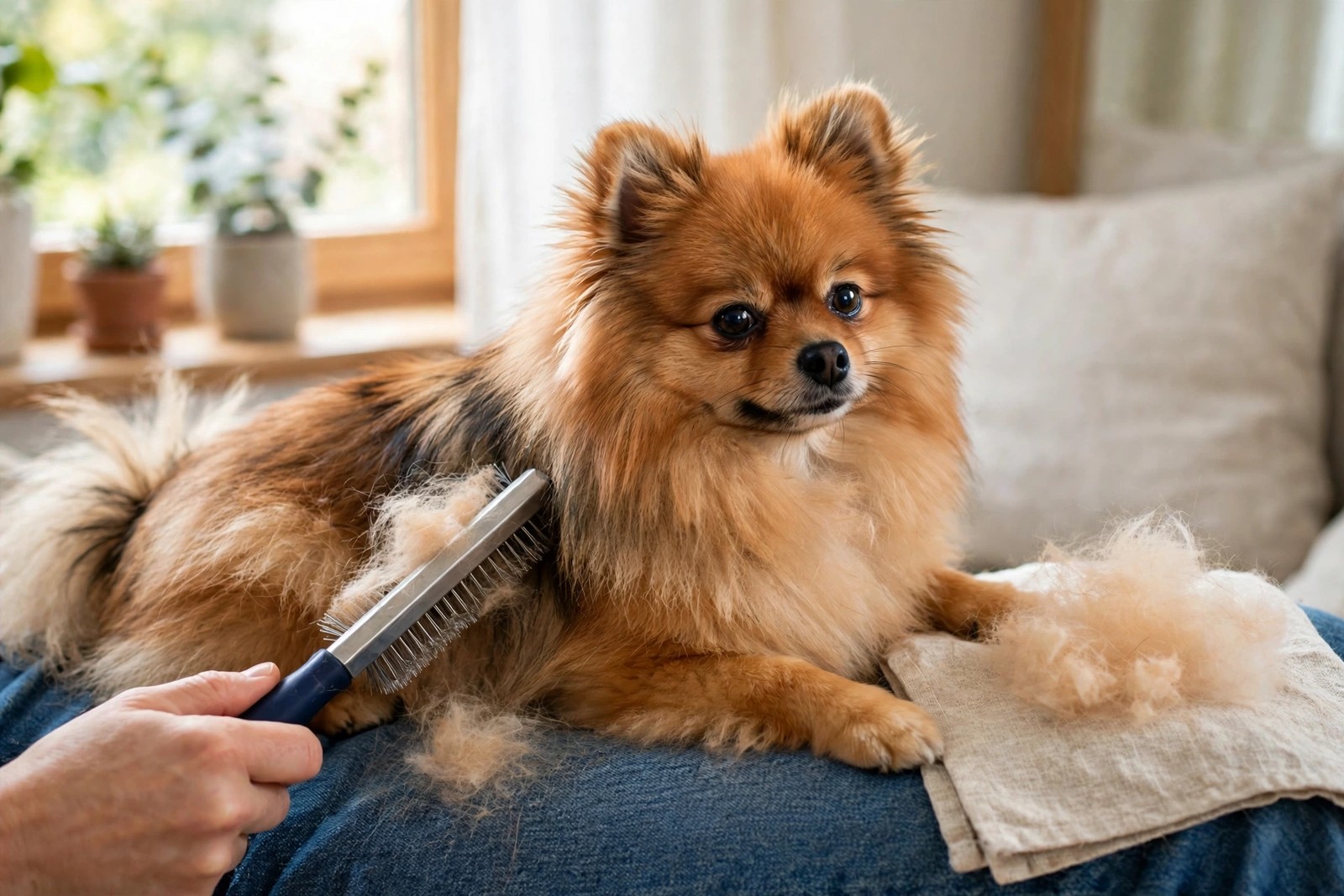
Yes, Pomeranians shed a lot for such a small dog, and owners who expect a handbag-sized breed to mean handbag-sized shedding are usually surprised within the first season. The Pomeranian's glory is a double coat: a dense, soft undercoat that insulates, topped by a longer, harsher outer coat that stands away from the body and creates the breed's round silhouette. Both layers shed. Hair releases steadily through the year, and then, typically in spring and autumn, the undercoat blows out in a heavier seasonal shed that fills brushes, drifts into corners and coats clothing for a few weeks at a time.
Brushing to the Skin: The Skill This Coat Demands
Surface brushing is a frequent mistake with this breed: the brush skims the outer coat, the dog looks fluffy, and meanwhile the undercoat near the skin packs into felt that traps moisture and pulls. Brush three times a week normally, and daily during a coat blow, using line brushing — part the coat in sections, hold the hair above the line back with one hand, and brush the exposed layer from the skin outward, then move the parting down. Mats start behind the ears, in the armpits, at the collar line and in the trousers at the back of the thighs, so check those four places every session even when time is short.
The Coat Blow and the Puppy Uglies
During a blow, work in short, frequent sessions rather than one marathon: ten relaxed minutes clears a section properly, keeps the skin visible so you can check it, and ends before a small dog's patience does. Loose undercoat comes away in soft clumps; that volume is normal and not a sign of poor health, though bald patches, sores, itching or a sour smell are reasons for a vet visit. Puppies add their own chapter: as the puppy coat gives way to the adult double coat, many young Pomeranians pass through a lanky, patchy stage owners nicknamed the puppy uglies, when the dog can look oddly thin-coated for a while before the full adult coat grows in. Brushing gently through that stage builds the handling habit the adult coat will demand.
Why You Should Not Shave a Pomeranian
Owners frustrated by shedding sometimes ask for the coat to be clipped very short or shaved, and groomers usually push back, for good reasons specific to double coats:
- The two layers grow at different rates, and a shaved coat can regrow patchy, with undercoat outpacing the guard hairs that give the coat its texture.
- The coat insulates in both directions, shielding skin from sun and heat as well as cold, so a shaved Pom is more exposed, not cooler and more comfortable.
- Shedding is not solved by cutting: the follicles still cycle, the hairs are just shorter, and the regrowth may feel denser and mat faster.
- Damaged double coats sometimes take a very long time to recover their original texture, and a minority never fully do.
If the coat feels unmanageable, the better route is a thorough professional de-shedding groom followed by keeping up the three-times-a-week home routine, which is far quicker once packed undercoat is cleared.
The Household Reality of a Small Heavy Shedder
The total volume is smaller than a large breed's — a Pomeranian simply has less dog to shed from — but the hair is fine, light and airborne, so it travels: onto dark clothing, across hard floors and into bedding. Washable throws on favourite chairs, a lint roller by the door and a quick vacuum of the dog's main rooms during a blow keep it civilised. Bathing every few weeks with a thorough brush-out before and after loosens dead undercoat on your schedule instead of the sofa's. Homes that split the routine — one person brushing, another vacuuming during blows — cope noticeably better than homes where it all falls to whoever complains first, and KinsLe Care Teams supports that split by letting you assign the brushing sessions and the blow-season extras as recurring duties for a named person, each marked complete with a timestamp.