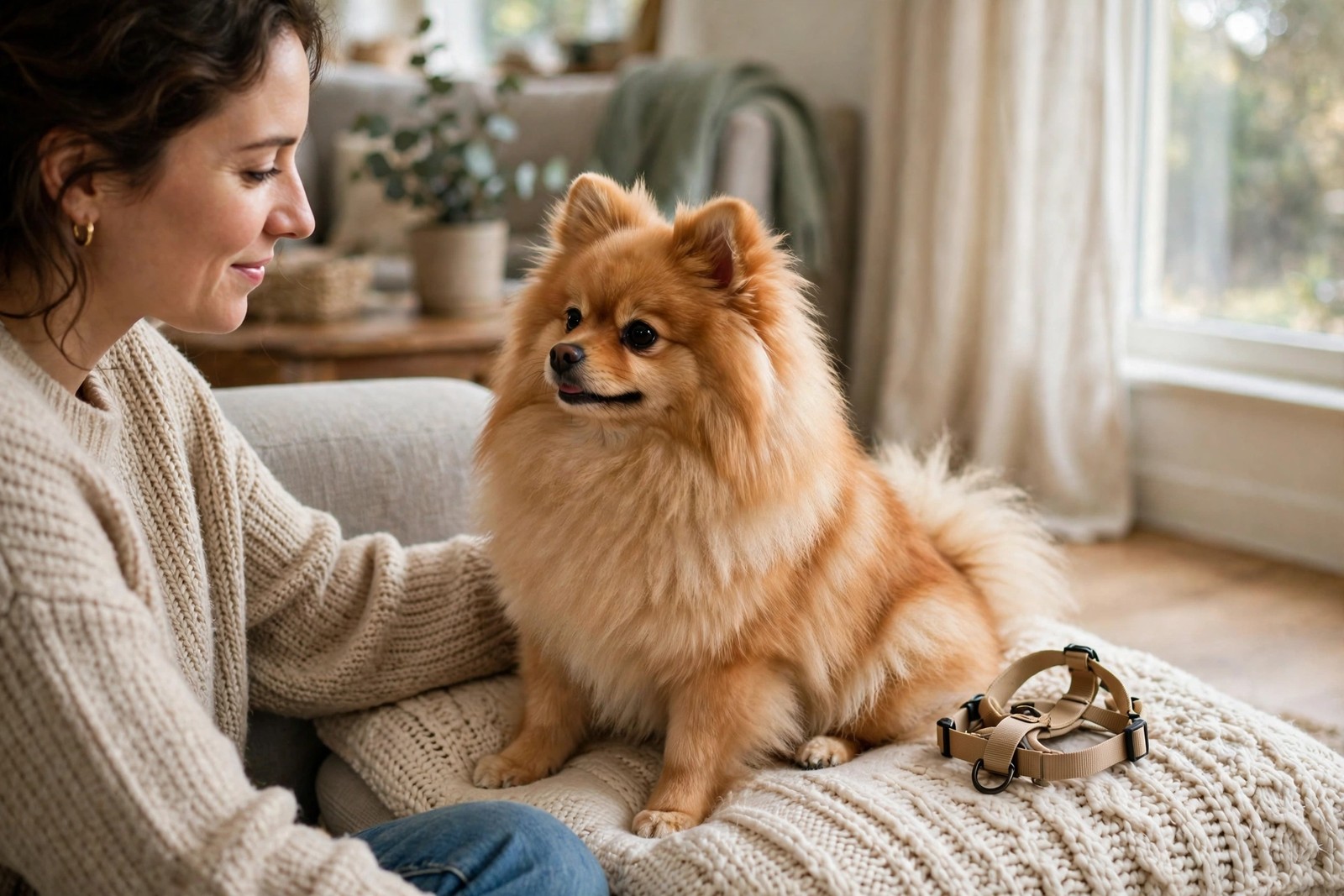
Pomeranians usually live 12 to 16 years, and many stay bright and bossy well into their teens. That range is a starting point rather than a guarantee. Genetics set the ceiling, but daily care decides how close an individual dog gets to it, and for this breed the deciding habits are dental care, weight control and prompt attention to breathing or mobility changes. A Pomeranian is a spitz in miniature, with a dense double coat, a foxy face and a body that often weighs between two and three and a half kilograms, so small problems scale up quickly.
The Three Weak Points Worth Watching
Teeth come first. A Pomeranian fits a full set of adult teeth into a very small jaw, so crowding, retained baby teeth and tartar build-up are common themes at vet checks. Daily brushing with a finger brush or a small soft brush, started gently in puppyhood, does more for long-term comfort than any later intervention, and your vet can advise when a professional clean under anaesthetic is appropriate. Knees come second: the kneecap can slip out of its groove, which may show as a sudden skip or hop on a back leg before the dog trots on as if nothing happened. Mention every episode you see, even brief ones, because the pattern matters more than any single hop. Third is the windpipe. The breed's trachea can be softer than ideal, so walk your dog on a harness rather than a collar, keep lead pressure off the throat and treat a harsh, honking cough as a reason to book a vet visit rather than something to wait out.
Weight, Food and Everyday Protection
Keeping a Pomeranian lean is the highest-value habit an owner controls. On a three-kilogram dog, an extra half kilogram is a substantial percentage of body weight, pressing on small knees and narrowing an already narrow airway. Measure meals with scales rather than scoops, count training treats inside the day's ration and run your fingers over the ribs weekly; you should feel them under a thin cover, with a visible tuck behind them. Fragility is the other side of small size. Pomeranian bones are fine, and falls from arms, sofas and beds cause real injuries, so teach children to sit on the floor to cuddle the dog, use steps or a ramp at favourite furniture and supervise play with much larger dogs, however friendly they seem.
Daily Life With a Very Small Dog
Exercise needs are modest but real: a Pomeranian thrives on a couple of short walks a day plus indoor play and training games, which suit its small lungs and legs far better than one long march. The dense double coat needs brushing several times a week, down to the skin, because the undercoat felts quietly under a tidy-looking top layer, especially behind the ears and where a harness sits. Teach the dog to accept foot handling, tooth brushing and being lifted correctly, supported under the chest and hindquarters, from puppyhood; a dog that cooperates with handling is a dog whose health checks actually happen for sixteen years.
What the Senior Years Look Like
From around eight or nine, shift into senior mode gradually rather than waiting for obvious slowing. Vets often suggest twice-yearly checks at this stage, because early heart, kidney and dental changes are easier to manage when caught small. Keep exercise daily but shorter and more frequent, keep the coat brushed out so mats do not pull at thinner skin and keep routines predictable, since older Pomeranians often grow less tolerant of change and noise. Appetite loss, heavier drinking, a new cough, reluctance to jump or a change in toilet habits all deserve a prompt vet conversation, not a wait-and-see month. Writing down what you notice, with rough timing, turns a vague worry into information your vet can act on. Across a life that can stretch to sixteen years and involve several clinics, KinsLe's Pet Passport holds your Pomeranian's vaccinations, dental history and weight notes in one packet you can share at any appointment.