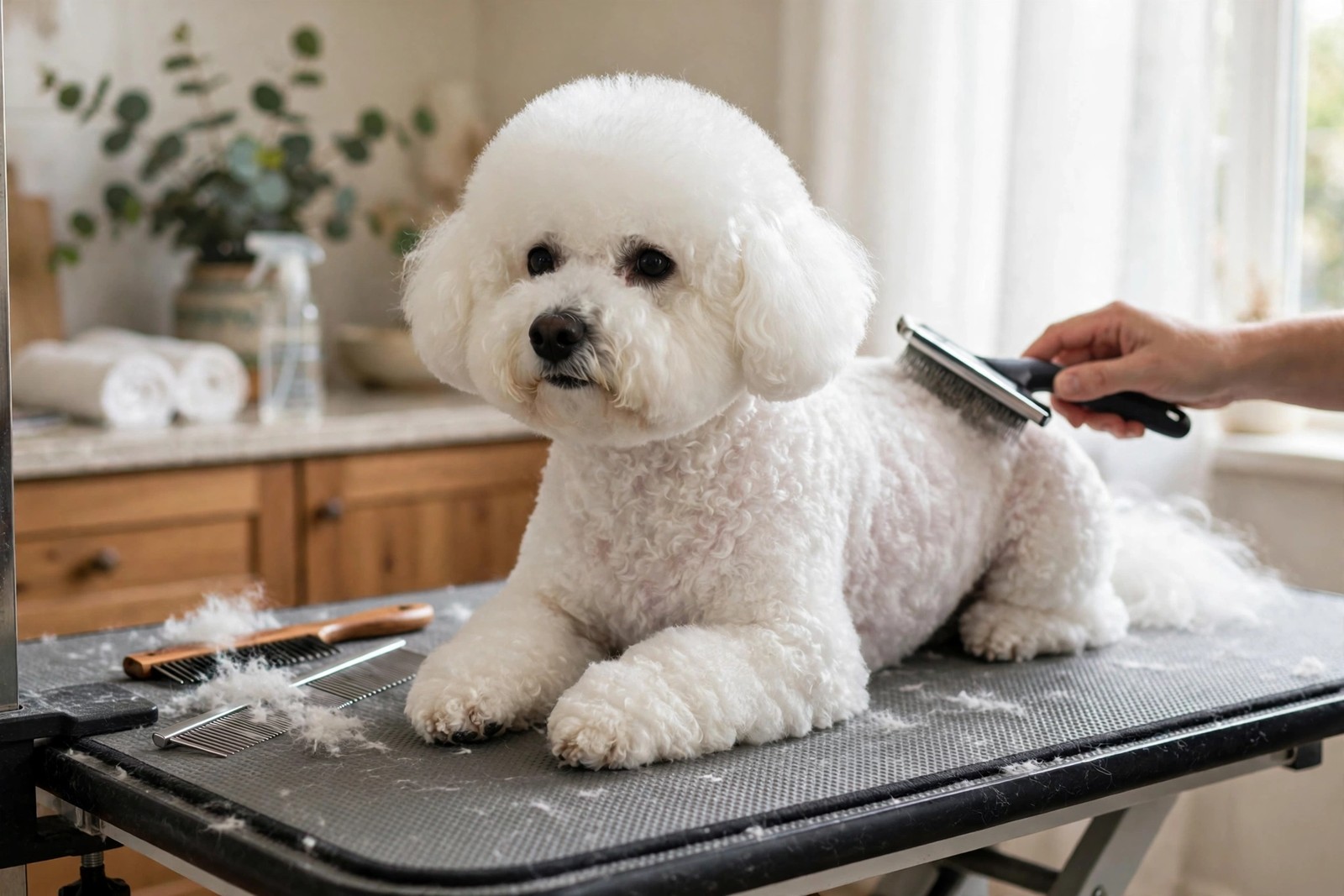
No, Bichon Frises do not shed a lot — they are one of the breeds people choose precisely because the house stays nearly hair-free. But the hair has to go somewhere, and understanding where it goes explains why Bichon owners talk about grooming constantly while owners of heavier-shedding breeds barely mention it.
Trapped Hair Instead of Dropped Hair
A Bichon's soft undercoat grows up into a curly outer coat, and loose hairs get caught in those curls instead of falling to the floor. Your clothes, sofa, and carpets collect very little. The coat itself collects everything. Left unbrushed, the trapped dead hair felts together with the living coat around it, forming mats — tight, pulling knots that form first behind the ears, in the armpits, under the collar, and wherever a harness rubs. Mats tug constantly on the skin and can hide damp, irritated skin underneath, so the low-shedding coat quietly converts a vacuuming problem into a brushing obligation.
The Grooming That Replaces the Shedding
Brush several times a week, working in sections down to the skin rather than skimming the fluffy surface; a brush that only smooths the top leaves the undercoat packing down unseen. Follow with a comb — if the comb glides through, the section is genuinely clear. Most pet Bichons also see a professional groomer every four to six weeks for a bath and clip, and between visits owners keep the hair around the eyes trimmed so vision and tear drainage stay clear. Puppies are the surprise: the soft puppy coat changes to the denser adult coat in the first year or so, and matting often spikes during that changeover, catching owners who thought they had the routine mastered.
Two Honest Caveats
First, low-shedding does not mean allergy-proof. Allergens ride on dander and saliva as well as loose hair, and no breed is completely free of them, so anyone with dog allergies should spend real time with Bichons before committing. Second, a Bichon who suddenly sheds noticeably, develops bald patches, or itches and flakes is not showing normal coat behaviour for this breed — that change deserves a veterinary visit rather than a new brush. If you are choosing a Bichon for the tidy house, budget the grooming time and the regular appointments as part of the same decision, and KinsLe's Pet Services Directory feature can help you find groomers near you and check which ones know curly, mat-prone coats, so your Bichon's clipping schedule is booked before the first mat forms.