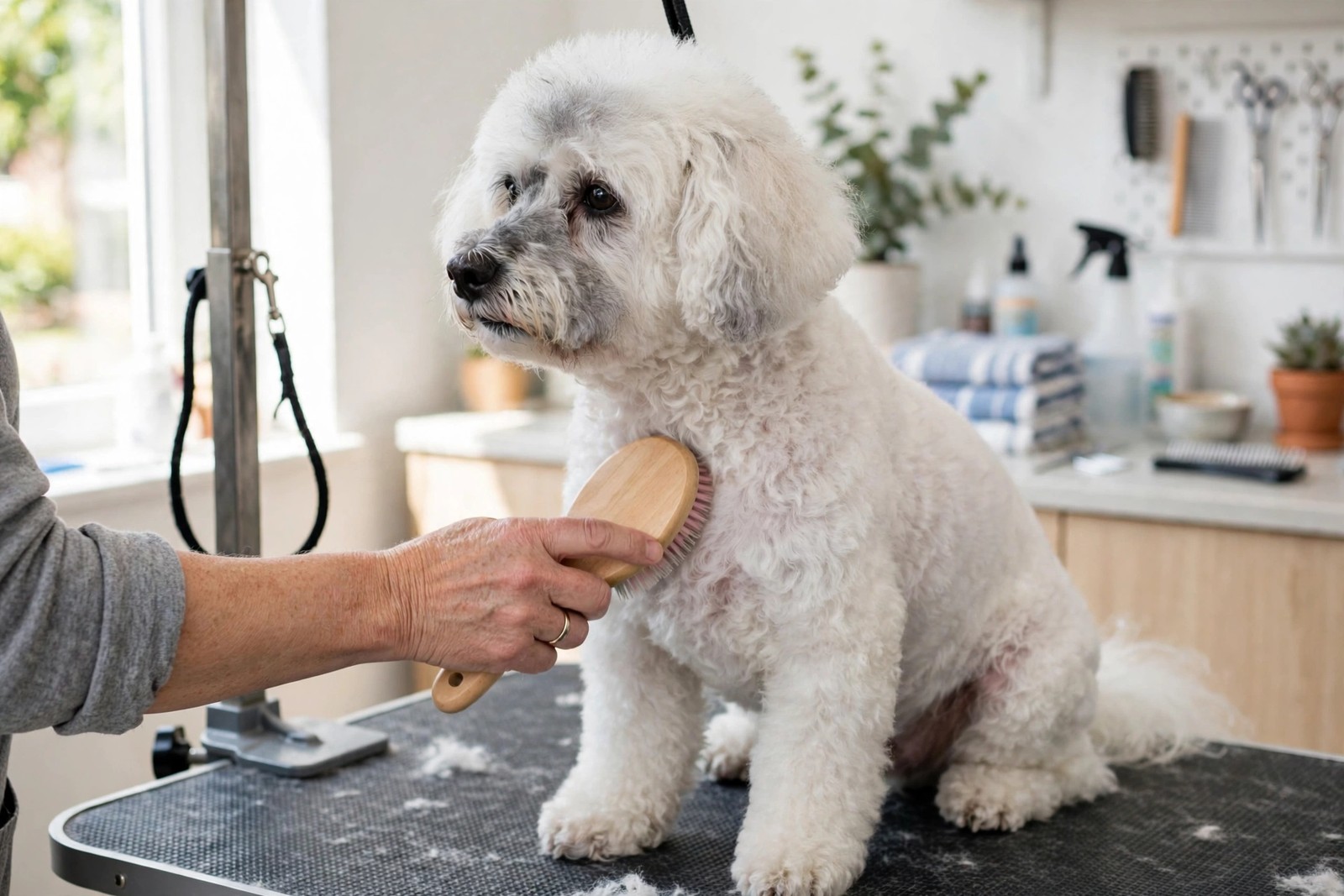
A Bichon Frise typically lives for 14 to 15 years, placing the breed among the longer-lived small dogs. Small breeds in general outlive large ones, and the Bichon adds a sound body and no exaggerated features to that head start. A puppy chosen now is a commitment that can stretch well past a decade, and the care that decides whether those years are comfortable is mostly routine, repeated faithfully.
Teeth: The Small Mouth With a Big Workload
A frequent age-limiting nuisance in the Bichon is dental disease. A full set of teeth is fitted into a small mouth, so teeth sit close, plaque builds quickly, and gum disease can establish itself early and quietly. Build the defence early: brush the teeth with a dog toothpaste as often as you can, aiming for a routine your puppy accepts before adult teeth arrive, have your vet check the mouth at every visit, and budget for professional dental cleaning under anaesthetic when your vet advises it, rather than treating it as an optional extra. Bad breath in a Bichon is information, not a breed trait, and it deserves a dental check.
Knees, Skin and Ears: The Watching Brief
Slipping kneecaps, where the kneecap moves out of its groove, occur in the breed and show as a sudden skip or a brief hop on a hind leg before normal movement resumes. An occasional skip in an otherwise sound dog is a note for your next vet visit; frequent skipping, a leg held up, or reluctance to jump and climb is an appointment now, because your vet can grade the problem and advise whether management or something more is appropriate. Keeping a Bichon lean protects those knees, as it protects every joint: slim small dogs move more freely in old age than plump ones.
The white coat hides skin trouble until it is well established, so part the coat and look at the skin during grooming: redness, flaking, hot patches, scratching and chewing at the feet all merit attention, and allergies are a common thread your vet can help you unpick. The drop ears hold moisture much like other coated breeds, so check under the flaps, keep the ears dry after baths, and have any head shaking, odour or discharge examined. Tear staining under the eyes is cosmetic in itself, but a change in discharge, squinting, or a cloudy eye at any age should be checked promptly.
Grooming and the Senior Bichon
That coat is a lifetime appointment: it grows continuously, mats close to the skin if brushing lapses, and needs regular clipping to stay manageable. Mats are not merely untidy, they pull on the skin and hide it from view, so a dog whose coat you keep brushed to the skin is also a dog whose skin you actually see every week. Choose the breed only if that rhythm, home brushing several times a week plus professional grooming on a regular cycle, genuinely fits your life for the dog's whole span. Keep those frequencies consistent in your own notes: the coat routine described here, brushing several times a week, should be the routine every carer follows.
Senior Bichons usually remain affectionate, playful in short bursts and deeply attached to their people. Adjust the stage rather than the dog: shorter, more frequent walks, a warm bed away from draughts, steps or a ramp for a favourite sofa if the knees advise against jumping, and senior vet checks at the rhythm your vet suggests, with notes on appetite, thirst, sleep and mobility. A lifespan of 14 to 15 years is built out of small, repeated acts of care, above all teeth, weight and coat. Recording dental checks, grooming dates, knee notes and vet visits in KinsLe's Pet Passport keeps that long record in one place, so any vet or groomer can see how your Bichon has been cared for across the years.