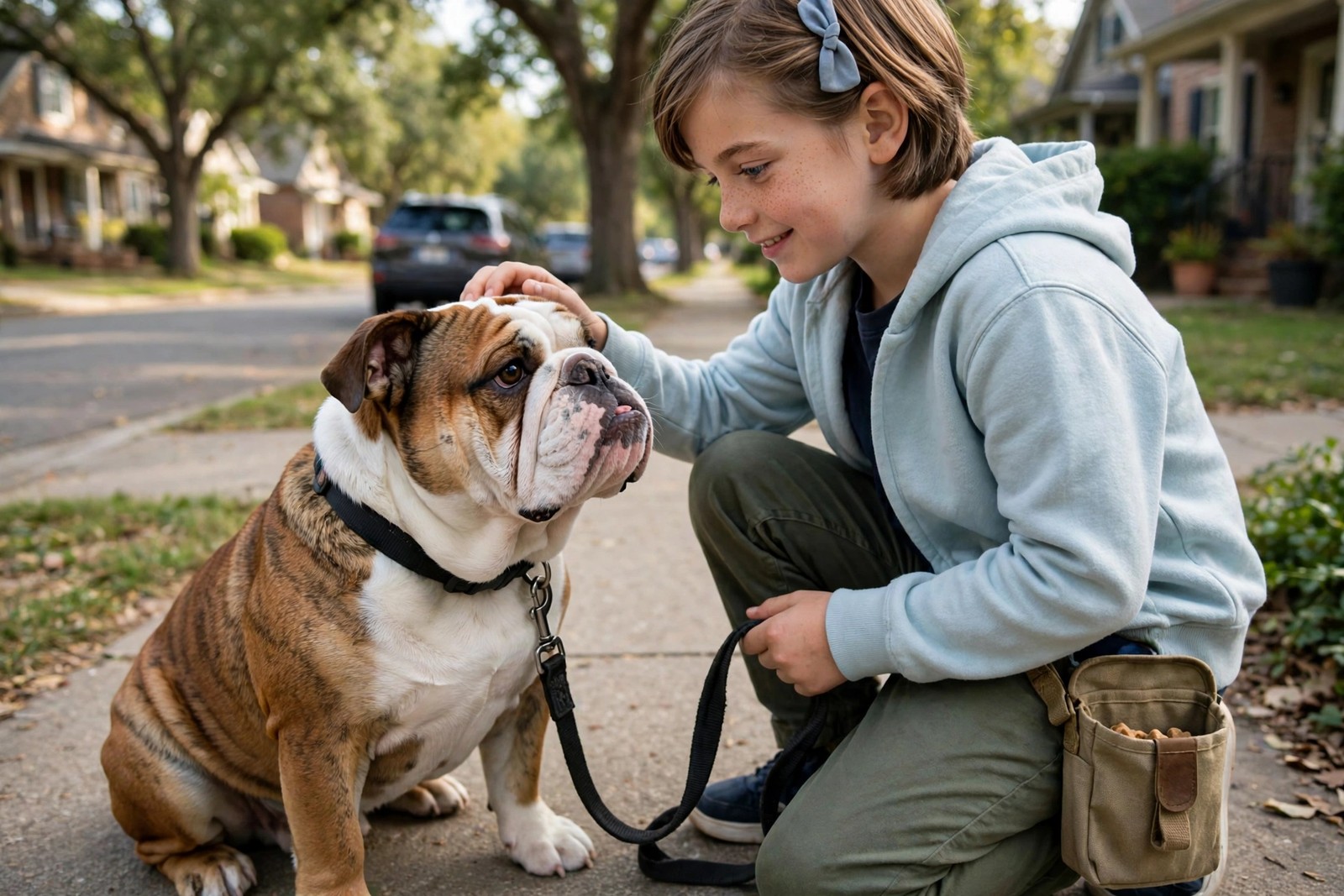
A Bulldog in a family home tends to be happiest in the middle of things — settled near the noise, tolerant of clumsy affection, and slow to take offence when a game gets untidy. That steadiness is why the breed suits households with children, but it is not a licence to skip supervision. A heavy, low dog can still knock a small child over with a friendly lean, and even the calmest Bulldog deserves to have his rest respected.
Reading the individual dog
Breed reputation is only a starting point; the dog in front of you is the one your children will live with. Watch how a Bulldog responds to sudden movement, dropped toys, and excited voices before trusting him in busy play. A relaxed dog sighs, shifts his weight, and stays soft-eyed. A dog who stiffens, turns away repeatedly, or leaves the room is asking for space, and adults should grant it promptly rather than coaxing him back for one more cuddle.
Rules children learn first
Children need simple rules they can repeat without thinking: stroke the shoulder, never the face; let the dog come to you; leave him alone when he is eating, sleeping, or settled in his own bed. Practise those habits during quiet moments, not in the middle of an exciting game, and praise children when they notice the dog choosing to move away. Toddlers need a physical barrier as well as words, because good intentions do not stop small hands from grabbing at folds of skin or dangling ears.
Heat, weight, and boisterous play
Two Bulldog traits shape outdoor play in particular. His solid body outweighs many children, so running games belong in open space where a collision cannot pin a child against a fence or step. His flat face also limits how well he copes with heat, which means summer play needs shade, water, and enforced pauses — a Bulldog who adores his children may keep trotting after them long after he should have stopped. Heavy, laboured breathing is the signal to end the game, move indoors, and seek veterinary advice if he does not settle quickly.
A retreat and a steady routine
Every family Bulldog needs a child-free corner that everyone honours, with a bed, water, and no visiting rights for small admirers. Build short care jobs into the week so children contribute without taking charge: an older child can carry the measured food bowl, hold the lead on a calm stretch of pavement with an adult alongside, or read aloud beside a dog who is in no hurry to leave. Keep adult hands on heat decisions, vet visits, and any moment when excitement rises on either side.
Chosen carefully and supervised honestly, an English Bulldog can be a patient, funny, deeply loyal presence in a child's early years. Through KinsLe, Transferrable Profiles keep a Bulldog's story together when ownership changes: the receiving owner takes on the same notes about children, rest, and daily routines rather than rebuilding them from memory.