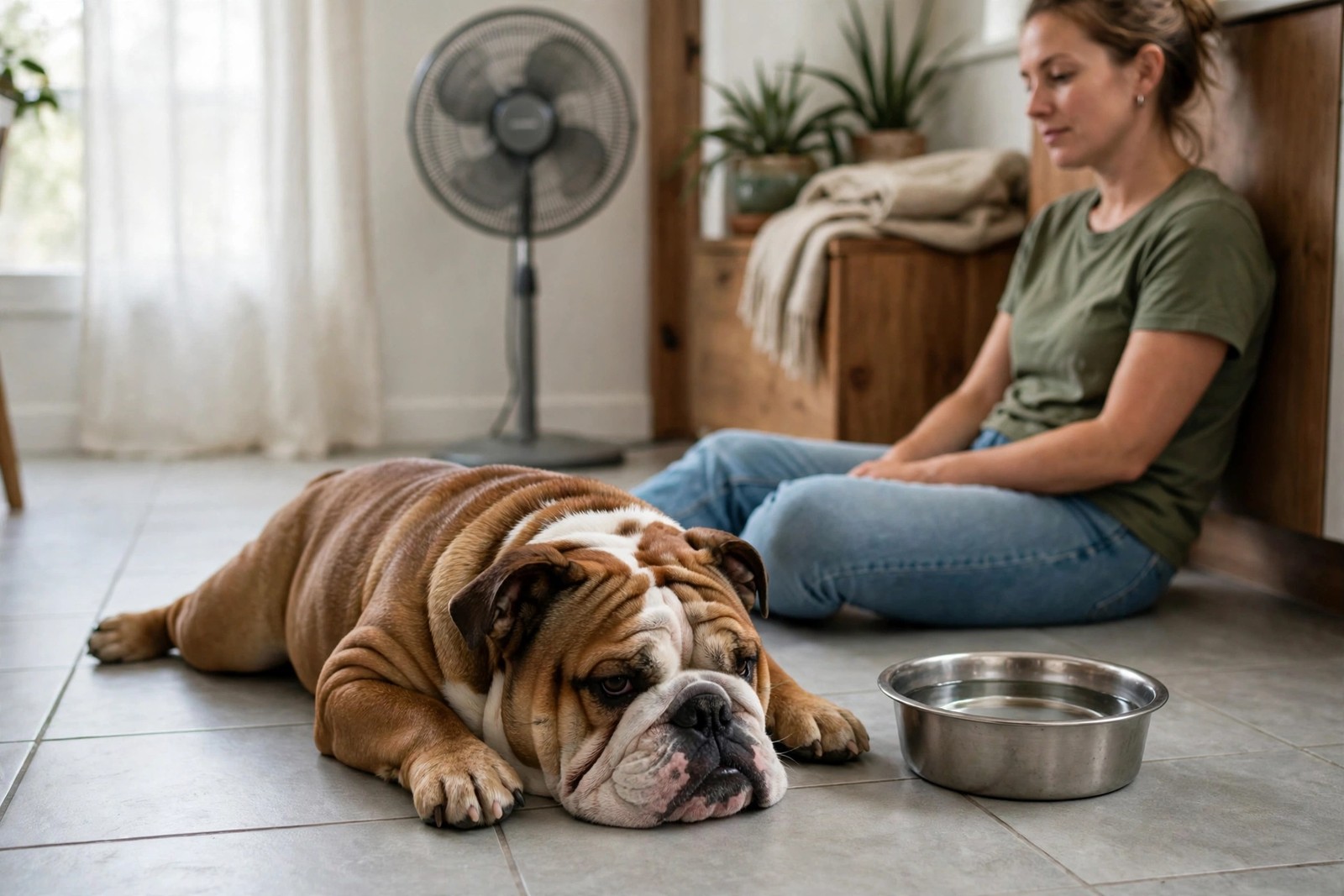
English Bulldogs usually live 8 to 10 years. That is a short span for a dog of this size, and it is honest to say so before you commit: the breed's flat face, broad heavy build and folded skin each bring care demands that influence health across the whole life. Owners who do best with a Bulldog accept the 8 to 10 year range clear-eyed and focus on quality within it: comfortable breathing, clean skin, sound movement and a dog kept slim and cool every single day, not just at vet visits.
Breathing and Heat Set the Limits
A Bulldog's shortened airways make breathing work harder than in longer-muzzled breeds, and panting cools the dog less efficiently. The practical rules follow directly: exercise gently in the coolest parts of the day, never push a Bulldog in heat or humidity, provide shade and cool water on every outing, and stop at once for loud laboured breathing, excessive drooling, disorientation or collapse, which needs urgent veterinary help. At home, keep your dog in cool rooms during warm weather and watch sleep as well as walks, since breathing effort at rest is useful information for your vet. Report snoring that worsens markedly, breathing that grows noisier over months, or stamina that shrinks on familiar routes, rather than treating decline as inevitable breed character.
Folds, Skin, Joints and Weight
Clean facial folds and any tail fold gently and regularly, dry them thoroughly afterwards, and check for redness, moisture or odour, taking sore or persistent changes to a vet instead of layering home products onto irritated skin. Joints carry a front-heavy, wide build, so build exercise as frequent short, gentle walks rather than occasional long efforts, avoid repeated jumping down from vehicles or furniture, and keep weight firmly controlled: extra kilograms load joints, worsen breathing and reduce heat tolerance all at once. Weigh your Bulldog regularly and adjust portions promptly, because gradual gain is easy to miss under a broad frame. Eyes also deserve routine checks, with redness, rubbing or discharge reported early.
Making the Years Count
Bulldogs are companionable, funny dogs who thrive on company, routine and comfortable rest, and senior care can begin earlier than in longer-lived breeds: from about six or seven, ask your vet about breathing, joints, skin and weight at every visit and watch recovery after even gentle exercise. Keep a dated note of breathing changes, skin flare-ups, appetite and mobility, because slow decline across several small signs is the pattern vets need to see whole. Choose a breeder, if you buy a puppy, who can discuss breathing and health testing in both parents openly and who breeds for soundness rather than exaggerated features.
A short lifespan with several standing watch points makes a complete, continuous record unusually valuable for this breed. KinsLe's Pet Passport keeps your English Bulldog's breathing notes, fold care, weight record and vet findings in one packet, so each appointment starts from the full picture rather than a fresh guess.