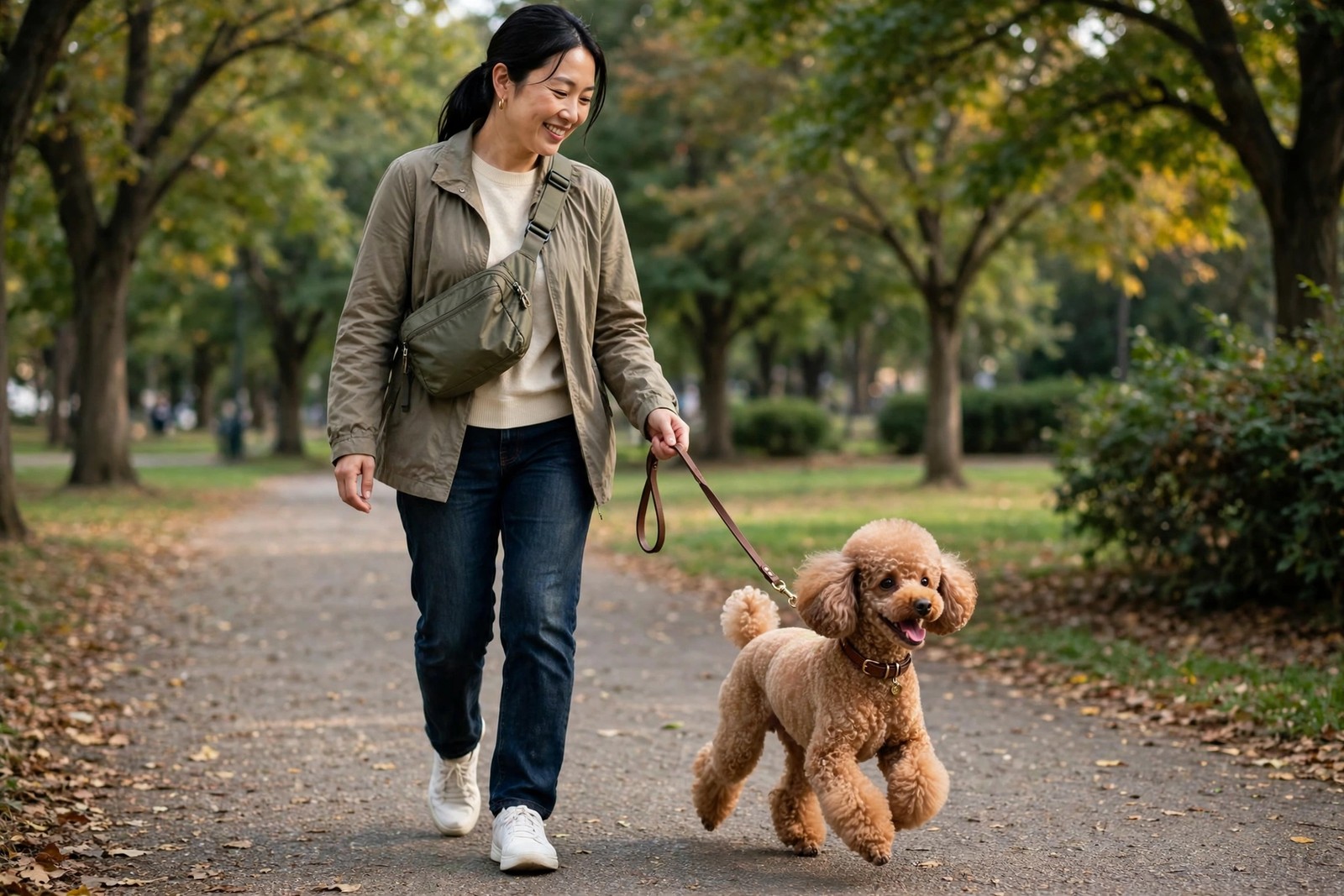
Poodles usually live 10 to 18 years, because the name covers three very different dogs. Toy and Miniature Poodles generally live longest, often reaching 14 to 18 years, while Standards typically live 10 to 14 years. Whichever size you choose, you are committing to a clever, athletic dog whose single curly coat grows continuously, whose ears need regular attention and whose health notes reward an owner who keeps records from puppyhood onwards.
Size Changes the Health Picture
In Toys and Miniatures, the recurring themes are teeth and knees. Small jaws crowd teeth together, so daily brushing and early checks for retained baby teeth matter, and kneecaps can slip in the smaller sizes just as they do in other small breeds. Standards carry a different list: hips worth monitoring as the dog matures, eye checks as part of routine vet care and a deep chest that makes stomach awareness important. Feed a Standard in a calm routine, avoid vigorous exercise straight after meals and learn the signs of a stomach emergency (restlessness, drooling and trying to vomit without bringing anything up) so you can get to a vet immediately if they ever appear. Across all sizes, eyes deserve routine attention at annual checks, and any new cloudiness, redness or pawing at the face deserves a prompt appointment.
The Grooming Commitment Is Lifelong
A Poodle coat does not shed in the usual way; instead it grows and mats if it is neglected, so professional clipping typically every four to six weeks, with brushing between appointments, is a real lifetime cost in money and time. Ears need checking and gentle cleaning as your vet advises, because the hair and shape of the ear canal can trap moisture after swimming or bathing. None of this shortens or lengthens life directly, but skin infections, matted coats and sore ears are the everyday discomforts that quietly erode a long life if the routine slips. Decide before you buy or adopt whether you will keep a practical short clip year-round, because that single choice makes the breed far easier to live with for fifteen years.
Choosing Between the Sizes Honestly
The size decision shapes your next decade and a half more than any other choice in this breed. A Toy Poodle fits flat living, travel and smaller budgets for grooming and food, but brings fragile bones, demanding teeth and a tendency to be under-exercised because it can be carried everywhere; carry it less and walk it properly. A Miniature is the middle path many owners find easiest, still portable but sturdier. A Standard is a substantial, athletic dog that needs real exercise, more food, larger grooming bills and the stomach awareness described above, in exchange for a calmer, less fragile presence. Meet adult dogs of the size you are considering, watch them move and settle and picture that dog at twelve in your home, because you are choosing a senior as much as a puppy.
Brains, Weight and the Older Poodle
Poodles stay mentally quick long after their muzzles grey, and boredom is a genuine welfare issue for the breed. Keep training, sniffing games and new routes in the routine at every age, adjusting distance rather than interest as joints age. Weight creeps up easily once activity dips, and a lean Poodle's joints, heart and breathing all cope better, so weigh your dog at vet visits and adjust food in small steps rather than waiting for a visible change. Senior Poodles benefit from twice-yearly vet checks in their later years, with attention to eyes, teeth, lumps and stiffness after rest. If a dog changes hands or moves clinic at any point, fifteen years of scattered notes become hard to reconstruct. KinsLe's Pet Passport gathers your Poodle's vet history, eye notes and weight record into one shareable packet, so whichever clinic you visit sees the whole story.