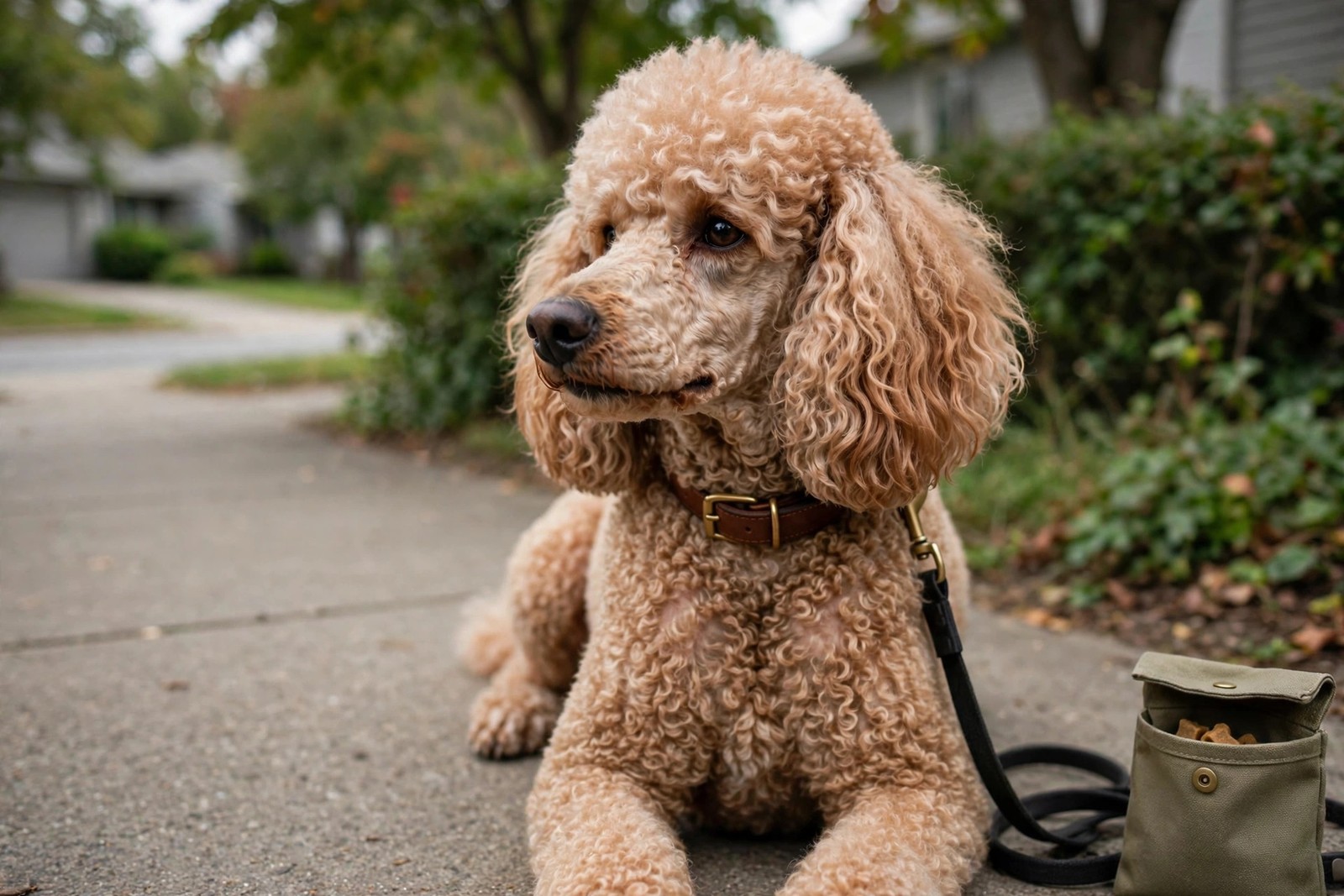
Yes — Poodles in all three sizes are intelligent, playful, people-focused dogs, and many make outstanding family companions. They learn household rules quickly, invent games, read moods with unnerving accuracy, and generally enjoy being at the centre of family life. But 'Poodle' covers dogs from under three kilograms to over thirty, and which size you choose matters as much for children as temperament does.
Size Is the First Decision
Standard Poodles are the sturdiest choice for families with younger children. They are big enough not to be injured by an accidental fall against them, athletic enough for ball games and long walks, and usually robust in temperament. A Standard still needs supervision with toddlers — any big young dog can knock a small child over — but the physical risk runs mainly one way.
Miniature Poodles suit calmer school-age children well. They are lively, clever, and portable, but a boisterous game can overwhelm one, and they are quicker to become snappy if they feel trapped or relentlessly handled. Toy Poodles are genuinely delicate: fine bones, easily hurt by being dropped, stepped on, or squeezed in an enthusiastic hug. For households with children under about seven, a Toy is usually the wrong call however appealing the size looks.
A Sensitive, Busy Mind
Poodles notice everything, including unfairness. A Poodle who is teased, chased by shrieking children, or shut away from family life while hearing the fun through a door can become anxious, barky, or withdrawn. They do best when children are coached early: no cornering, no picking the dog up without an adult, no disturbing a sleeping or eating dog, and stroke-and-pause to check the dog is still enjoying the fuss.
Their intelligence is the joyful side of the bargain. Older children can teach a Poodle tricks in an afternoon, set up scent games and hide-and-seek with treats, and take supervised responsibility for trick training, which burns mental energy a walk alone does not. A bored Poodle invents its own entertainment — barking at passers-by, raiding bins, redecorating with toilet paper — so involving children in structured play genuinely helps the dog behave.
Practical Ground Rules at Home
Supervise all dog-and-child time until you know both parties well, and keep that habit with visiting children, who have not learned your dog's signals. Give the Poodle a crate or bed that is strictly off limits to children, feed meals undisturbed, and separate dog and children at exciting moments like party arrivals until calm returns.
Remember the grooming commitment children will witness and can help with in small ways: Poodle coats grow continuously and need regular brushing and clipping, and a child who helps hold treats during a calm brush learns the unglamorous, important side of dog care.
Chosen in the right size and raised with respectful children, a Poodle is often the dog who learns every family member's routine and inserts itself lovingly into all of them. KinsLe Care Teams makes that inclusion organised by letting you assign supervised play, training games, and feeding help to each family member, so your Poodle gets consistent handling and every child has a clear, suitable role.