
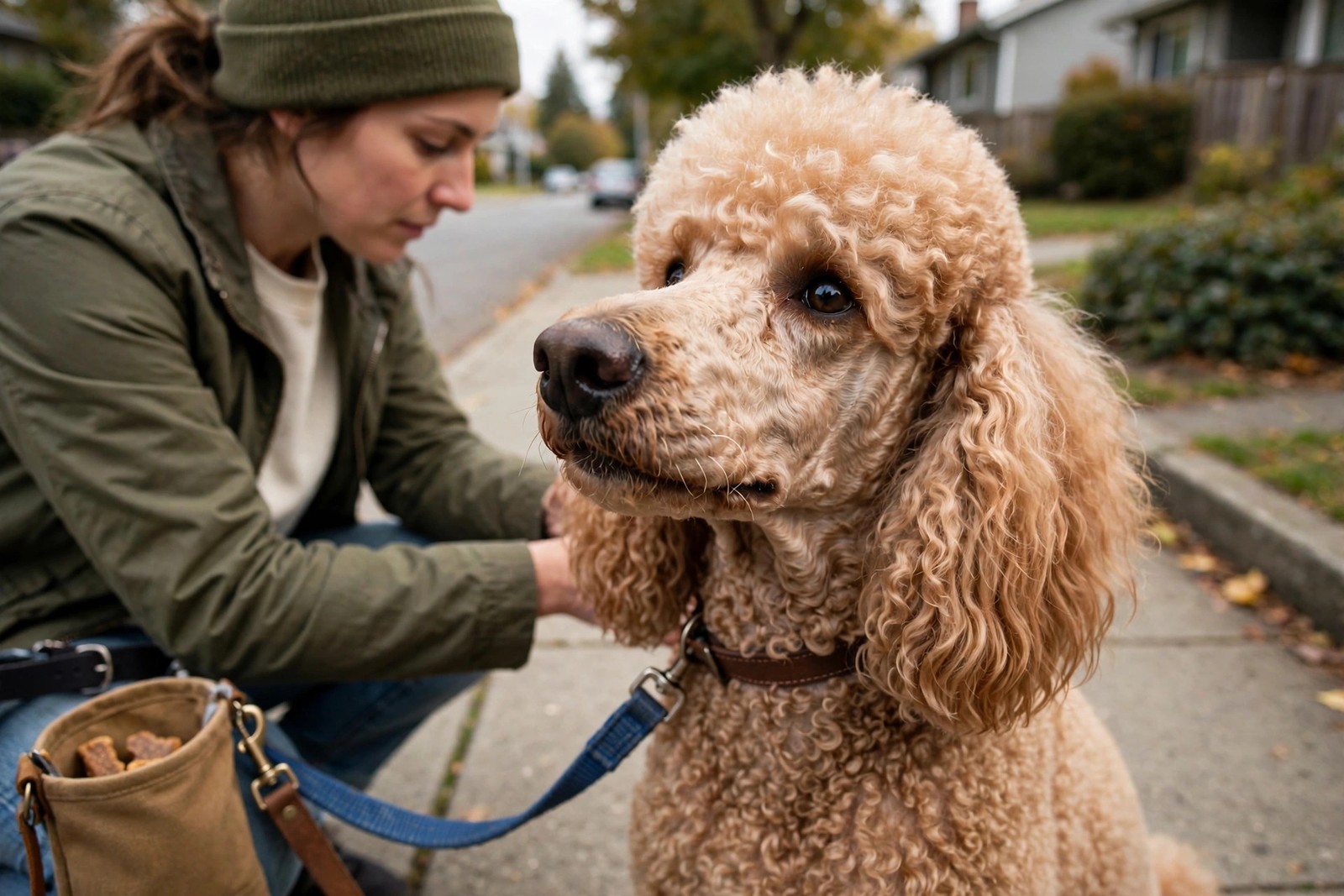
No. A Poodle sheds so little that loose hair on the sofa is rarely how you will notice the coat at all. What you will notice, if you fall behind on grooming, is matting — and that trade-off is the honest answer to this question. Poodles swap shedding for coat maintenance, and anyone choosing the breed should budget for the second, not worry about the first.
A Coat That Grows Instead of Cycling Out
Most double-coated breeds grow fur to a set length, shed it, and grow more, with heavy seasonal blows in spring and autumn. A Poodle's single coat works differently. The hair keeps growing, and each strand stays in its follicle far longer, so very little is released day to day. When a hair does loosen, the tight curls around it catch and hold it. You will find that hair later in your brush or on the grooming table, not spread across your bedding.
This is true across all three sizes. A Toy, Miniature, or Standard Poodle has the same coat type — only the amount of dog under it changes. A Standard simply has more coat to brush, and a grooming session takes proportionally longer.
What the Trapped Hair Demands From You
Hair held in the coat does not disappear; it tangles. Left unbrushed, loose hairs weave into the curls and form mats, tight felted knots that pull on the skin and can hide irritation underneath. Prevention is straightforward but frequent:
- Brush through to the skin, in sections, several times a week — daily for a longer coat
- Pay attention to the friction spots where mats start first: behind the ears, under the collar, in the armpits, and around the tail
- Expect a professional clip roughly every six to eight weeks for most pet trims, since the coat never stops growing
- Choose a shorter clip if your real schedule cannot support long-coat brushing; a short Poodle coat is still low-shedding and far kinder than a matted long one
Bathing without brushing first usually makes tangles set tighter, so groomers work in a brush-out, bath, dry, and clip order. Puppies should get short, gentle introductions to that routine early, because an adult Standard who fears the table is a genuinely difficult dog to groom.
The Allergy Question, Answered Carefully
Poodles are often recommended to allergy-sensitive households, and the low shedding does mean less hair carrying dander around the home. No dog is completely allergen-free, though — dander and saliva proteins exist in every breed. If allergies are the reason you are asking, spend real time with an adult Poodle before committing, ideally over several visits, rather than trusting the breed name alone.
When Shedding Would Be a Warning Sign
Because normal Poodle shedding is so minimal, visible coat loss stands out. Bald patches, sudden thinning, broken hair, or shedding paired with itching, redness, or a change in skin odor is not the breed being seasonal — it is a reason to book a veterinarian. Skin and coat changes can reflect several underlying issues, and only an in-person exam can sort out which one your dog has.
In short, expect a vacuum cleaner that stays in the closet and a grooming calendar that fills up instead. When you use KinsLe's Pet Services Directory to line up a groomer who knows curly coats, that calendar becomes a simple standing appointment rather than a recurring scramble.