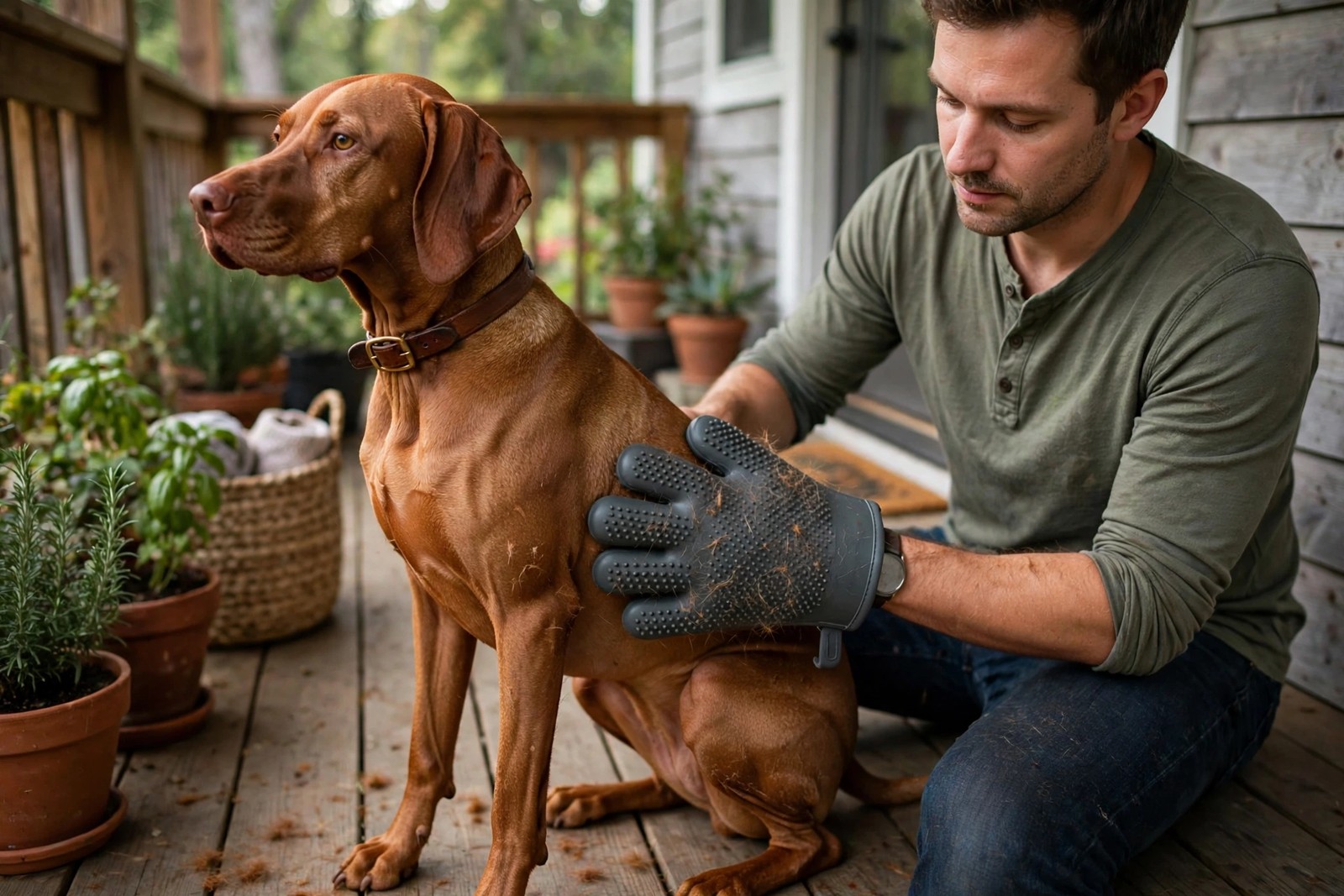
No, Vizslas do not shed a lot. A Vizsla carries a very short, fine, single coat that lies close to the body, and it sheds lightly and steadily through the year rather than in heavy seasonal waves. There is no thick undercoat to blow out in spring, no long hair to mat, and no daily brushing requirement. What you get instead is a fine dusting of short rust-colored hairs on clothes, bedding, and car seats, which most owners rate as a small housekeeping task rather than a shedding problem.
Where the hair actually shows up
Short hair hides until contrast exposes it. Vizsla hairs show most on black pants, light-colored couches, and car upholstery, and they collect where the dog leans and sleeps: bed edges, favorite cushions, and the passenger seat. A lint roller in the car and washable throws on the dog's chosen furniture handle most of it. Because the hairs are short and straight rather than fluffy, they vacuum up easily and rarely weave into fabric the way longer coats do. Guests who own double-coated breeds are usually startled by how little evidence a Vizsla leaves behind after a weekend visit.
The weekly rub-down is the whole routine
Coat care for a Vizsla is deliberately simple: a weekly rub-down with a soft brush or a rubber grooming mitt loosens dead hair so it comes away in the brush instead of on the furniture. Five unhurried minutes once a week is genuinely all the coat needs for most dogs, and most Vizslas enjoy the contact, since this breed treats handling as attention. Bathing is occasional, only when the dog is actually dirty or smelly, because frequent washing strips a short coat's natural oils and can leave skin dry. Check ears, nails, and teeth during the same weekly session and grooming stays a single small habit.
Shedding that should not be waved away
Light and steady is normal; patches are not. Bald spots, clumps of hair coming away, relentless scratching, flaky or red skin, or a coat that turns dull and thin are changes worth a veterinarian's attention, because skin and coat condition reflect wider health, including nutrition, parasites, and conditions a veterinarian would investigate. Note when the change started, whether food, season, or household stress changed with it, and whether the dog is scratching or simply shedding. That timeline, brought to the appointment, is more useful than a bag of collected hair.
What to tell a groomer, sitter, or future owner
Because the coat looks maintenance-free, caregivers sometimes assume either too much or too little care. The accurate summary is short: brush lightly once a week, bathe only when dirty, expect fine hairs on soft furnishings, and report any bald patch or itching rather than treating it as shedding. A sitter told these four points will keep the coat exactly as you do. Owners comparing breeds should also know the trade honestly: the Vizsla swaps shedding chores for exercise demands, so the coat is the easy part of a dog whose daily running needs are anything but light.
A coat routine simple enough to hand over
The Vizsla's low-maintenance coat is one of the breed's practical charms, and its care notes fit on an index card: weekly rub-down, bath when dirty, ears and nails checked in the same session. Those notes still deserve writing down, because sitters and future owners should not have to guess whether a Vizsla needs daily brushing or special products. It does not, and saying so clearly prevents over-bathing by a helpful caregiver. Through KinsLe, Transferrable Profiles carries a Vizsla's grooming routine, handling preferences, and health notes to any new owner, so the coat keeps its simple weekly care wherever the dog lives.