
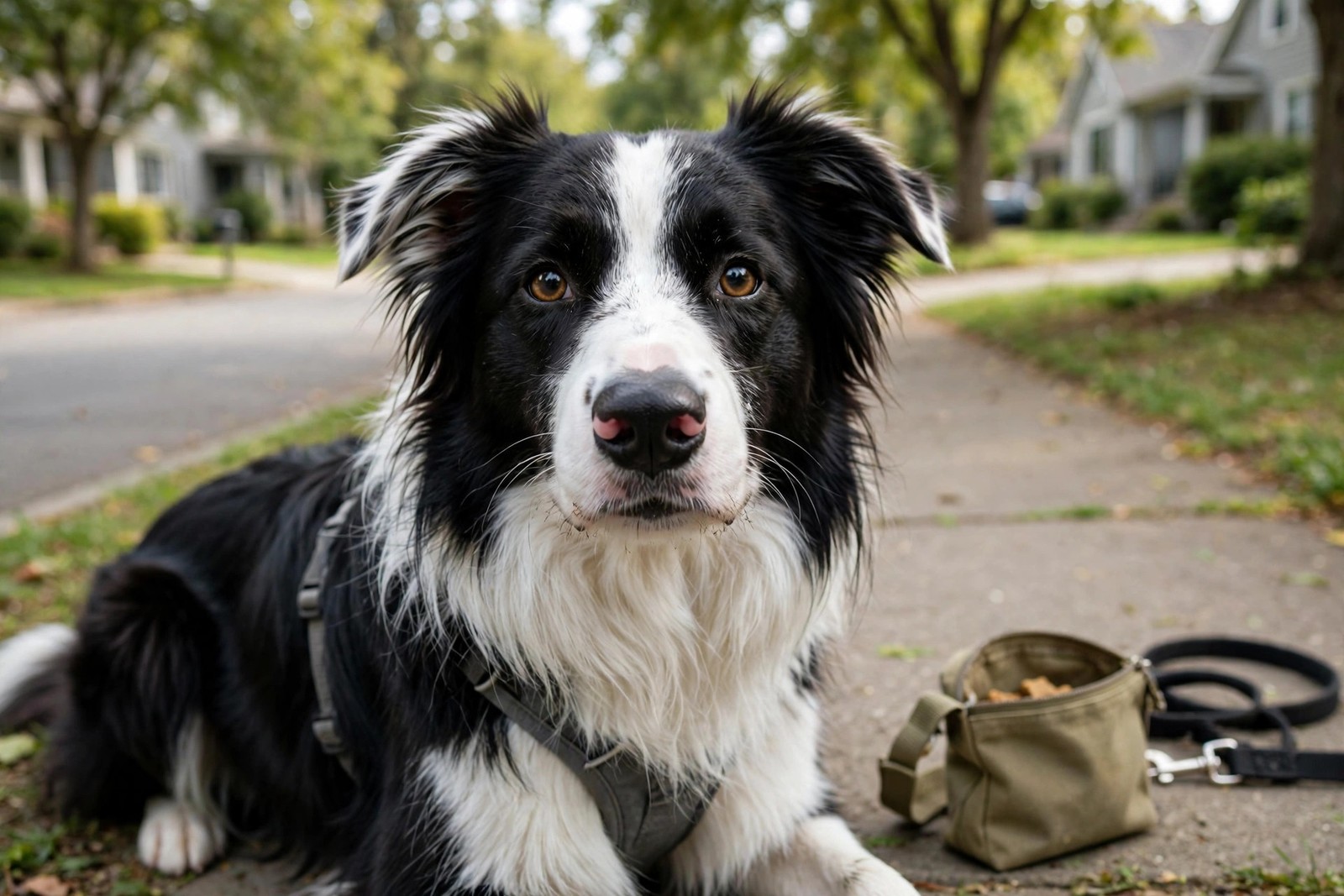
Budget 90 minutes to two hours or more a day for an adult Border Collie, and understand what you are really budgeting: this is a working dog bred to read sheep, terrain and a shepherd's whistle across a full day on a hill. The question is never only how far a Collie walks. It is how much of the day asks the dog to think, decide and solve, because a Collie whose brain is idle will find its own employment, usually involving your skirting boards, your garden, or herding your children.
Building the Adult Day
A workable pattern is a substantial morning outing of 45 to 60 minutes with real off-lead running in a safe, enclosed or well-controlled space, a shorter midday leg-stretch and toilet walk, and an evening session mixing walking with games. Layer in 20 to 30 minutes of mental work across the day in short bursts: training new cues, trick sequences, searching for hidden toys, scatter feeding, or a herding game with a large ball. Five focused training minutes tire a Collie more honestly than twenty minutes of mindless pavement.
Be deliberate with ball throwing. Endless repetitive chasing hikes arousal, hammers joints, and teaches obsessive patterns in a breed already prone to fixating on movement, shadows and lights. Use fetch as one ingredient, in short sets with pauses and searches in between, never as the whole diet.
Puppies, Adolescents and Seniors
Collie puppies need the gradual build, roughly five minutes of structured exercise per month of age once or twice daily, plus play and sleep, because growth plates are still closing well into the second year. Adolescent Collies are the peak challenge: energy at maximum, judgment at minimum, and this is when most owners get caught out, so increase training and structured activity rather than simply adding miles. Senior Collies usually still want a job; shorten the walks, keep the training and searching games, and let the brain work carry more of the load as the body slows.
Reading the Signs Honestly
A Collie who paces, stares, nudges, barks at movement outside, or reorganises your home is usually under-occupied, not naughty. Equally, a dog who lags, stiffens after rest, or starts refusing jumps needs a vet check, not a bigger programme. On rest days after very hard exercise, choose sniffy walks and training over another mountain. In a busy household the plan only survives if it is shared, and KinsLe's Care Teams lets you assign the morning run, midday walk and evening training to different people so the full Collie workload is genuinely covered.