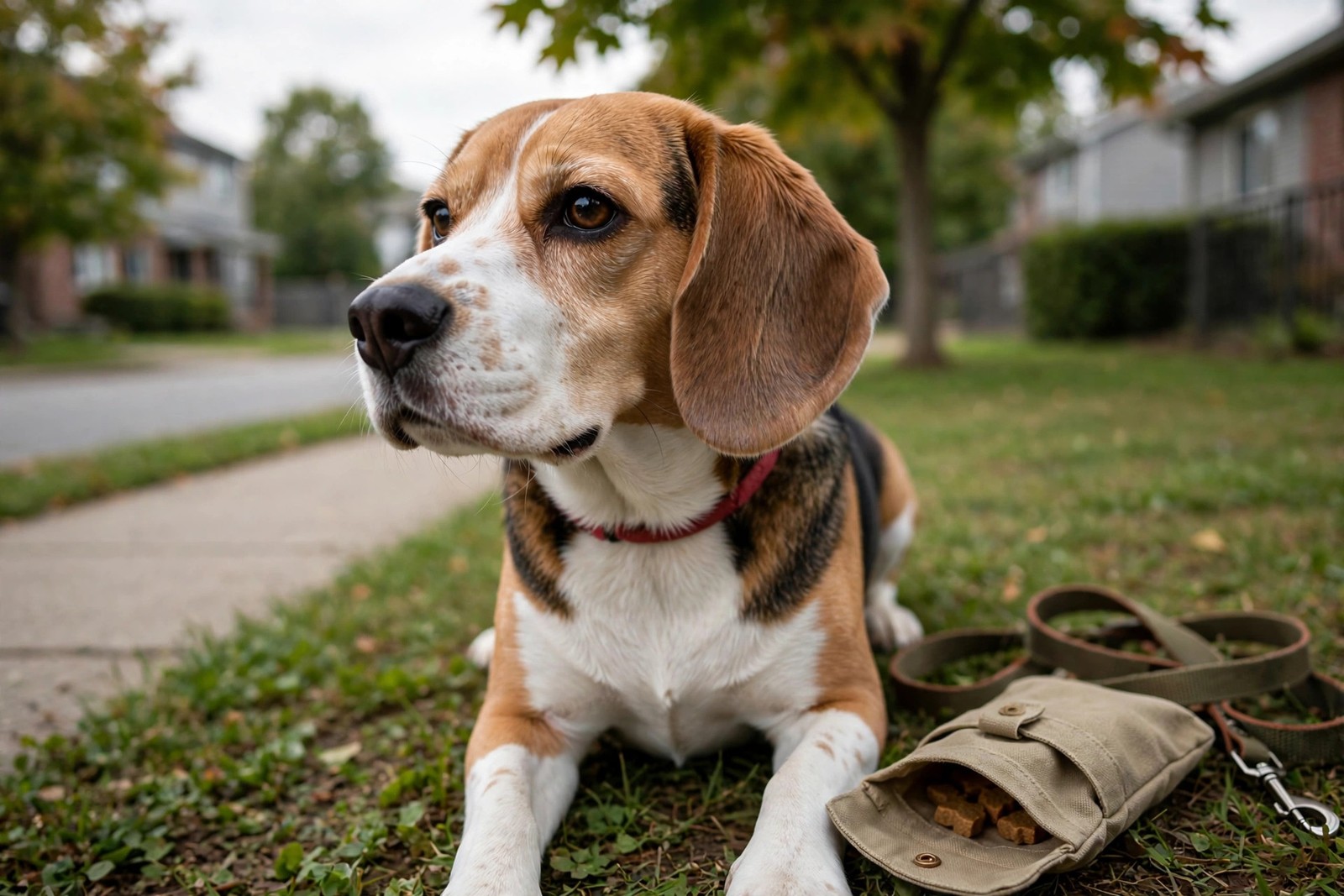
Yes. The Beagle's tidy, short coat is one of the breed's great deceptions. Underneath the smooth topcoat sits a thick undercoat built for following scent through cold, wet countryside, and that two-layer system renews itself constantly. Expect fine hairs on dark clothing in every month of the year, tumbleweeds of fur along skirting boards, and two heavier periods, usually spring and autumn, when the undercoat loosens in handfuls and your dog seems to produce a second dog's worth of hair each week.
How Much Hair, Realistically
Beagles sit in the moderate-to-heavy shedding range, well above genuinely low-shedding breeds whose hair grows continuously and is cut rather than shed. They are not hypoallergenic, and no honest breeder should describe them that way, because dander and loose hair are part of living with one. Shedding varies a little between individuals and lines, and neutered dogs sometimes grow a slightly thicker coat, but anyone choosing a Beagle for a pristine home or a serious allergy should reconsider before the puppy arrives rather than resent the dog afterward. On light floors the tricolour hairs blend in; on dark sofas and car seats they announce themselves immediately.
Brushing That Actually Keeps Up
A weekly brush with a bristle brush or rubber grooming tool keeps normal shedding manageable and spreads skin oils through the coat. During a seasonal blowout, step up to several shorter sessions a week, ideally outdoors, and work through the dense areas behind the ears, on the neck, and over the hips where loose undercoat packs down. Bathing every month or two is enough for most Beagles unless they have rolled in something memorable; frequent washing strips the coat's natural oils, dries the skin, and can increase the very shedding you are trying to reduce. Never shave a Beagle to stop shedding. The double coat insulates in both directions, and shaving disrupts its regrowth while doing nothing to the cycle underneath.
When Shedding Stops Being Normal
Steady shedding is even across the body. Bald patches, red or flaky skin, scratching, a sour smell, or sudden heavy hair loss outside the usual seasons are not shedding at all and deserve a vet visit, since allergies, parasites, thyroid problems, and skin infections all present this way in Beagles. Diet and stress show in the coat too: a dull, brittle coat on a dog shedding more than usual is worth mentioning at a routine appointment, with a note of when it changed and what else changed with it. Puppies lose their soft puppy coat as the adult double coat comes in during the first year, which alarms some new owners but is a normal, one-time transition.
Living With the Hair Day to Day
Most Beagle owners settle into a rhythm: washable throws on favourite furniture, a lint roller by the door, quick vacuum passes in the rooms the dog uses most, and grooming built into the week rather than saved for a crisis. Choose dog beds with removable covers, because Beagles shed where they sleep most of all. Assigning brushing, washing throws, and blowout-season extra sessions through KinsLe's Care Teams spreads the least glamorous part of Beagle ownership fairly, and the timestamped record shows whether grooming really happened three times this week or only felt like it did.