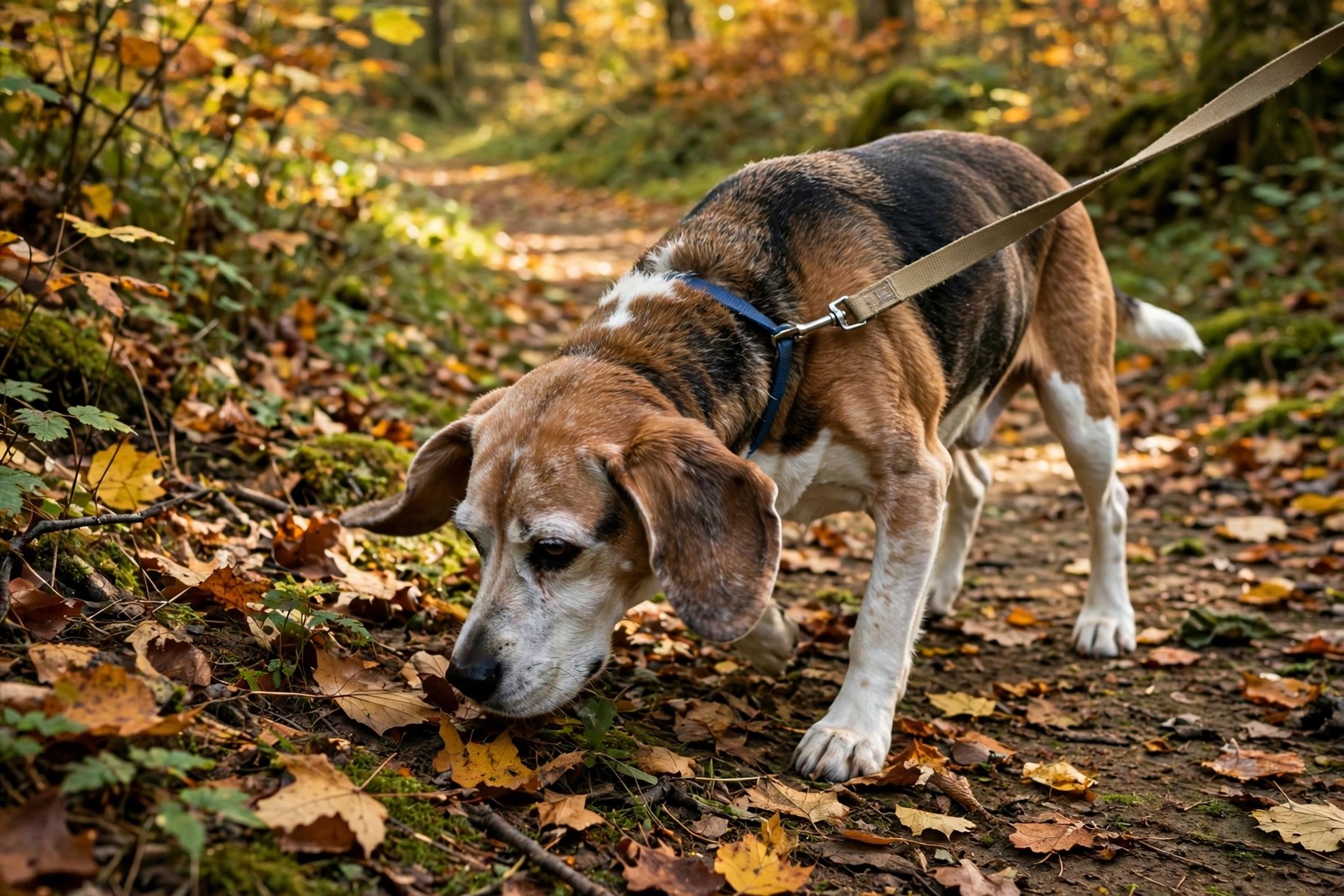
A Beagle typically lives for 12 to 15 years. That is at the longer end for a dog of its size, and it reflects a generally sound, unexaggerated build: a Beagle is a sturdy hound without the breathing, joint or skin complications bred into some other shapes. What shortens Beagle lives is usually not the design of the dog but the management of its appetite.
Weight: The Daily Decision That Matters
Beagles were bred to work in packs, eat when food appears, and keep going, and a pet Beagle brings that appetite to a house full of food. Extra weight in this breed loads the spine and joints, worsens the consequences of an underactive thyroid, and makes every other age-related problem harder. A lean Beagle should have a visible tuck behind the ribs and a waist you can see from above; if the waist has gone, the ration needs to shrink whatever the packet suggests.
Weigh the dog regularly and write the figure down, because a Beagle gains slowly, week by week, in quantities no one notices by eye. Measure meals, keep treats small and counted, and be honest about food stolen, scavenged on walks, or delivered by children, since a Beagle counts all of it even when the household does not. A dog who is walked a good distance daily and fed to its actual needs stands a strong chance of reaching the top of the range still mobile and keen.
Ears, Nose and Thyroid: The Watching Brief
The Beagle's long, heavy ear flaps close over the ear canal and hold in warmth and moisture, which is why ear infections recur in this breed. Lift the flaps weekly, look and sniff: a healthy ear is pale and fairly odourless, while redness, a sweet or yeasty smell, dark discharge, head shaking or scratching at an ear means a vet visit rather than another week of home cleaning. Dry the ears after wet walks and swimming, because trapped moisture is the usual starting point.
The nose is the breed's glory and its management challenge: a Beagle following scent may not respond to recall the way other breeds do, so secure fencing and a long line in open spaces protect the dog across its whole life, since road accidents are a risk no amount of health care fixes. On thyroid function, know the pattern worth reporting: weight gain despite an unchanged ration, a thinning or dull coat, seeking warmth, and lower energy can all accompany an underactive thyroid, which a vet can test for and advise on. Reporting that cluster of signs early is far more useful than reporting any one of them alone.
The Senior Beagle
Old Beagles usually stay cheerful, food-motivated and interested in the world, which makes them rewarding seniors. Keep walks daily but adjust the length to the dog in front of you, keep scent games going because the nose rarely retires, and keep the weight rule in force even when pleading eyes work harder, because a lean old dog moves more comfortably than a plump one.
Add the practical supports as they are needed: a bed with low sides that arthritic joints can manage, a ramp for the car if jumping in has become a struggle, and vet checks at the rhythm your vet advises for seniors, with your notes on appetite, water, sleep and mobility in hand. New lumps, a lasting cough, unexplained weight loss or a sudden change in thirst should always be checked promptly, in a Beagle of any age.
Choosing a Beagle means planning for a companion who may share your life for a decade and a half, including a long and characterful old age. Keeping the dated weights, ear notes and vet visits together in KinsLe's Pet Passport gives every vet who treats your Beagle the full picture behind that long and healthy span.