
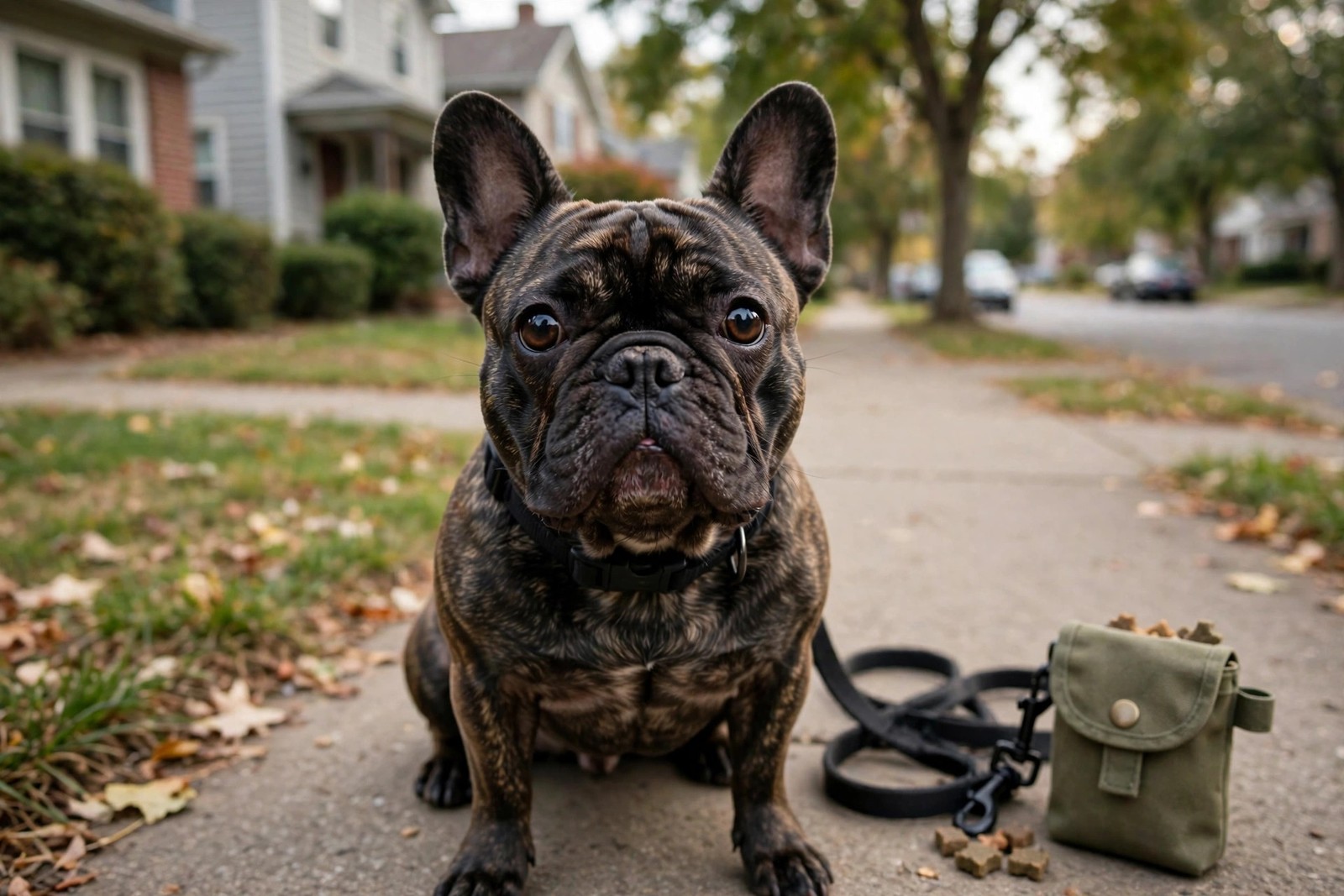
For most families, yes. The French Bulldog earns its place on family shortlists honestly: it is affectionate without being clingy-fragile, playful without a working breed's intensity, and compact enough for ordinary houses and flats. A well-bred, well-socialised Frenchie typically regards children as excellent entertainment and positions itself in the middle of whatever they are doing.
Why the Breed Suits Family Life
Build is the first benefit. At roughly 20 to 28 pounds of dense, muscular dog, a Frenchie is not easily hurt by the ordinary clumsiness of a school-age child — a stumble, an enthusiastic pat, a game that gets rowdy — in the way a fine-boned toy breed would be. Temperament is the second: Frenchies are clownish, people-centred, and notably tolerant, with low prey drive and little tendency to guard space or possessions compared with many breeds. Their exercise needs are modest, so the dog is not competing with the school run for hours of walking, and their idea of a perfect afternoon — short game, long nap near their people — overlaps well with children's rhythms.
The Heat Rule Children Must Learn
The serious caveat is breathing. A flat-faced dog cannot cool itself efficiently, and children are experts at keeping a game going past the point a dog should stop. Teach every child in the house the rule plainly: when the Frenchie's panting gets loud, harsh, or frantic, play stops, water comes out, and the dog rests in a cool place — no exceptions, no 'one more throw.' In warm weather, active play belongs in the cool of morning or evening, swimming is out — Frenchies are front-heavy, poor swimmers who can sink — and a Frenchie should never be left to charge around a sunny garden with excited children at midday. This single rule prevents the breed's most dangerous family scenario.
Handling and the Youngest Children
Frenchies have prominent eyes that can be scratched by flailing toddler hands, sensitive upright ears that should not be pulled, and a sturdy but not invulnerable back — children should not ride, wrestle, or pick the dog up. With toddlers, supervise everything and expect the usual architecture of gates and separation at mealtimes and during the dog's sleep, because any dog woken by a grab may startle. From about five or six, most children can be taught the heat rule, gentle handling, and simple training games, and Frenchies reward them by being willing, funny pupils for tricks and fetch.
Choose a puppy from parents with clear breathing and a dog that has been raised around household noise, or an adult rescue with a known history around children, and ask honestly whether your household can keep play sessions short and supervised rather than long and wild.
KinsLe's Care Teams helps families run that safely, assigning which adult supervises Frenchie-and-children play and scheduling the dog's rest and cool-down breaks — so enthusiasm never outruns what a flat-faced dog's breathing can handle.