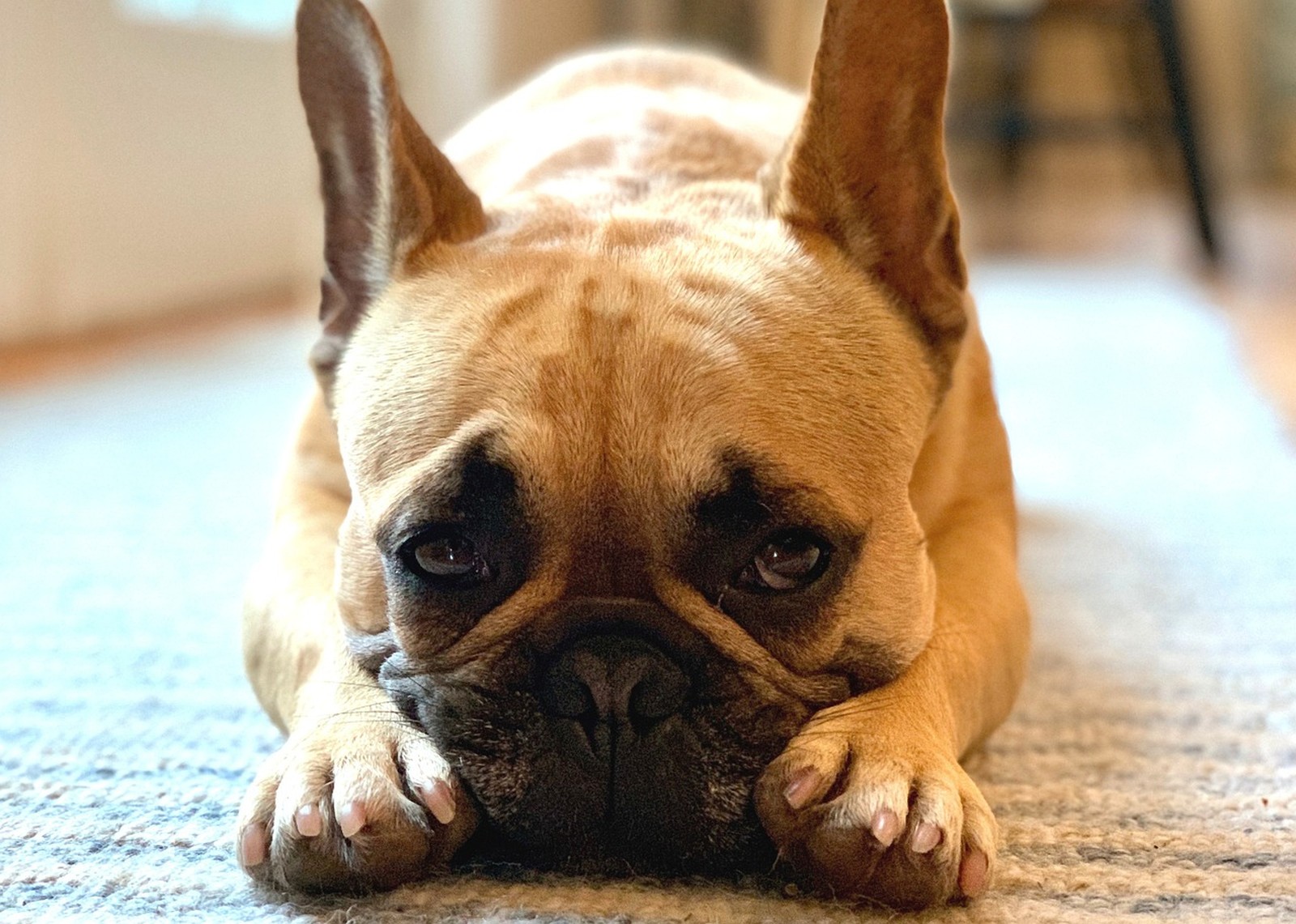
A companion first, an athlete never
A French Bulldog's first year revolves around closeness, not mileage. This is a compact, flat-faced companion breed bred to live beside people, and your puppy will probably treat your lap, your sofa, and the patch of floor by your feet as the centre of the home. Days settle into short play bursts, long naps, and much snoring.
Growth is quick at first and then steadies, but the personality arrives early: clownish, people-focused, and quietly stubborn.
Breathing, heat, and the rules they set for your routine
That short muzzle shapes almost every practical decision in year one. French Bulldogs cannot cool themselves as efficiently as longer-nosed dogs, so walks belong in the cooler parts of the day, exercise stays brief and unhurried, and car rides, warm rooms, and summer pavements need real caution. Heavy panting, noisy breathing at rest, or a puppy who cannot settle after mild activity are reasons to stop, cool the dog, and call your veterinarian promptly rather than pushing through a planned outing.
Swimming belongs on the avoid list too. With heavy heads and compact bodies, most French Bulldogs are poor swimmers, so garden ponds, pools, and riverside walks call for a lead and close supervision rather than hopeful experiments. Harnesses usually suit walks better than collars that press on the airway.
Folds, ears, food, and the small daily jobs
The breed's wrinkles are charming and also a chore. Skin folds on the face, and sometimes around the tail, trap moisture and debris, so gentle cleaning and thorough drying become part of the weekly rhythm. Ears need regular checks, nails grow quickly on a dog who walks relatively little, and teeth benefit from early, patient brushing practice while your puppy still accepts new handling.
Weight is the other quiet battle. French Bulldogs love food, exercise modestly, and gain easily, and extra weight makes breathing harder still. Measure meals, keep treats small and counted, and let your veterinarian's hands on your dog's ribs guide portion changes rather than the hopeful look over the bowl. A lean Frenchie breathes, moves, and sleeps more comfortably.
House training and living together
Progress on house training is often slower than new owners expect. Short, frequent trips outside, generous praise delivered the moment your puppy finishes outdoors, and a fixed feeding schedule will get you there, but accidents may continue longer than they would with some other breeds. Patience is not a soft extra here; it is the method that works with a dog who digs in when pressured.
Early socialisation matters because this breed bonds intensely to its own people. Calm introductions to visitors, children, other dogs, household noises, and brief separations help prevent the clinginess that can grow into distress when you leave. Practise short departures early, keep returns low-key, and give your Frenchie a settled resting place that is theirs even when you are home.
What catches first-year owners out
The common surprises are cost and vigilance rather than chaos. Breathing problems, skin irritation, ear infections, and back trouble are all more likely in this breed than in many, so choose your puppy's source carefully, keep vet checks on schedule, and take new snoring changes, skin redness, limping, or reluctance to jump seriously rather than assuming they are just breed quirks. A puppy who drags a back leg, cries when picked up, or suddenly cannot manage steps needs veterinary help the same day.
By the end of the year you will have a sturdy, comical companion whose care is measured in short walks, clean folds, cool rooms, and constant company. Keeping every early vet note, feeding routine, and quirk recorded matters, and KinsLe helps through Transferrable Profiles, which let a French Bulldog's whole first-year history travel intact with the profile should a new owner ever take over.