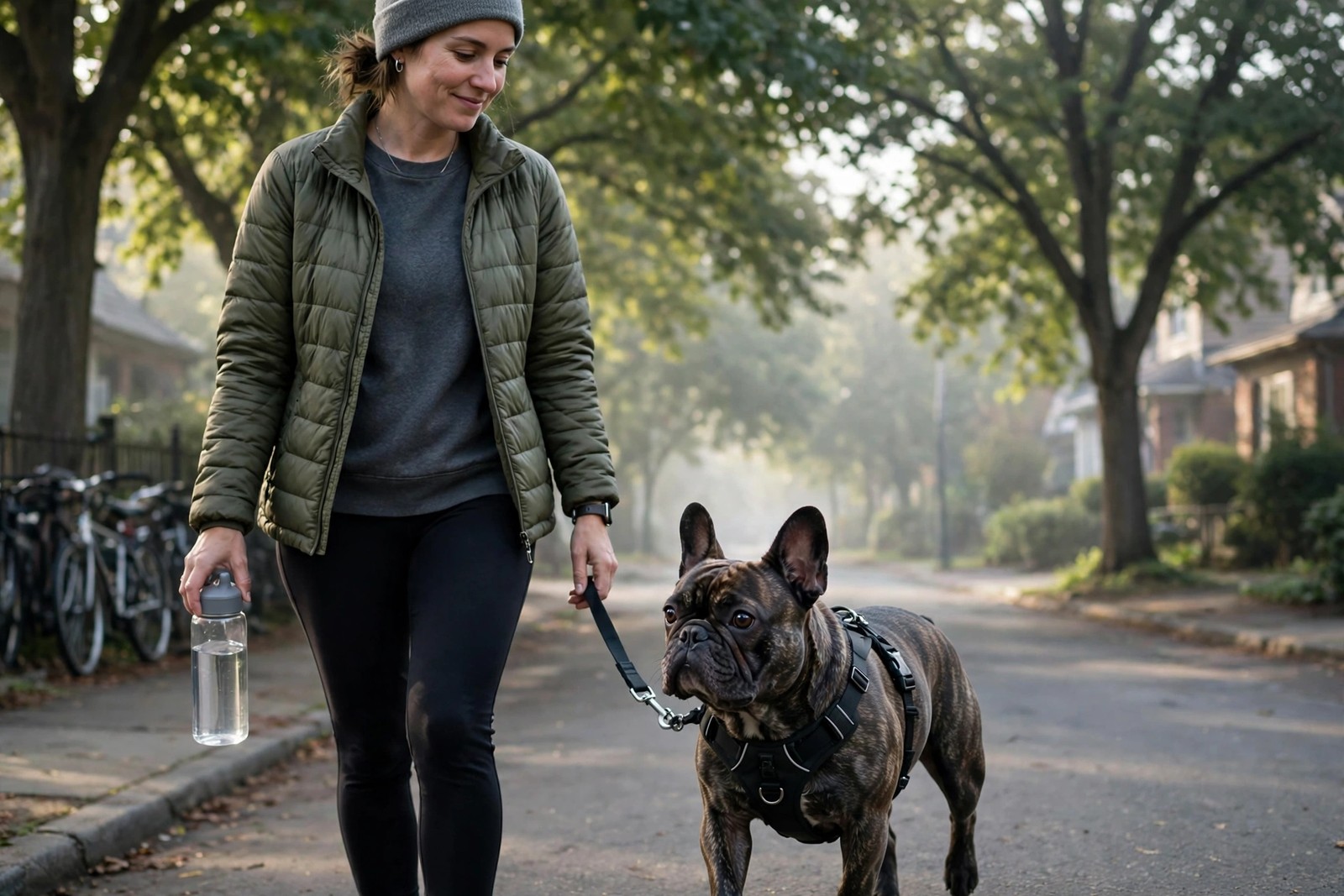
French Bulldogs usually live 10 to 12 years. This compact, flat-faced breed has become a city favourite, but the same shortened airways that shape the French Bulldog's face also shape its lifespan: breathing efficiency and heat tolerance are the background conditions of almost every care decision you will make. A Frenchie kept lean, exercised sensibly in cool conditions and watched carefully for breathing change can enjoy the full range; a heavy dog pushed in warm weather is working against two of those protections at once.
Breathing and Heat Come First
A French Bulldog cannot pant as effectively as a longer-muzzled dog, so heat builds faster and clears slower. Walk in the cooler morning and evening, keep summer exercise short and gentle, carry water, and treat parks in midday heat as off limits rather than a challenge to manage. Stop immediately for harsh raspy breathing, heavy drooling, a wide-eyed or frantic look, wobbling or collapse, and get urgent veterinary help for those signs. Indoors, provide a cool resting place and watch your dog after excitement or play, not just outdoors. Breathing that becomes noisier over months, snoring that changes character, exercise tolerance that shrinks or episodes of fainting should all be discussed with a vet promptly, with dates noted, because the trend across time is the useful signal.
Spine, Skin, Ears and Weight
The breed's screw tail and compact spine mean back problems can occur, so discourage repeated jumping down from sofas and beds, use ramps where you can, lift with the body supported level, and report reluctance to move, yelping or hind-leg wobbliness promptly. Skin folds on the face need gentle regular cleaning and thorough drying, and ears should be checked for redness or head shaking, with persistent soreness seen by a vet. Weight is the thread connecting everything: a lean French Bulldog breathes more easily, cools better, loads the spine less and moves more comfortably, so measure meals, keep treats small and counted, and weigh your dog regularly rather than judging by eye under a stocky frame.
Choosing and Keeping Well
If you are buying a puppy, ask a breeder directly about breathing in both parents, what health testing has been done and whether the parents exercise comfortably, and be wary of any seller who treats noisy breathing as cute or normal. Across adult life, keep routine vet visits even in healthy years, since breathing, spine, skin and weight reviews catch change early. Senior Frenchies, from about eight onward, need the same heat discipline with shorter outings, plus prompt attention to appetite, mobility or breathing changes rather than assumptions about age.
Heat limits and breathing warning signs protect your dog only when sitters, family and dog walkers all follow the identical rules without exception. KinsLe's Care Teams lets you share your French Bulldog's exercise limits, feeding amounts and vet warning signs as assigned duties, so every carer works from the same plan on every day.