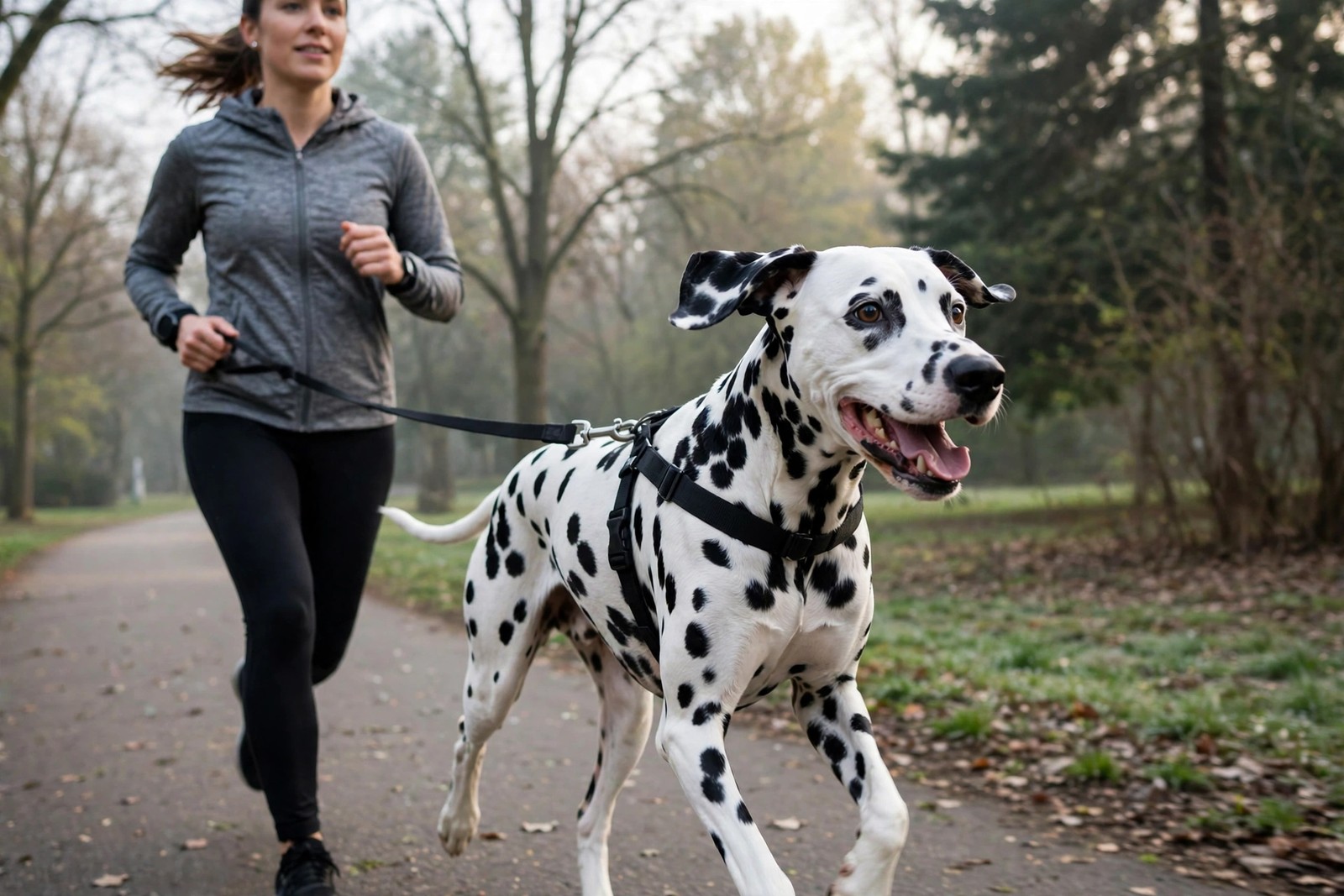
A Dalmatian genuinely needs one and a half to two hours of real exercise a day as an adult, and the word real is doing work in that sentence. Dalmatians were developed in the carriage era to trot alongside horses and coaches for long distances, guarding the vehicle at stops, and the modern breed retains that endurance engine in a lighter, modern body. A half-hour amble around the block barely warms this dog up. What an under-exercised Dalmatian does next is predictable: chewing skirting boards and furniture, digging, barking, counter-surfing, bouncing off guests and treating the house as an assault course. None of it is spite. It is unspent stamina looking for an outlet, and the cure is workload, not punishment.
Building a Day That Actually Tires the Dog
Split the one and a half to two hours across at least two sessions, because one outing rarely holds a Dalmatian all day. A strong pattern is a morning run of 45 to 60 minutes built around free running in a secure space, cycling alongside on a suitable route or a jog once the dog is fully grown, then an evening session of 45 to 60 minutes mixing lead walking, training and play. Two sessions of 45 to 60 minutes give you 90 to 120 minutes in total, which is exactly the one and a half to two hours the breed needs. Add brain work inside the day: scent games, trick training, food scattered in grass and short obedience refreshers all tire a Dalmatian in a way extra pavement miles do not. Judge the dose by the evening dog. A Dalmatian that settles, sighs and sleeps after dinner is correctly worked; one that is still staging raids at bedtime needs more, or needs its exercise earlier and harder.
Running Partners Need Building and Checking
Dalmatians make willing running and cycling partners, but fitness and soundness come first. Build distance over weeks, start with run-walk intervals, exercise in the cool hours because a hard-running dog overheats quickly and check paws after hard or stony ground. Only run or cycle with a fully grown dog whose joints have matured, generally from around 18 months, and ask your vet to confirm your individual dog is sound for it at a routine check. Puppies need the opposite programme: short play, brief training, social outings and a great deal of sleep, with exercise increased gradually as they grow. Hearing is worth mentioning in this breed: responsible breeders have puppies hearing-tested, so ask for the results when you buy, and if an adult's response to sounds changes, raise it at a vet visit rather than assuming stubbornness.
Water, Toilets and the Dalmatian Difference
Dalmatians process uric acid differently from other breeds, which is why vets give their owners two habits to keep for life: constant access to fresh water and frequent chances to urinate, so the bladder flushes through regularly rather than holding urine for long stretches. Build toilet breaks into the exercise plan (one before a long run, one after, and regular opportunities across the day) and follow your vet's guidance on diet for your individual dog rather than copying feeding fashions from the internet. An adult Dalmatian left for a full working day without a toilet break is being set up to fail on both behaviour and health. In active households the morning run, midday break and evening session usually fall to different people. KinsLe's Care Teams lets you assign your Dalmatian's exercise and toilet breaks to named family members and see each one marked done, so the full one and a half to two hours actually happens every day.