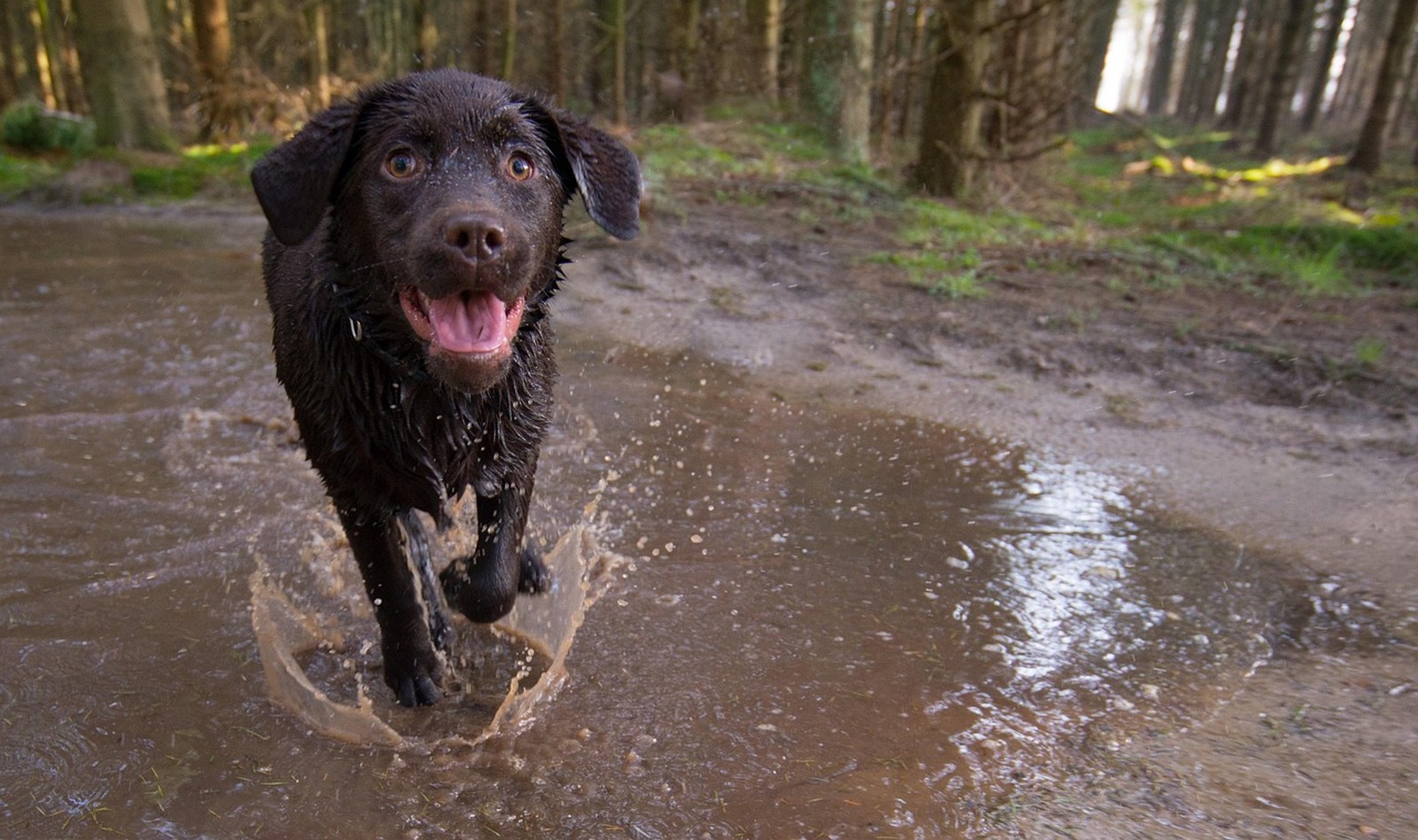
A healthy adult Labrador needs roughly 90 minutes to 2 hours of exercise a day. Labradors were bred as working retrievers, and the breed's appetite for activity matches its appetite for everything else. Owners who plan for an hour and hope for the best usually meet the difference at home, in the form of a restless, inventive dog dismantling something. Spread the total across the day, mix its forms, and most Labradors settle into the easy-going family dog of reputation.
Build the Day in Blocks
A proven pattern is a 45-minute morning walk, a shorter midday play or training session, and a 45 to 60-minute evening outing that includes some retrieving or free running in a secure area. Swimming is outstanding Labrador exercise: it burns serious energy, suits the breed's water heritage, and spares the elbows and hips. Keep repetitive ball launching to short bursts rather than half an hour of full-speed sprints and skids, which is hard on joints, and rotate in scent games and trick training so the brain works too. After swimming, rinse pond or salt water from the coat, dry the ears thoroughly, and check paws for cuts, because a Labrador will happily keep going on a sore foot and only mention it at bedtime.
Puppies: Short, Often, and Off the Stairs
Labrador puppies grow fast, and their joints pay for over-exercise long before the dog looks tired. Keep lead walks brief and frequent; a widely used guide is a few minutes per month of age, twice a day, topped up with gentle play on grass. Discourage stair running, sofa leaping, and slippery-floor wrestling during the first year, however enthusiastic the puppy is. Seniors and arthritic dogs shift to shorter, flatter, more frequent walks, and any new limping or stiffness after rest deserves a vet visit rather than a longer warm-up.
Exercise and the Labrador Waistline
This breed is genetically prone to piling on weight, and an overweight Labrador both needs and tolerates less exercise, which traps owners in a shrinking circle. Break it gradually: add five minutes a week, favour swimming, and measure food honestly, including training treats. A Labrador at a healthy weight will visibly rediscover enthusiasm for the full range. Sharing a near-two-hour daily commitment is realistic for a household rather than a hero, and KinsLe's Care Teams lets you assign each walk, swim, and play session to a different family member with completion timestamps, so your Labrador's exercise stays complete even when one person's day falls apart.