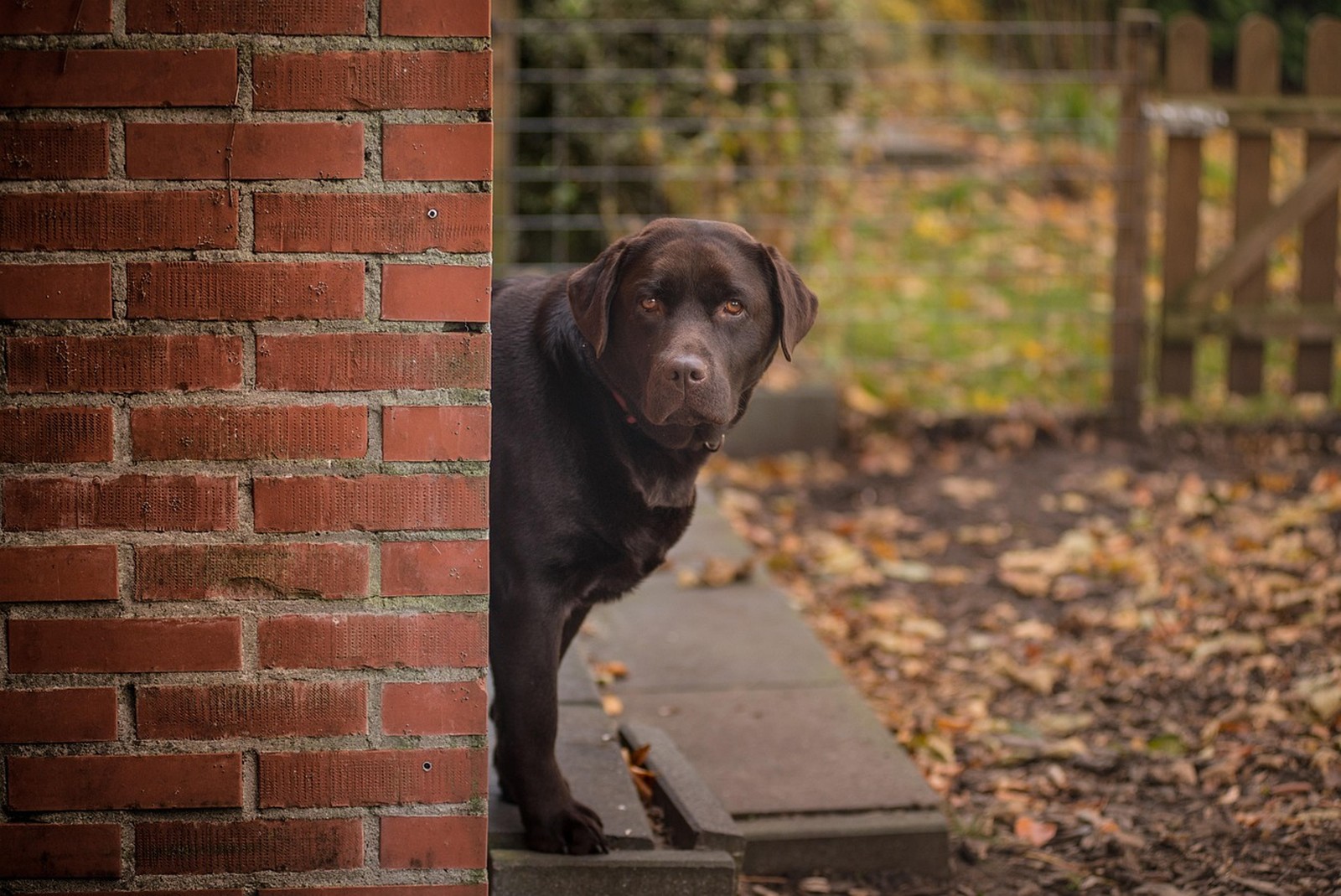
The puppy who eats the world
Labrador puppies approach life mouth-first. Food, sticks, socks, stones, and anything vaguely edible on a walk all qualify as worth tasting, and the breed's legendary appetite means your puppy will act genuinely starving minutes after a full meal. Many Labs carry a real genetic drive toward food-seeking, so the pleading is not bad character — but it still cannot be fed. Measured meals, counted treats, food stored behind latches, and bins a determined nose cannot open become household infrastructure in year one.
That mouthiness, plus serious teething, means chewing needs management rather than outrage: legal chews always available, valuable items out of reach, and swaps instead of chases. A Labrador who has swallowed something suspect and then vomits, refuses food, or seems uncomfortable needs a veterinarian promptly, because this breed's enthusiasm makes obstructions a real first-year risk.
Energy that grows before manners do
Young Labradors are exuberant athletes in training. Daily walks, play, retrieving, and swimming — most Labs adore water and will find the muddiest version available — all feature heavily, balanced against young joints that should not be hammered with forced running or endless stair work. Training games do double duty: a puppy learning to retrieve to hand, wait at gates, and settle on a mat is burning mental energy that pure walking leaves behind.
Adolescence is the honest surprise of the Labrador year. Around the time the puppy looks grown, recall may wobble, greetings become launches, and known cues get tested at maximum volume and strength. This phase passes fastest for owners who keep training consistent, use long lines where recall is shaky, and reward calm behaviour lavishly rather than only correcting the wild moments.
Coat, weight, and Labrador upkeep
The short double coat sheds far more than its length suggests, year-round and heavily in season, so weekly brushing and a good vacuum are part of the package. Ears, especially on swimmers, need drying and regular checks, and that wagging tail can split its tip against hard surfaces when excitement peaks.
Weight is the breed's central health project. A lean Labrador is measurably kinder to its own hips and elbows, joints this breed is known to stress, so ribs should be felt easily under a thin fat cover even while your puppy insists it is wasting away. Weigh regularly, adjust portions as growth changes, and let the dog in front of you — not the optimistic face at the bowl — set the ration. Persistent limping, stiffness after rest, or lagging on walks earns a veterinary check rather than an assumption of laziness.
Friendliness still needs teaching
Labs are social to their bones and usually wonderful with people and dogs, but an untrained adult Labrador greeting is a lot of muscular enthusiasm arriving at speed. Teach the puppy version of politeness now: sitting for attention, ignoring passers-by on cue, settling while the household eats, and coming away from other dogs when called. Early, positive exposure to traffic, children, livestock smells, vet handling, and being left alone briefly builds the steady adult the breed is famous for being.
Because Labradors bond closely and love company, build alone-time gradually and arrange cover for long days rather than expecting a young dog to simply cope.
The dog at the end of year one
Owners who steer appetite, energy, and manners through the first year usually land the classic Labrador: cheerful, biddable, muddy, and devoted. Keep the evidence of that work — growth, weight, vet visits, training stages — where it belongs, and KinsLe does so with Transferrable Profiles, holding your Labrador Retriever's whole profile ready to move complete to a new owner if circumstances ever demand it.