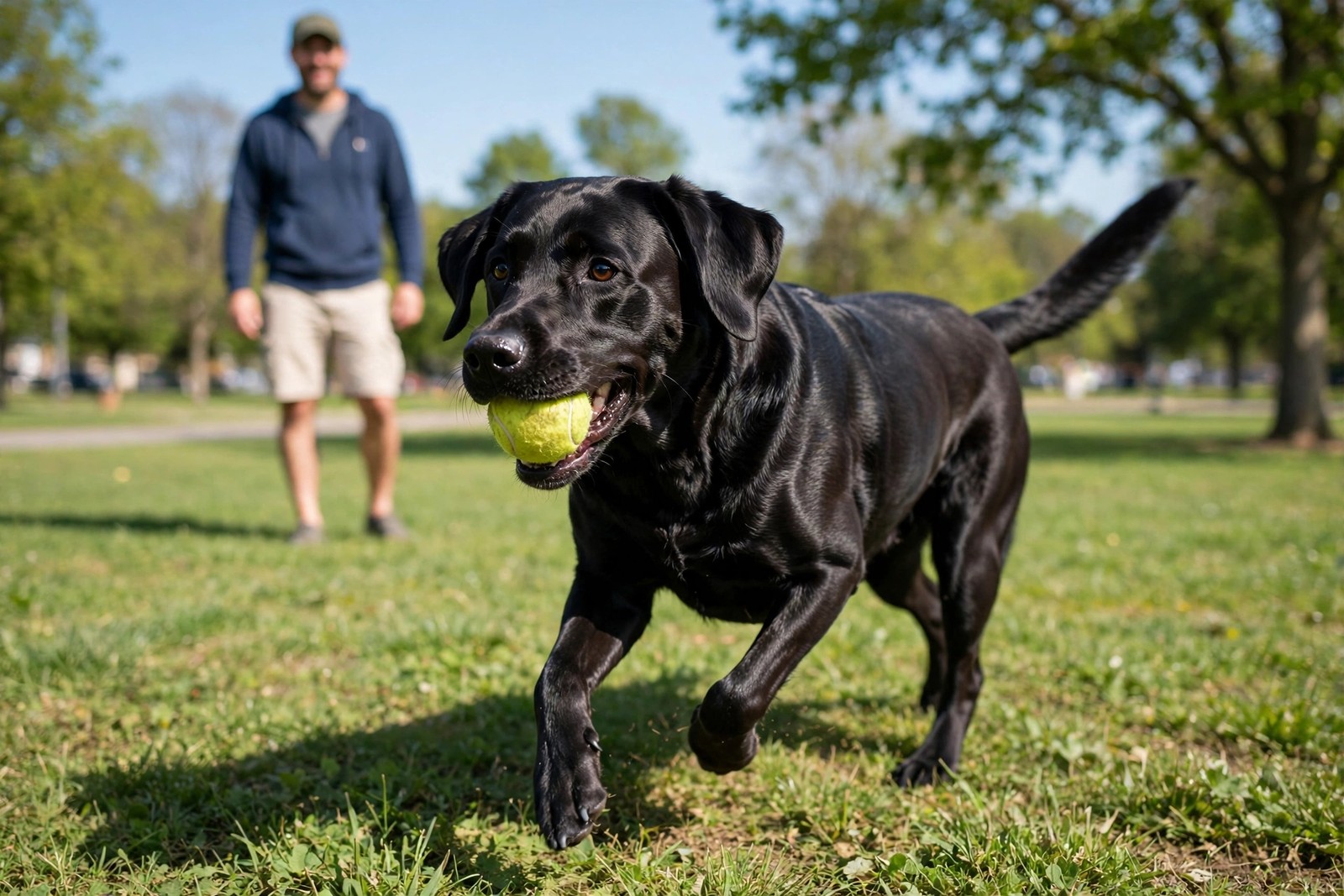
Labrador Retrievers usually live 11 to 13 years. Labradors sit at the healthier end of the large-breed range, with no extreme muzzle, coat or proportions working against them, and many reach 13 as enthusiastic, grey-faced companions. If one theme dominates Labrador longevity, it is weight. This breed gains famously easily, carries a famously persuasive appetite and loads its hips and elbows with every spare kilogram for a decade or more. Owners who master feeding discipline give their Labrador strong support within ordinary daily care.
Weight Above All
Feed measured meals matched to your dog's actual condition, not to the optimism of the portion guide or the pleading of the dog, and include every treat, chew and training reward in the daily total. Check ribs monthly: you should feel them with light pressure under a thin fat cover, and you should see a waist from above and a tuck from the side. Weigh your dog regularly and adjust portions promptly when the trend rises, because catching a one-kilogram gain is simple while reversing five is a long project. Be especially careful after neutering and again in the senior years, when calorie needs fall but a Labrador's conviction that he or she is hungry does not. Ask your vet to set a target weight for your individual dog and write it down.
Hips, Elbows and Ears
Hip and elbow problems occur in the breed, so ask a breeder what joint evaluation both parents have had and keep those results. Protect joints across life by keeping weight lean, building exercise gradually, warming up before hard retrieving or agility-style work, and reporting stiffness after rest, reluctance to jump into the car or an uneven gait to a vet for assessment rather than simply cutting exercise on guesswork. Ears are the third watch point, particularly in Labradors who swim: water plus floppy ears invites trouble, so dry ears after swimming and baths, check weekly for redness, odour or head shaking and have persistent signs examined. Under the coat, run your hands over the whole body weekly for new lumps and have any new or changing lump checked promptly.
An Active Life, Adjusted With Age
A Labrador needs real daily exercise and mental work at every age, adjusted in form rather than abandoned: steady walks, retrieving in moderation, scent games and training keep muscle on the frame and weight off it. From about eight onward, treat vet visits as senior reviews covering joints, weight, ears, lumps, appetite and stamina, and note changes with dates so gradual decline is measured. Senior Labradors often stay joyful and involved for years when joint discomfort is discussed early and exercise is reshaped instead of stopped, and ramps for the car plus non-slip mats at home are practical kindnesses for an older dog of this size.
Weight graphs, joint results and ear history across 11 to 13 years are far easier for a vet to act on when they live in one continuous record. KinsLe's Pet Passport holds your Labrador Retriever's target weight, screening papers and visit notes together, so each appointment compares today's dog with the whole history.