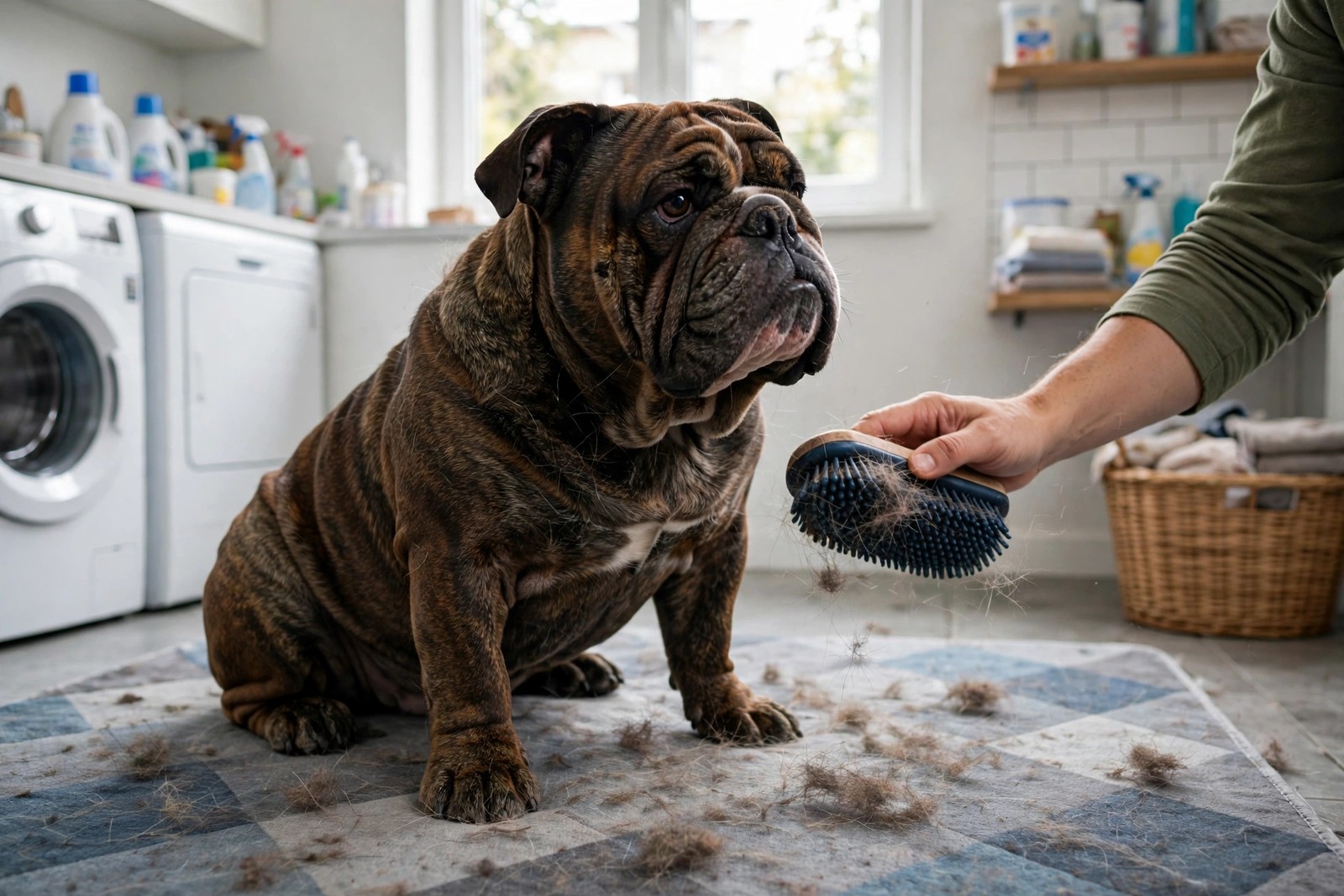
An English Bulldog will not bury your home in hair the way a double-coated breed can, but anyone choosing the breed for a tidy, hair-free house is in for a surprise. Bulldogs carry a short, straight, single coat that sheds steadily all year, and the individual hairs are stiff and bristly, which makes them oddly persistent: they work their way into upholstery weave, cling to dark clothing and turn up in carpets. Expect a moderate daily fall, with noticeably heavier shedding for a few weeks at a time when the coat turns over, typically as the seasons change.
How Much Hair, and When
Year-round shedding at a low level is normal for this breed, because the coat renews itself continuously rather than blowing out in one dramatic moult. During a heavier spell you will see loose hair coming away in the brush, on bedding and wherever the dog rubs, and the coat may look duller for a short while before the new coat comes through sleeker. What should not happen in a normal shed is hair coming out in patches: bald spots, a moth-eaten look, red or flaky skin, a sour smell from the folds or scratching that goes with the hair loss all point to a skin problem, allergies or parasites rather than shedding, and those need a vet rather than a better brush.
Brushing: Little and Often
A short session once a week is enough for most of the year, using a rubber curry brush or a soft bristle brush worked in the direction of growth, which lifts loose hair and spreads skin oils without scratching the Bulldog's sensitive skin. During a heavy shed, increase to two or three sessions a week until the fall slows again. Five to ten minutes is plenty; this is a thin-skinned breed, so skip stiff slicker brushes and heavy pressure, and treat the session as a chance to check the whole dog over: folds, ears, tail pocket, paws and any new lump or sore. Bathing helps loosen a shedding coat, but Bulldogs should not be bathed too often, as frequent shampooing dries skin that is already prone to irritation; when you do bathe, rinse thoroughly, because shampoo residue left in folds and coat is a common cause of itching, and dry the dog completely, especially inside every fold.
The Daily Job Is Skin, Not Hair
Ask any experienced Bulldog owner what the real routine is and they will point at the folds. The facial wrinkles, the folds around the tail and the tight tail pocket trap moisture, food, shed hair and debris, and a neglected fold quickly becomes sore and infected. Wipe the facial folds and tail pocket daily with a soft, damp cloth or a vet-recommended wipe, then dry each fold carefully, since a fold left damp is worse than a fold left alone. Check weekly for redness, discharge or a yeasty smell, and keep the hair and skin around the tail pocket clean after toilet trips. This daily minute or two matters far more to a Bulldog's comfort than anything you do about shedding.
Living With the Hair That Lands
Household management is simple: washable covers on the dog's favourite furniture, a lint roller by the door, and brushing outdoors or on a hard floor to keep loose hair out of soft furnishings. Feed a complete diet suited to the dog's life stage and keep his weight sensible, because skin and coat quality suffer quickly in an overweight Bulldog, and mention persistent heavy shedding, dullness or flaking to your vet, as coat change can be an early sign that something else needs attention.
Judged fairly, shedding is one of the smaller commitments of Bulldog ownership, well behind breathing, skin care and weight control, and a weekly brush is a fair price for the breed's company. KinsLe's Care Teams makes that small routine easy to keep, letting you assign the weekly brushing and the daily fold wipe to different family members so neither slips, with every completed task marked complete with a timestamp.