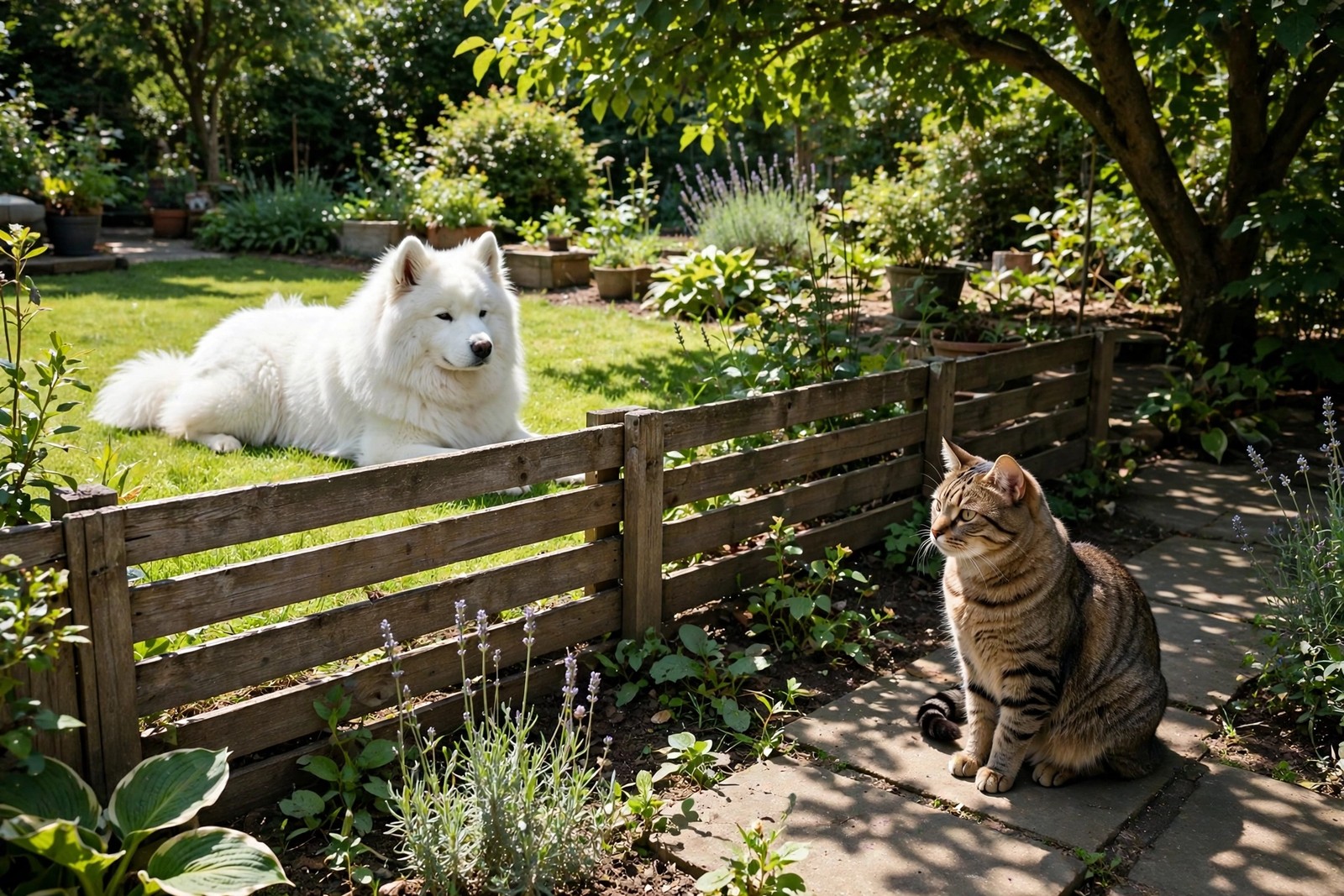
Samoyeds usually get along well with the cats they live with, and the reason is the breed's deep pack orientation. Samoyeds were developed to live closely with people and other animals, working and sleeping as part of a group, and a settled Samoyed tends to file the household cat under 'family' — to be greeted, accompanied and occasionally herded, rather than hunted. That friendliness coexists with a genuine chase instinct: movement switches it on, and a Samoyed who naps peacefully beside the family cat indoors may still chase an unfamiliar cat outdoors, or a housemate who suddenly bolts, until the relationship is thoroughly established. Introductions over several weeks turn the friendly instinct into a reliable habit.
What Samoyed Friendliness Actually Looks Like to a Cat
A Samoyed's social style is full-contact and cheerful: face-to-face greetings, pawing invitations to play, enthusiastic vocalising and a tendency to lean in and loom happily over smaller animals. Owners read this as pure friendliness; cats often read the first weeks of it as overwhelming. Give the cat control of the distance: high perches, a gate it can slip through, and a room of its own, and let the cat close the gap over days rather than holding the cat for the dog to sniff. Work on the Samoyed's settle on a mat and its recall indoors before shared-room sessions, and exercise the dog first — a Samoyed with energy banked from a good walk and some training can practise being boring around the cat, which is exactly the skill being built.
Staging the Introduction for a Vocal, Bouncy Breed
- Begin with scent swaps and meals either side of the cat's safe-room door, letting the dog's first association with the cat's smell be dinner rather than excitement.
- Run barrier meetings with the dog on a leash, rewarding quiet watching and turns away from the cat; Samoyeds bark when aroused, so pay for silence generously and end sessions before the commentary starts.
- Progress to shared-room time with a house line on the dog, the cat free to leave upward, and a mat settle as the dog's job throughout.
- Practise the moving-cat scenario deliberately and safely: with the dog leashed and settled, let a household member play with the cat at a distance, rewarding the dog for staying put, before you ever rely on that control for real.
- Keep the pair separated when unsupervised until several weeks of ordinary, dull coexistence have passed.
The Garden Problem: Chase Instinct Outdoors
Indoors is where the friendship forms, but outdoors is where the breed's chase instinct is strongest, and the two settings must be managed separately. A Samoyed reliable with the cat in the house should still meet the cat in the garden on a long line at first, because a cat running across open ground, in a space the dog associates with play and pursuit, is a different stimulus from a cat crossing the kitchen. Samoyeds are also committed diggers and escape artists, so check fences for dig gaps — a dog who gets under a fence after a neighbour's cat has left your management entirely.
Long-Term Harmony in a Samoyed Household
Settled Samoyed-and-cat homes usually describe the same picture: the dog greets the cat as a colleague, the cat exploits the dog's thick coat as occasional furniture, and both supervise the humans together. Maintain the basics that got you there — separate feeding, since Samoyeds are enthusiastic eaters who will finish a cat's bowl; the cat's litter area kept dog-proof; and exercise that does not depend on the cat being interesting. Adolescence can bring a bouncier, more testing phase, so reinstate the leash and barrier briefly if manners slip, and take persistent staring, stalking or guarding to a qualified behaviour professional. Households that divide introduction sessions, exercise and separate feeding between family members keep the plan consistent even in busy weeks, and KinsLe Care Teams helps by letting you assign each of those duties for both animals to a named person, with every completed duty marked complete with a timestamp.