
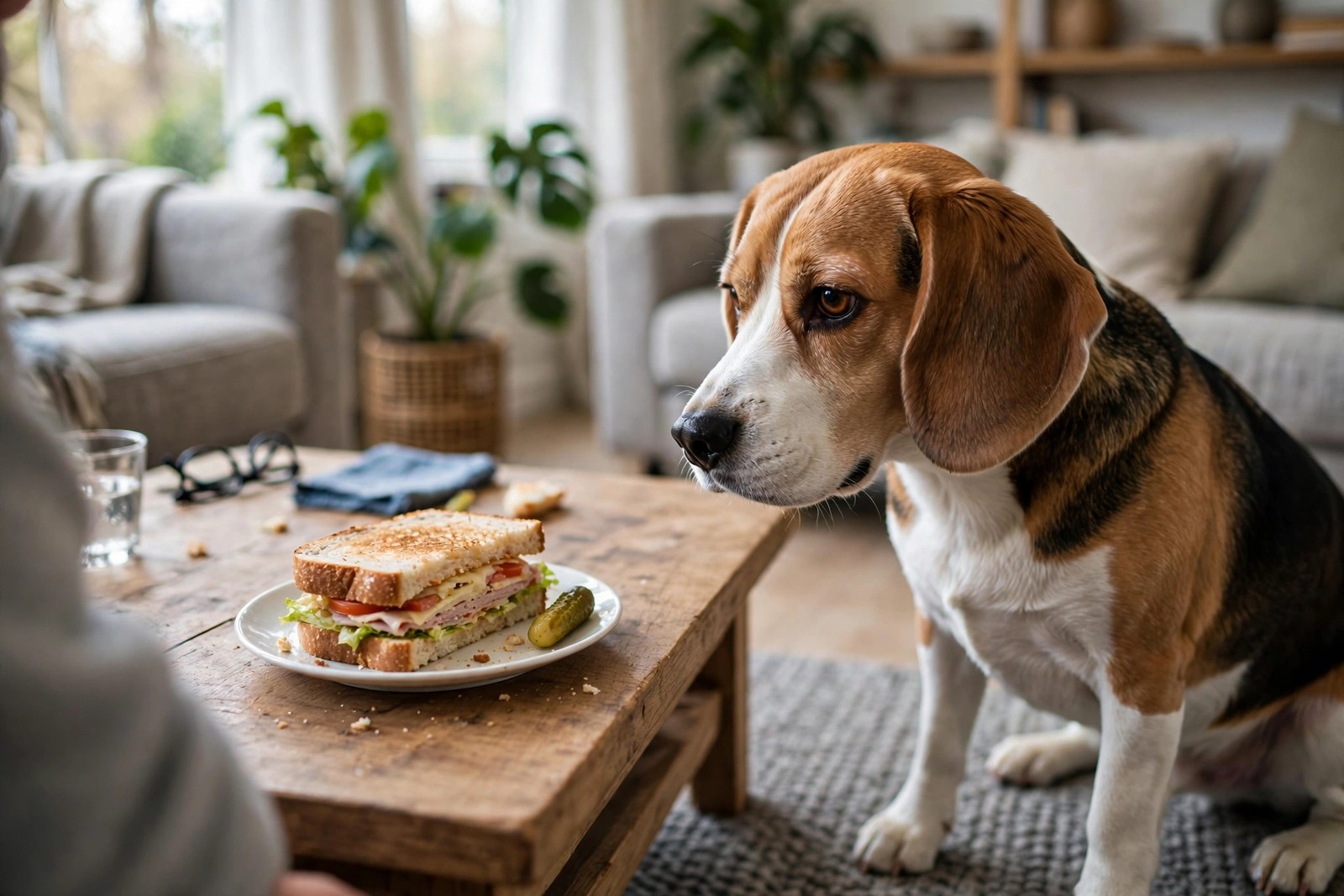
Your dog steals food when you are not looking because that is exactly when stealing works — he has learned your presence is what makes it risky, not that the food is off-limits. It is not spite, revenge, or a guilty conscience. It is good timing, a superb nose, and a simple lesson repeated over time: when the human leaves, the sandwich is available and nothing bad happens.
The "guilty look" is not guilt
That crouched posture, averted eyes, and tucked tail owners read as guilt is usually a response to you. Dogs display the "guilty look" when their owner acts upset — even when the dog did nothing wrong. Your tight voice and stare at the empty plate tell him you are displeased now, so he offers appeasement signals. He is not confessing; scolding after the fact teaches him about your moods, not the sandwich.
How the sneaky habit actually forms
Food stealing is self-rewarding. Every successful grab pays immediately, with no downside when you are out of the room. Dogs also learn discriminations quickly — the same animal who would never touch your plate while you sit beside it has learned that a turned back, a ringing doorbell, or the sound of the shower means opportunity.
Hunger and habit can overlap, which is worth checking honestly:
- Is he fed on a predictable schedule, or do long gaps leave him genuinely scavenging?
- Has his appetite changed recently, or is he losing weight despite stealing?
- Is the stolen food always high-value human food, or is he raiding trash and counters constantly?
A sudden increase in food-seeking, especially with weight change, excessive thirst, or raiding non-food items, is a reason to talk to your veterinarian. Most opportunistic stealing in a healthy, well-fed dog, though, is learning — and learning can be reshaped.
Fix the setup, reward the calm
Management comes first because every score strengthens the habit. Clear counters, latch the trash, close pantry doors, and do not leave food unattended on coffee tables during the retraining weeks. Then reward what you want: calm lying down while people eat, choosing a chew toy over hovering, and settling on a mat away from the table.
Practice honestly rather than with traps: leave the room briefly while safe, boring items are out, return, and reward him for ignoring them, gradually increasing temptation and duration. Never stage a test with dangerous food. Teach a strong "leave it" and mat settle away from meals first, then bring those skills to the dining room.
Safety if a theft does happen
If your dog grabs cooked bones, chocolate, grapes, raisins, onions, xylitol-sweetened products, raw yeast dough, or medication, contact your veterinarian promptly for guidance rather than waiting to see how he seems. Keep a note of what was taken and roughly how much, if you know it — that detail helps your vet assess the risk quickly.
How KinsLe Care Teams help
One overlooked cause of scavenging is a missed or late meal in a busy household where everyone assumed someone else fed the dog. KinsLe's Care Teams let you assign feeding, walks, medication, and grooming duties, with timestamped completions, so you can see at a glance that breakfast actually happened — and rule out genuine hunger before treating the problem as purely behavioral. Clear records make training fairer for your dog. Curious what else your dog's timing is telling you? Care Teams in KinsLe writes that roster down — one household member on breakfast, another on the evening meal — and stamps each completed feeding with its time, so a missed meal never hides behind assumption.