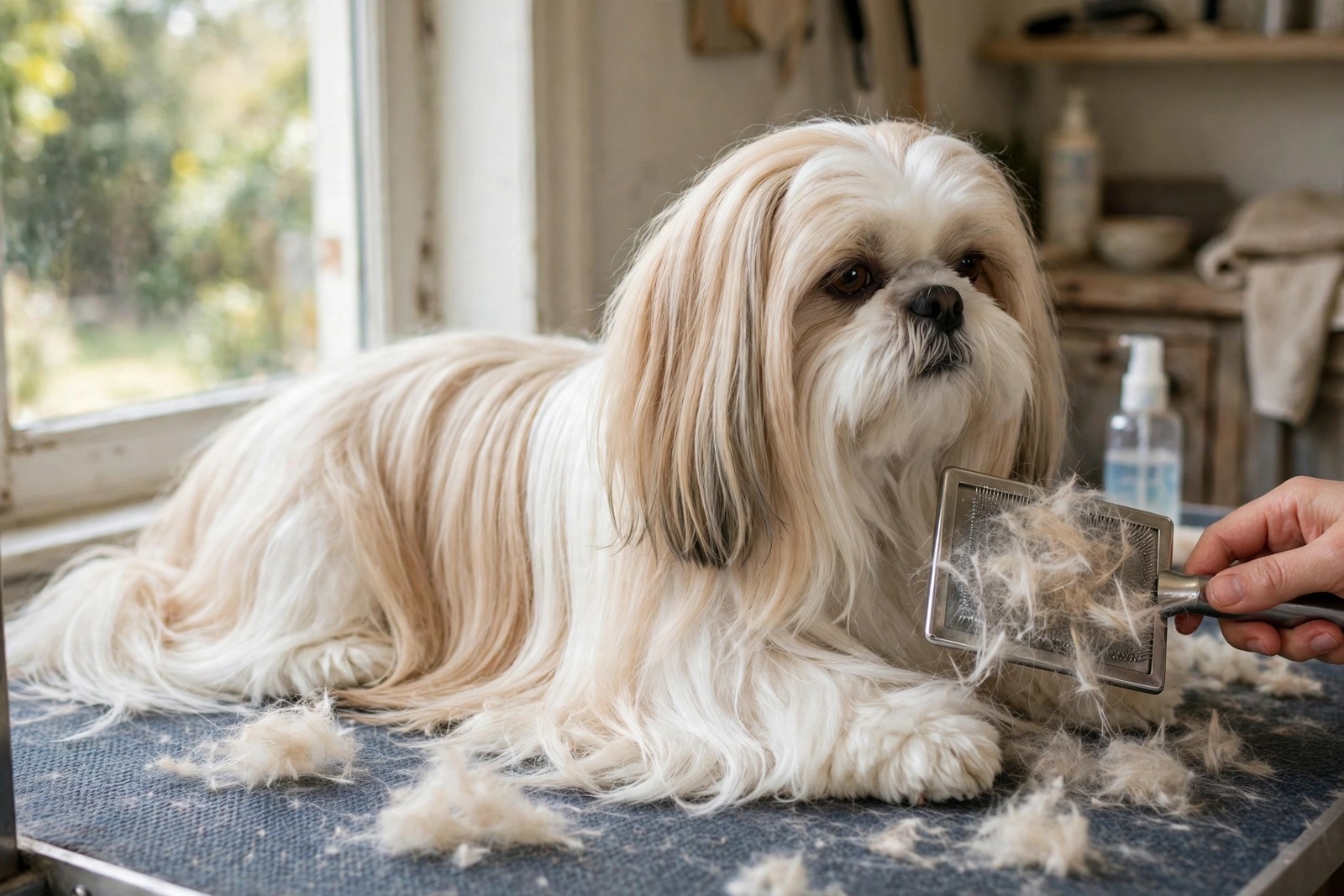
No — Shih Tzus sit at the low-shedding end of the dog world. Their long, flowing coat grows more like hair than the fur of a heavily shedding breed, and when an individual strand finishes growing and comes loose, it usually stays tangled among the surrounding strands instead of dropping onto your sofa. That is why owners often say this breed barely sheds at all: the hair leaves the coat mainly in the brush, in the bath, or in a mat you tease out, rather than on your floors day by day.
Why the Coat Holds Onto Loose Hair
A Shih Tzu carries a dense double coat, with a softer undercoat beneath the long topcoat. In a short-coated breed, a loose hair has a short, clear path to the ground. In a Shih Tzu, that same hair has to work its way out through inches of neighbouring hair, and it rarely makes the journey on its own. The practical result is a trade rather than a free pass: very little shedding around the home, in exchange for coat care that is genuinely part of owning this breed. Skip the brushing and the trapped hair does not disappear — it felts into mats close to the skin, especially behind the ears, under the collar, in the armpits, and around the legs, where friction is constant.
The Brushing Routine That Does the Shedding for You
Most Shih Tzus in a full or medium coat do well with a thorough brush and comb session every other day, and many owners find a short daily session easier than a long rescue job twice a week. Work in sections down to the skin with a slicker brush, then follow with a comb; if the comb glides through, the section is truly clear, and if it snags, that tangle is tomorrow's mat. Pay the friction zones listed above extra attention. Bathing roughly every few weeks loosens dead hair so it rinses and brushes out instead of knotting, and drying the coat fully afterwards matters, because damp tangles tighten as they dry. A puppy clip — the shorter pet trim many owners choose — shortens each session considerably and means less coat to trap hair, but the dog underneath still sheds the same small amount.
Times When You Will Notice More Hair
Expect a temporary increase when a puppy's soft coat gives way to the adult coat during the first year or so; the texture changes, tangling increases, and more loose hair appears in the brush for a stretch. Seasonal shifts can also loosen a little more undercoat than usual. Shedding that suddenly becomes heavy, or that comes with bald patches, flaky or reddened skin, scratching, or a dull and thinning coat, is a different matter — that pattern is not normal for this breed and deserves a vet visit rather than a new brush.
A Word for Allergy-Sensitive Homes
Low shedding is not the same as allergy-free. People react mainly to dander and saliva proteins, which every dog produces, and no breed can honestly be called completely hypoallergenic. Shih Tzus suit many allergy-sensitive households because less loose hair means less dander spread around the home on shed strands, but spending real time with the breed before committing is still the sensible test.
The owners who stay on top of this coat treat brushing as a rota, not a memory test, and KinsLe's Care Teams supports exactly that: you can assign each Shih Tzu brushing session to a named person and see every completed session marked off, so the coat gets its regular clear-out whoever is home.